Protect your family, employees, and customers from the danger of broken glass with high-quality Safety Window Tint from AZ Max Tint. Home and business owners across Arizona have trusted us for over 30 years.
Reduce the risk of flying glass at your home or business in Phoenix and across Arizona with safety window tint from AZ Max Tint. We are licensed, bonded, and insured under ROC # 363904, and our crew has been installing film throughout the Valley for over 30 years.
What is safety window tint? It is a thick, clear polyester film applied to glass so that when a pane breaks, the shards stay bonded to the film instead of scattering across a room.
Why does it matter in Phoenix? Monsoon season runs June through September, and those storms bring gusts strong enough to snap tree limbs and turn patio furniture into projectiles. Glass failure here is more common than most homeowners realize.
What will it not do? It does not make glass unbreakable, bulletproof, or intrusion-proof. It retains fragments after a break; it does not stop the glass from cracking, and forced-entry resistance is the job of security window tint.
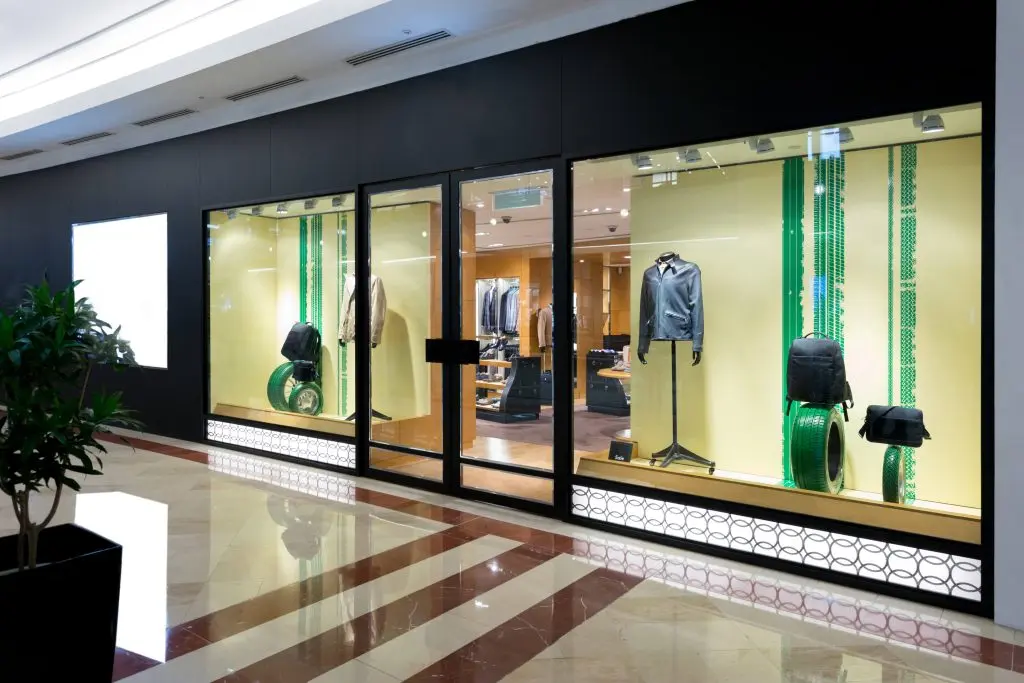
Safety window tint is a thick, clear polyester film applied to glass so that when the pane breaks from a monsoon dust storm, a stray golf ball, or an accidental impact, the shards stay bonded to the film instead of scattering across a room. It does not make glass unbreakable, bulletproof, or intrusion-proof, and it is a different product from security window tint and from the tinted glass regulated under Arizona’s window tint law.
In Phoenix, glass failure is more common than most homeowners realize. Summer haboobs regularly send patio furniture, tree limbs, and gravel from desert landscaping into windows and sliding doors. When ordinary annealed glass breaks, it shatters into sharp, unpredictable shards that can cause serious lacerations to kids, pets, or anyone nearby. Safety window film is engineered specifically to address that moment of failure. The film’s thickness, typically in the 4 to 8 mil range, holds broken glass together in a single sheet rather than letting it fall or fly apart.
The biggest misconception homeowners bring into a consultation is that safety film equals unbreakable glass. It does not. The glass still cracks on impact. What changes is what happens after the crack: instead of a spray of glass across a kitchen floor or a toddler’s play area, the pane holds its shape, sags in the frame, or stays intact enough to be safely removed and replaced later. This distinction matters for insurance conversations, for homes near ball fields or busy streets, and for commercial storefronts along high-foot-traffic corridors like Camelback or Mill Avenue where accidental impacts happen during business hours.
Security window film looks similar but is built and installed differently. It uses thicker gauges, often paired with mechanical attachment systems along the frame, and is tested against forced-entry standards rather than accidental breakage. If the goal is deterring smash-and-grab break-ins at a retail storefront, security film is the correct product, not standard safety tint. Likewise, the tint most people associate with windows, the shade percentage regulated by Arizona Revised Statutes for windshields and side windows, has nothing to do with fragment retention and serves a privacy and heat-reduction purpose instead. Homeowners and business owners in Phoenix should ask providers directly which of these three distinct products they are quoting, since the terminology gets blended in casual sales conversations.
Phoenix has a monsoon season every year, usually June through September. Those storms bring wind gusts strong enough to snap tree limbs and turn patio furniture into projectiles. We get calls every summer from folks whose windows took a hit from flying debris.
But it’s not just storms. Glass breaks. A kid’s baseball, a break-in attempt, an accident with a ladder near a storefront window. When glass shatters without safety window tint, it turns into sharp shards flying across a room full of people. That’s the real danger, not the broken window itself.
Safety window tint changes that outcome. It’s a film applied directly to the glass that holds the pieces together on impact, so instead of shards flying everywhere, the glass stays mostly in one sheet.
When we install this for a business owner, they had no idea it was even an option. Most people think window tint is just for cutting heat or glare. It does that too, but the safety benefit is the part that protects your family, your customers, or your employees when something goes wrong.
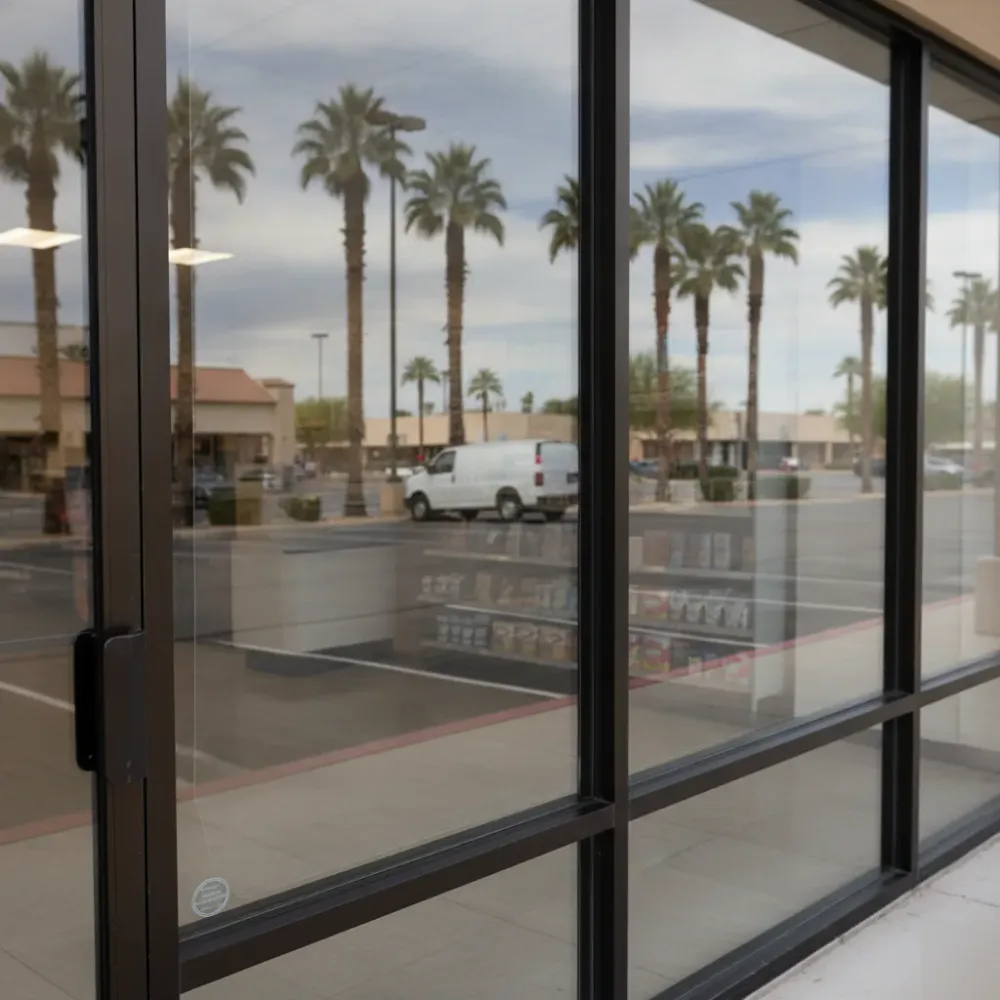
Think about a Phoenix strip mall with big storefront glass facing a busy road, or a home with sliding glass doors near a pool deck. Those are exactly the spots where broken glass turns a bad moment into a dangerous one.
Ever wonder why some buildings seem to bounce back faster after a storm hits? A lot of it comes down to what’s already on the glass before trouble shows up.
Hear from clients who upgraded their glass for comfort, safety, and value.
Not every window in the Valley needs a safety and security film, and a reputable installer should tell you that upfront. If your home or business was built recently in communities like Verrado, Eastmark, or one of the newer developments around Queen Creek, there’s a good chance your windows already use tempered or impact-rated glass that meets current building codes. Tempered glass is designed to crumble into small, relatively harmless pebbles rather than sharp shards, and impact-rated glass used in many new Phoenix builds is engineered to resist forced entry and severe wind-driven debris on its own. Adding safety film on top of glass that already performs this function is often unnecessary spending.
That last point comes up more than people expect. Plenty of Phoenix homeowners call asking about safety film because a window feels dangerously hot or the afternoon glare makes a west-facing room unusable, but those are heat and UV problems, not structural safety problems. In those cases, UV Window Tint is the better fit. It’s built to block solar heat and ultraviolet rays that fade flooring and furniture, without the thicker, reinforced construction that drives up the cost of safety film. Choosing UV tint instead can save a few hundred dollars while solving the actual issue.
A trustworthy Phoenix tint contractor will walk your property, check glass type where possible, and ask what’s bothering you before recommending a product. Sometimes that means telling a homeowner in Ahwatukee or Chandler that their existing glass is already compliant and safety film would be redundant. That kind of honest disqualification builds more trust than pushing an upgrade nobody needs, and it means the next recommendation you get carries more weight.
So why does one safety film job cost more than another? It’s not random. A handful of real factors decide the final number, and every one of them shows up the moment we start measuring your windows.
Placement matters more than most people expect. A window right off a Phoenix sidewalk or alley faces different risk than one tucked behind a block wall in the backyard. And a storefront with big display glass on a busy Valley corridor is going to need a different approach than a home office window.
Film thickness is where the real difference shows up.
Thicker film costs more, but it also holds broken glass together better in a break-in or a storm. Thinner film still adds protection, just not as much. We walk you through both options during your estimate so you’re picking based on what your property needs, not just guessing.
We’re licensed, bonded, and insured, ROC number 363904, so when we come out to measure and quote your job, you’re getting a real assessment from a crew that’s done this work across Phoenix for decades. That estimate is free, and there’s no pressure attached to it.
Why homeowners and property managers call us first.
Trusted installs across the Valley and Arizona.
Premium films built to perform in desert sun.
Block up to 99% of UV for people and interiors.
Clear options and no-pressure estimates.
A professional safety window tint installation in Phoenix typically begins with an in-home consultation. The installer walks through your property, examines each window’s condition, and discusses your primary goals, whether that’s storm protection, break-in deterrence, UV reduction, or a combination. During this visit, technicians measure every pane precisely, noting frame type, glass thickness, and any obstructions like security bars or blinds that could affect the fit. This step matters in Phoenix because many homes have a mix of original single-pane windows and newer dual-pane replacements, and film thickness or adhesive type may differ depending on what’s installed.
Film selection comes next, and this is where your specific concerns shape the outcome. Someone worried about monsoon-driven flying debris may need a thicker mil-rated safety film, while a homeowner focused on daytime heat and glare might prioritize a film blending UV blocking with impact resistance. A reputable installer explains the tradeoffs in plain terms, including cost differences, expected clarity, and how each option performs against both summer sun and occasional break-in attempts.
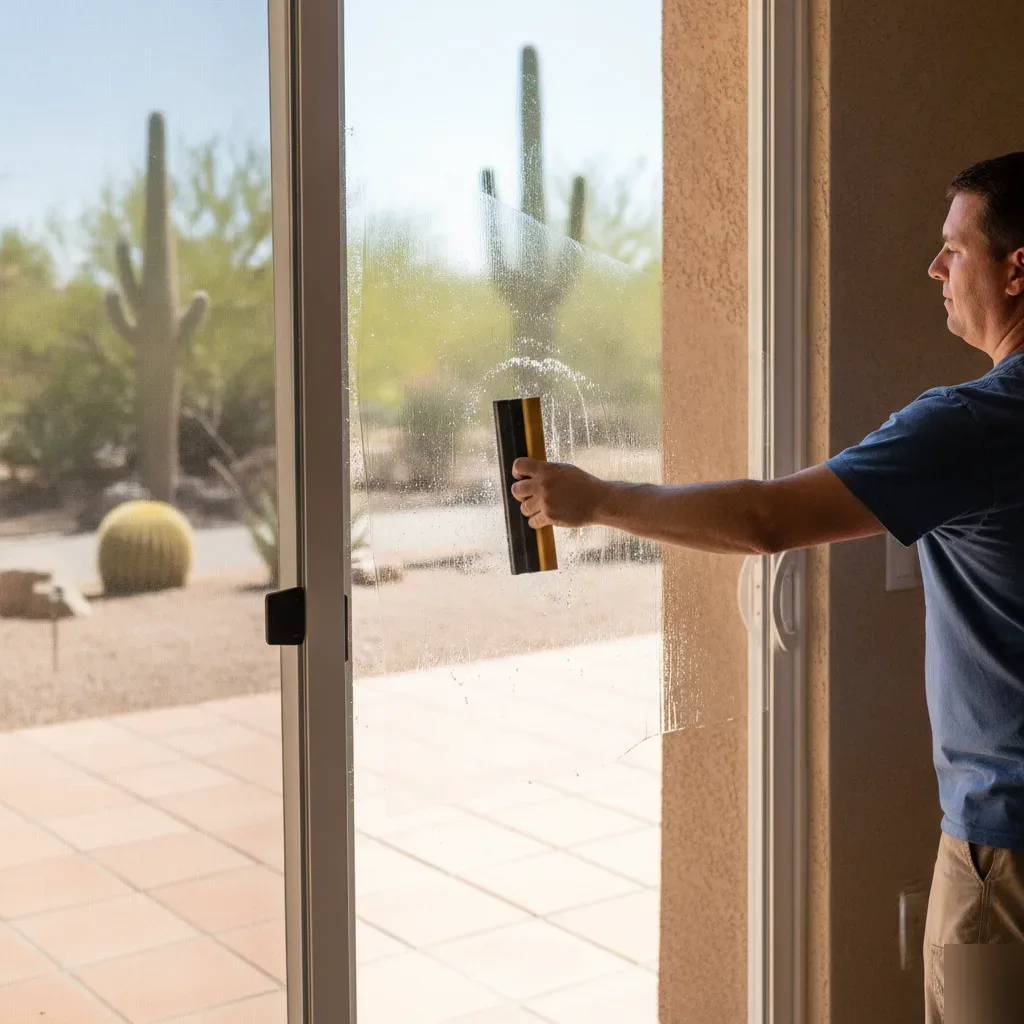
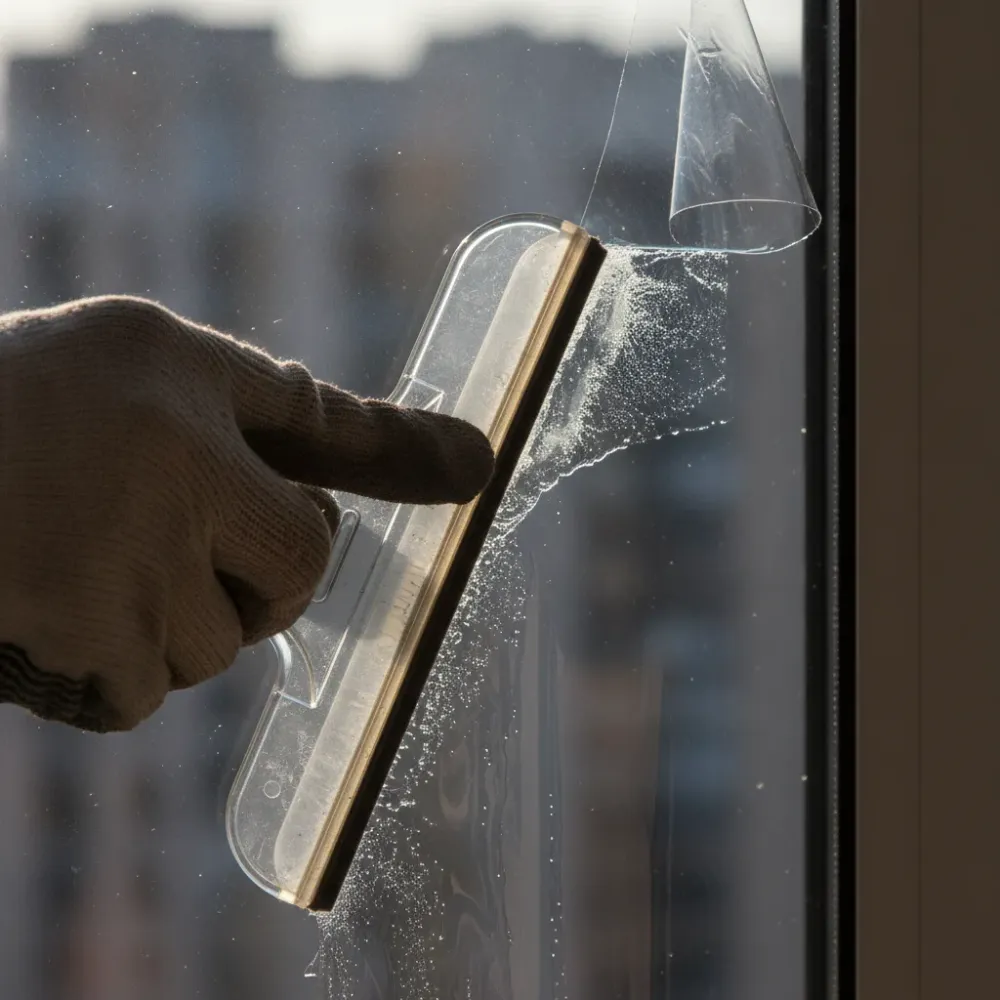
Installation itself happens entirely indoors, and no glass removal is required. Technicians clean each window thoroughly, trim the film to exact dimensions on-site, and apply it directly to the interior surface using a specialized adhesive and squeegee process to remove air bubbles and excess moisture. Most residential jobs are completed in a single day, though larger homes with many windows or sliding glass doors may take longer.
After installation, it’s normal to notice a hazy or slightly cloudy appearance, sometimes with visible moisture pockets between the film and glass. This is part of the curing process, not a defect. In Phoenix’s dry heat, curing often completes faster than in humid climates, but homeowners should still expect the haze to clear gradually over several days to a few weeks depending on window orientation and sun exposure.
Before hiring any installer, verify they are licensed, bonded, and insured. Arizona contractors performing this work should carry an active ROC license, such as ROC number 363904, which you can confirm directly with the Arizona Registrar of Contractors.
From your first message to the finished install — clear steps and no surprises.
01
Call, text, or send a form for a no-pressure conversation.
02
We review glass, goals, and the right film line for the space.
03
We book a time that works and perform a clean, professional install.
04
We stand behind the work and care about the long-term result.
Explore the rest of our specialty window film options.
Fully reflectivity on your windows and glass
Block the sun's harmful UV rays
Protect your family, employees, and customers
You can see out while nobody else can see in
Add style to your space with frosted tint
Customize your home or business
Protect your home or business from prying eyes
Unmatched style at a fraction of the cost
Protect your home or business from vandalism
Window protection from burglary or accidental damage
Cut window reflections that melt artificial turf
Common questions about Safety Window Tint
Most Phoenix installers can schedule a visit within a few days, and sooner during peak monsoon season when calls spike. If your glass already cracked, cover the area and keep people away from it until the appointment. Summer storms from June through September bring the highest demand, so booking early in the season means faster scheduling. If you’re calling after a haboob has already hit your neighborhood, mention the storm date so the crew can plan for extra glass on your visit.
The installer will first clean each window thoroughly, since dust and hard water spots are common on Phoenix glass and can trap air bubbles under the film. They’ll measure and cut the film on site, then apply it with a squeegee and heat gun to remove moisture and creases. Most homes with several windows are done in a single day. You won’t need to leave the house, but you should keep kids and pets away from the work area while the film cures.
Yes, and it happens every summer across the Valley. Wind gusts during haboob season regularly launch patio furniture, tree branches, and landscaping gravel into windows and sliding glass doors. Without safety film, that impact sends sharp shards across a room in seconds. With safety film installed, the glass still cracks, but the pieces stay bonded to the film instead of scattering. That’s a meaningful difference if kids or pets are nearby when the storm hits.
Check for a small etched logo in the corner of the glass, which usually indicates tempered or impact-rated glass. Newer builds in areas like Verrado, Eastmark, and Queen Creek often use this glass in doors and low windows to meet current codes. Tempered glass breaks into small, dull pebbles instead of sharp shards, so adding film there is often unnecessary. A quick inspection during a consultation can confirm what type of glass you already have before you spend money on film you may not need.
No, they’re built for different jobs. Safety window tint holds broken glass together after an accidental impact, like a storm or a stray ball, so shards don’t fly across a room. Security film is thicker, anchored into the window frame, and tested to resist forced entry attempts. If your main concern is deterring smash-and-grab break-ins at a storefront, ask specifically for security film rather than standard safety tint, since the two get mixed up in sales conversations.
Yes, safety film works well on existing storefront glass and doesn’t require replacing the windows. Storefronts along high-traffic corridors face daily risk from accidental impacts, delivery carts, and foot traffic bumping into large display panes. Applying film to that glass means a crack from an accident stays contained instead of spraying across a sales floor during business hours. Many storefront owners pair the safety layer with heat-reducing coatings at the same time to get added comfort from the same visit.
We’ll follow up with a clear next step, timeline, and pricing direction — with no pressure.
Licensed, Bonded, and Insured. ROC # 363904
(480) 913-5889
info@azmaxtint.com
Business hours
Every Day: 6:00 AM - 9:00 PM
Enter Your Information Below
Enter Your Information Below