

Can Window Film Crack Double-Pane Windows? Thermal Shock Explained for Arizona Homeowners
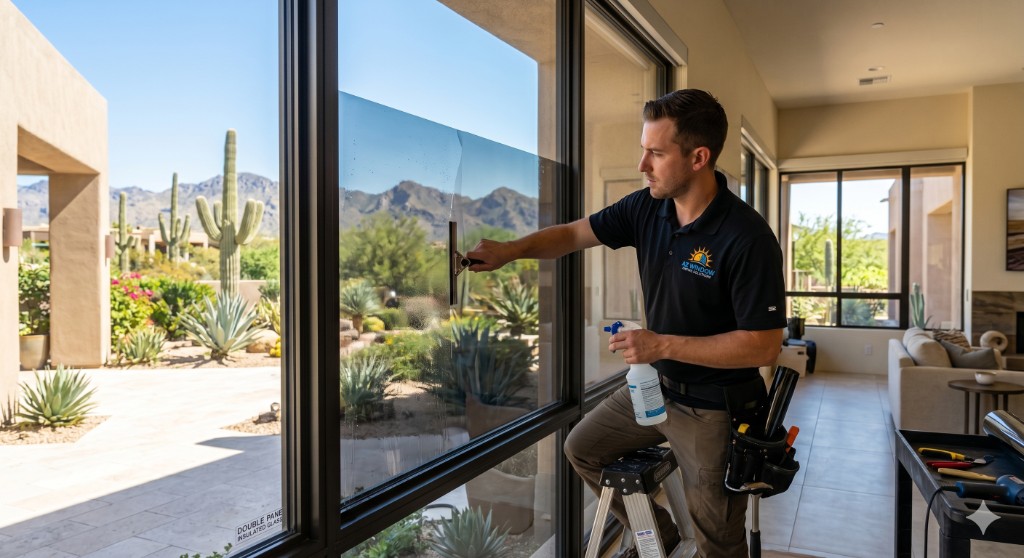
If you live in the Phoenix metro, you already know the summer routine: the AC runs around the clock, your blinds stay permanently shut, and your electricity bill climbs to a number you’d rather not think about.
Window tinting is one of the smartest investments you can make to fight back against the Arizona heat — but a common warning stops many homeowners dead in their tracks. Maybe you’ve read it in a forum, heard it from a neighbor, or stumbled across it in the fine print from your window manufacturer:
Window film can cause your glass to crack.
This is a real phenomenon called thermal shock, and it does happen — but only when the wrong type of film is installed. With the right film and a professional installation, tinting your double-pane windows is completely safe, highly effective, and one of the best upgrades you can make to your home.
Here’s everything you need to know before you commit.
What Is Thermal Shock, and Why Does It Matter?
Most modern homes in the Valley are built with Insulated Glass Units (IGUs) — two panes of glass sealed together with a small pocket of air or argon gas in between. That trapped gas acts as an insulating barrier, slowing heat transfer between the scorching outdoors and your conditioned interior.
Thermal shock occurs when a dramatic temperature difference develops between two areas of the same pane of glass. The center of the glass heats up rapidly while the edges — shielded inside the cool, shaded window frame — stay significantly cooler. Glass naturally expands as it heats, but when one section tries to expand while the adjacent section resists, the resulting stress can fracture the pane.
The telltale sign? Cracks that originate at the frame edge and radiate outward in a curved or wavy pattern.
The key word here is can. Thermal shock is a real risk with the wrong window film — but with the right film, it’s a non-issue.
The Real Culprit: Heat-Absorbing Window Films
Not all window films work the same way. The critical difference is how they handle solar energy: they either absorb it or reflect it.
Cheap dyed films and most off-the-shelf automotive tints are absorption-based. They soak up the sun’s energy and hold it in the glass itself. On a 115°F Arizona afternoon, this causes the glass temperature to skyrocket — exactly the conditions that lead to thermal fractures in double-pane windows.
These are the films that earned window tinting its scary reputation. And they’re still widely sold at big-box stores.
The Safe Options: Reflective and Ceramic Films
For double-pane windows in an extreme climate like ours, you need a film that redirects solar energy before it penetrates the glass.
Reflective films use microscopic metallic layers to act like a mirror, bouncing a significant portion of the sun’s energy away from the glass entirely. Because the heat never fully enters the first pane, glass temperatures stay within a safe range.
Ceramic window films are the gold standard for residential applications. Rather than metal layers, they use non-conductive ceramic nanoparticles to filter out infrared heat and UV radiation. The result is dramatic heat rejection — often blocking 50% or more of solar heat gain — without the mirrored, commercial look that many homeowners want to avoid. Your view stays clear. Your glass stays cool.
What About Your Window Warranty?
This is the question we hear most often, and it deserves a direct answer.
Major window manufacturers like Milgard, Pella, and Andersen typically include language in their warranties stating that aftermarket window film voids their coverage for glass breakage or seal failure. That blanket language exists to protect against DIY installations and low-quality films — not to prevent you from tinting your windows at all.
Here’s the good news: when you work with a licensed professional installer using premium film brands like SunTek, the film manufacturer’s warranty steps in to cover your glass and seals — matching the terms of your original window warranty. You don’t lose coverage; you simply transfer it to a product specifically designed to perform safely in your climate.
What a Safe Installation Actually Looks At
Arizona’s heat isn’t uniform, and neither are its homes. A professional assessment before installation accounts for several variables that directly affect safety and performance:
- Glass type. Standard annealed glass is more vulnerable to thermal stress than heat-strengthened or tempered glass. Knowing what’s in your home guides the film selection.
- Shade patterns. Counterintuitively, partial shade can increase thermal shock risk. If a tree or patio overhang puts half a window in deep shade while the other half bakes in direct afternoon sun, that single pane experiences two dramatically different temperatures simultaneously — a prime setup for stress fractures.
- Frame material. Vinyl, wood, and aluminum frames expand and contract at different rates. The right film choice accounts for how your specific frame interacts with heat.
- Window orientation. West-facing windows bear the brunt of late-afternoon sun in Arizona. East and south exposures have their own seasonal patterns. Orientation determines which rooms and which panes carry the most thermal risk.
The Bottom Line for Arizona Homeowners
Thermal shock is real, but it’s avoidable. The difference between a cracked window and a cooler, more comfortable home comes down to two things: using the right film and having it installed correctly.
DIY rolls from a hardware store are designed for cars, not homes — and they’re exactly the kind of high-absorption films that put double-pane glass at risk. Professional-grade ceramic films are engineered for residential applications in demanding climates, and they come with the warranties and track record to back it up.
At AZ Max Tint, we’ve been tinting windows across the Phoenix Valley for years. Before we recommend any film, we assess your glass type, shade patterns, frame construction, and sun exposure — because the best tint for your home isn’t the same as the best tint for your neighbor’s.
Ready to cut your cooling costs, eliminate glare, and protect your furniture from UV fading — without risking your windows? Contact AZ Max Tint today for a free estimate. We’ll take a close look at your windows and recommend the ceramic film solution that’s right for your home.
AZ Max Tint provides professional residential and commercial window tinting throughout the Greater Phoenix area, including Scottsdale, Mesa, Chandler, Gilbert, Tempe, and Peoria.