

A tagged storefront is a small problem the first time. It becomes an expensive one when you learn that the tag is not on the glass — it is in it.
Acid etching, scratch tagging, and certain paints do not clean off. They cut into the glass surface. Once that happens, the only remedy is replacing the pane, and on a modern commercial storefront that means a large tempered or insulated unit, a glazing crew, and a day with your frontage boarded up.
Anti-graffiti film exists to make sure the damage lands somewhere cheaper.
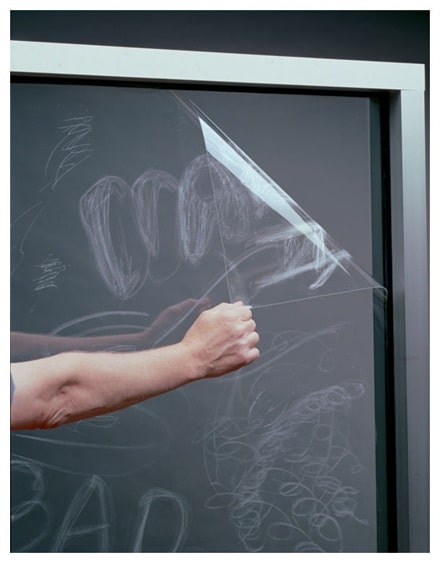
Anti-graffiti film is an optically clear layer bonded to the exterior face of your glass. It is deliberately the weakest element in the assembly, which is the entire design intent.
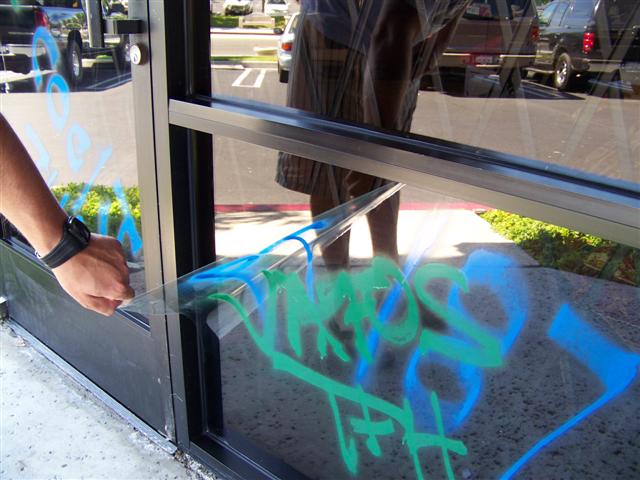
When someone etches, scratches, or paints the surface, they are working on the film. The glass underneath is untouched. Remediation is peeling the damaged panel off and applying a fresh one — typically a short visit rather than a glazing project.
This is the one category where film is intentionally disposable. LLumar notes in its architectural film documentation that window film is generally engineered for long-term installation with the exception of sacrificial anti-graffiti film. Everything else on your building is meant to last. This layer is meant to be replaced.
The business case is a straightforward comparison, and it turns on one variable: how often does your glass get hit?
On one side, replacing a damaged commercial pane means the glass itself, a glazing crew, and downtime with boarded or exposed frontage. On the other, replacing a film panel is a scheduled visit with no glazing work and no downtime.
We are not going to publish invented figures for either. Get a glazing quote for one of your actual storefront panes, then get a film quote for the same opening, then multiply by how many times you have been tagged in the last two years. If you have been hit once in five years, the film may not pay for itself. If you are cleaning tags off the same elevation every few months, the answer becomes obvious quickly.
The businesses that benefit most are the ones that already know their tagging frequency without having to look it up.
Tagging is not evenly distributed. Across Valley commercial property, the recurring targets share characteristics:
If your property matches several of these and you are already budgeting for graffiti removal as a recurring line, you are the case for this product.
Worth being clear, because this product is sometimes sold as more than it is.
It does not deter anyone. A tagger cannot tell it is there, which means it prevents nothing — it only changes what the damage costs you. It also is not a security product: it will not meaningfully slow a break-in. If glass entry is your concern, that is security window film, a different construction solving a different problem.
And it is not permanent. It is consumable by design. Budget for replacement panels the way you would budget for any wear item.
Most Phoenix storefronts need solar control film regardless, because west-facing commercial glass fades merchandise and creates glare through the busiest hours of the afternoon. That is covered in our piece on storefront and office film for glare and inventory protection.
When you are already treating the glass, adding an exterior sacrificial layer is an incremental decision rather than a standalone project. Similarly, businesses hardening glass against break-ins — see why high-risk Phoenix storefronts install security film first — often specify anti-graffiti on the exterior and security film on the interior of the same pane.
Scoping these together is generally cheaper than three separate mobilisations.
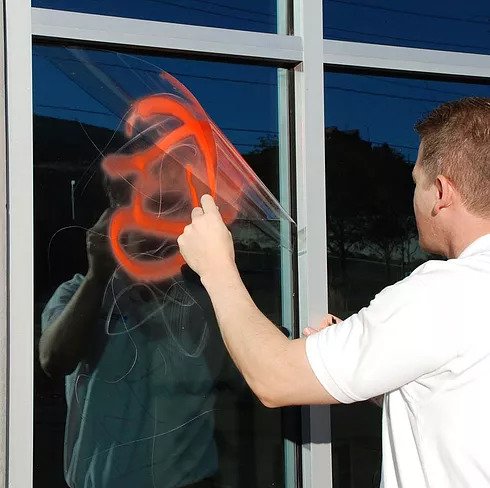
Anti-graffiti film is not glamorous and it does not prevent anything. What it does is guarantee that when your glass gets hit, you are replacing a film panel instead of a storefront window.
For a Phoenix business on a busy corridor that has been tagged more than once, that is usually a straightforward decision. For a business that has never had a problem, it is a reasonable thing to skip.
See anti-graffiti window tint, browse our commercial window tinting services, or request a free estimate. We will look at which elevations are actually getting hit and quote only those.
Home Window Tinting: The Underrated Upgrade That Pays You Back
Storefront & Office Window Film in Arizona: Cut Glare, Protect Inventory, and Improve Comfort
Enter Your Information Below
Enter Your Information Below