
Blog Article

Commercial Window Tinting in Arizona: How It Can Lower Cooling Costs

By AZ Max Tint
Arizona businesses do not have to wait for peak summer to feel the cost of glass. Storefronts, offices, restaurants, medical suites, salons, and showrooms can all look bright and professional from the curb, then become expensive to keep comfortable once the sun hits the windows.
If your space has hot zones near exterior glass, blinds that stay closed most of the day, employees avoiding certain workstations, or customers drifting away from sunny tables and waiting areas, the issue may not be your HVAC system alone. A large part of the cooling load can come from solar heat entering through untreated glass.
Commercial window tinting, also called commercial window film or solar control film, helps address that problem at the glass. It can reduce heat gain, soften glare, and protect interiors without requiring a full window replacement or major renovation.

Phoenix commercial buildings run cooling load about eight months of the year. For a Valley business with significant glass, that is not a seasonal expense — it is a structural one, and a large share of it comes in through the windows.

Quick Answer

Solar control window film reduces the heat entering through commercial glass, which lowers the cooling load your HVAC has to overcome. According to U.S. Department of Energy figures cited by LLumar, solar heat gain through windows accounts for roughly one third of a building’s cooling cost, and many film projects return their investment in three to five years. In Phoenix, where the cooling season is longer than almost anywhere in the country, that payback arrives at the faster end of the range.

Film is not a substitute for a failing HVAC system. It reduces the load that system has to fight.

Why Phoenix Commercial Glass Is a Different Problem

Phoenix averages roughly 111 days a year at or above 100°F, and over recent years has averaged around 40 days a year at 110°F or higher. Cooling demand here is not a summer spike; it is a baseline that runs from roughly March through October.

Three things make Valley commercial glass expensive to condition:

  • Glass-heavy construction. Office buildings, medical suites, and retail frontage built in the last few decades favor large glazed elevations. More glass means more solar gain per square foot of floor area.
  • West and southwest exposure. Low-angle afternoon sun hits vertical glass face-on between roughly 3 PM and sunset — the hottest part of a Phoenix day and, for most retail and office operations, a peak occupancy window.
  • Long peak-demand season. Utility demand charges are driven by your highest usage intervals. Reducing the afternoon cooling spike affects more than just consumption.

Both APS and SRP serve territory across the Valley with different rate structures and demand-charge treatment. Which utility serves your building is worth knowing before you scope a project, because it affects how savings actually show up on the bill.

How Window Film Reduces Cooling Demand

Solar energy arriving at glass is either reflected away, absorbed, or transmitted into the space. Untreated commercial glass transmits a great deal of it. Solar control film shifts that balance toward reflection, so less energy enters the building as heat in the first place.

The practical effects compound:

  • Less heat entering means less runtime for rooftop units
  • Shorter runtime means lower consumption and reduced wear
  • Reduced afternoon peak can affect demand charges, not just kilowatt-hours
  • More even interior temperature reduces thermostat wars and complaint volume

Which Phoenix Businesses See It First​

Film pays back fastest where glass area is high relative to conditioned floor space, and where west or south exposure dominates. In the Valley that typically means:
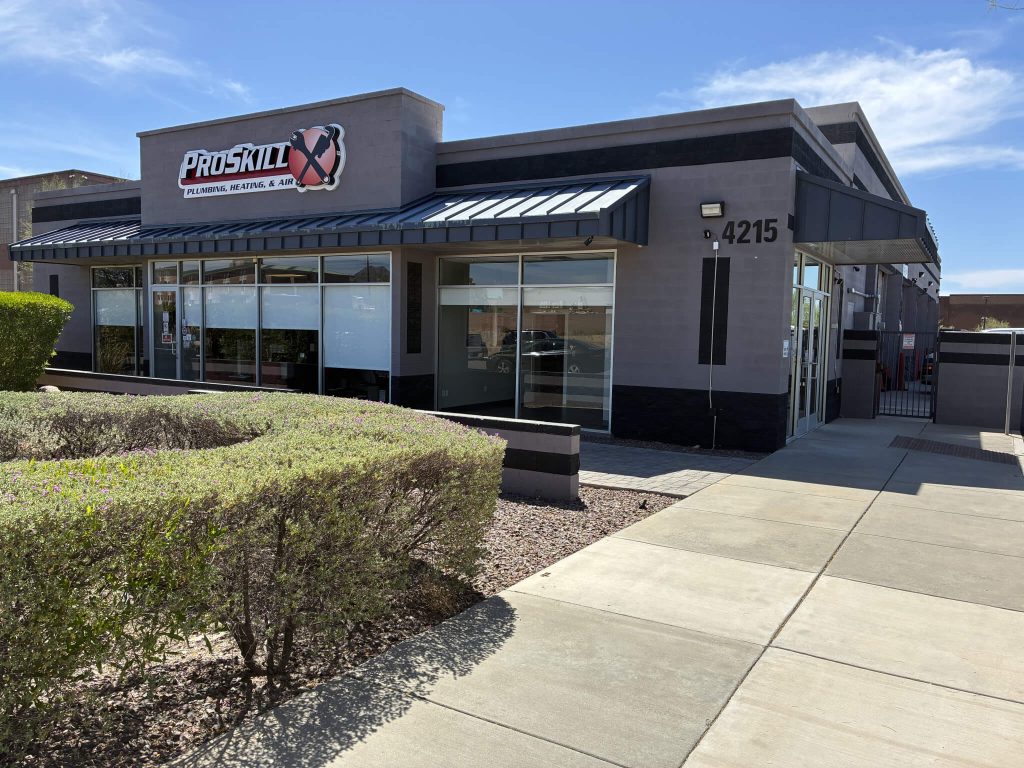
  • Medical and dental suites — waiting rooms with west glass, patient comfort expectations, and equipment loads already taxing HVAC
  • Professional offices — perimeter workstations where the window seat is unusable by afternoon
  • Retail and restaurants — glass frontage with all-day exposure and occupancy through the peak
  • Fitness and gyms — high internal heat generation compounding solar gain
  • Auto and service businesses — large showroom or bay glazing
UV blocking window tint on a Phoenix business storefront

The Best Film Is Not the Darkest Film

A common assumption is that heat rejection scales with darkness, so the darkest film must be the best one. That was true of dyed film. It is not true of modern architectural products.

Spectrally selective and ceramic films reject infrared energy while transmitting visible light. For a business, that distinction is commercially important: a retail space that goes dark loses display quality, and an office that goes dark starts burning more electricity on lighting, which partially cancels the cooling savings.

The right specification balances heat rejection against the light level your operation actually needs. Our breakdown of ceramic vs. carbon film covers how those tradeoffs work in practice.

What to Ask Before You Commit​

  • What is the glass type and construction on each elevation?
  • Which exposures carry the most load, and should they get different products?
  • What visible light transmission does the space need to stay functional?
  • What does the film manufacturer’s warranty cover, in writing?
  • Can installation be phased or done after hours to avoid disrupting operations?
  • Is our building served by APS or SRP, and does that utility offer commercial rebates for solar control film?

On that last point: LLumar notes that utility companies frequently offer rebates for solar control film installation, sometimes as a named measure and sometimes under a commercial “Custom Measures” category. Programs change, so verify current terms with your utility directly before building them into a business case.

Film vs. Window Replacement

Replacing commercial glazing solves the same problem and solves it permanently. It also costs a multiple of what film costs and takes the affected areas out of service while it happens.

Film upgrades existing glass at a fraction of replacement cost, installs without removing glazing, and can usually be scheduled around business hours. For most Valley businesses with structurally sound windows and a heat problem, film is the proportionate answer. If your glazing is failing — seal failure, fogging between panes, frame damage — that is a replacement conversation, and film is not the fix.

Where This Fits With Other Commercial Film Decisions

Cooling cost is one reason Phoenix businesses install film. It is not the only one, and the right product often addresses more than one goal at once.

If glare on screens and merchandise fading are the bigger day-to-day problems, that is covered in our piece on storefront and office window film for glare and inventory protection. If your concern is glass security rather than energy, see why high-risk Phoenix storefronts install security film first. Those are different products solving different problems, and scoping them together usually costs less than doing them separately.
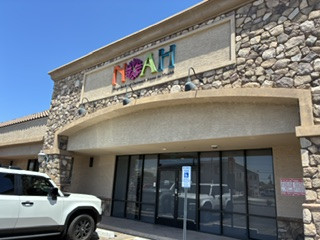
AZ Max Tint - Commercial Window Tint - Noah Storefront - UV Blocking Tint - Phoenix Arizona 3

What Should You Ask Before Choosing Commercial Window Film?

Before choosing a product, ask questions that connect performance to the way your business actually operates:
  • Will this film reduce heat enough for our worst windows?
  • How much visible light will it preserve?
  • Will it make the building look reflective, darker, or more neutral from the outside?
  • Is it compatible with our glass type?
  • Does the manufacturer warranty apply to this application?
  • Can the installation be scheduled around business hours, tenant access, or customer traffic?
Those questions matter because commercial film is not one-size-fits-all. The best recommendation for a west-facing restaurant can be different from the best recommendation for a professional office, storefront, or medical suite.

Where Commercial Film Usually Pays Off First

If you are deciding where to start, focus on the areas where solar heat creates the most operational friction.
High-priority zones often include:
  1. West-facing windows that receive intense afternoon sun
  2. South-facing glass with long daily exposure
  3. Customer seating or waiting areas that become uncomfortable
  4. Registers, reception desks, and workstations affected by glare
  5. Retail displays or inventory exposed to direct sunlight
  6. Large panes or glass doors that make one part of the space harder to cool
You do not always have to film every piece of glass at once. A phased approach can start with the worst exposures, then expand once you see how the building responds.

A Practical Checklist Before Requesting an Estimate

Before contacting an installer, walk your space during the hours when the problem is worst and make a short list.
Ask yourself:
  • Which windows create the most heat?
  • What time of day is the problem most noticeable?
  • Are employees, customers, or equipment affected?
  • Do blinds or shades stay closed most of the day?
  • Are there products, furnishings, or finishes near the glass that need protection?
  • Is the priority energy savings, comfort, glare reduction, privacy, appearance, or a combination?
This information helps the installer recommend film based on your real conditions instead of guessing from square footage alone.

Commercial Window Tinting vs. Window Replacement

Window replacement can improve building performance, but it is often expensive, disruptive, and unnecessary when the existing glass is structurally sound.
Commercial window film is usually a more practical first step because it works with the windows you already have. Installation is typically less invasive than replacement, and most businesses can continue operating with minimal disruption depending on scope, access, and scheduling.
For many Arizona businesses, the question is not whether new windows would perform better. The better question is whether a professionally installed film can solve the immediate heat, glare, and comfort problems at a fraction of the disruption.
AZ Max Tint - Storefront Window Tint - Commercial Window Film - Cosmo Pro 4

Is Commercial Window Tinting Worth It in Arizona?

Commercial window tinting is worth evaluating when direct sun is making a business harder to cool, harder to work in, or harder to present well to customers. The value is strongest when the same windows are causing several problems at once: heat, glare, fading, privacy concerns, and uncomfortable customer or employee areas.
The return is not only measured on the utility bill. A cooler reception area, a usable conference room, a more comfortable dining section, or protected merchandise near the windows can all affect how the business operates day to day.

When Security Film Should Be Part of the Conversation

Solar control film focuses on heat, glare, UV, and comfort. Security film is designed for a different purpose: helping hold broken glass together and slowing access after impact.
Some businesses need both conversations, especially street-facing storefronts, dispensaries, jewelry stores, pharmacies, salons, and other locations with valuable inventory or vulnerable glass. In those cases, it is smart to discuss solar performance and glass protection together instead of treating them as unrelated upgrades.

For more on that side of the decision, read our guide on security window film for high-risk storefronts.

AZ Max Tint - Commercial Window Tint - Aamco Car Care - Phoenix Arizona 2

Frequently Asked Questions

Does commercial window tinting really lower energy bills in Phoenix?

It lowers the cooling load your HVAC has to overcome by reducing solar heat gain through glass. DOE figures put solar gain through windows at roughly a third of a building’s cooling cost. Actual savings depend on glass area, orientation, existing glazing, film selection, and your utility rate structure.

Will window film make my business too dark?

Not unless you specify a dark film. Spectrally selective and ceramic products reject heat while transmitting most visible light. Retail and office spaces generally should not go dark, because lost display quality and added lighting load work against the savings.

Can film be installed while we stay open?

Usually yes. Film is applied to the interior surface with water-based solution and can typically be phased by elevation or floor. Larger commercial projects can be scheduled after hours. Discuss timing constraints when you book.

How long before we see savings?

Comfort improvement is immediate. Bill impact appears over full billing cycles and is clearest across a Phoenix cooling season. Industry figures commonly cite three to five year payback on commercial film projects, varying with energy rates and building specifics.

Is commercial window film only for storefronts?

No. Offices, medical suites, schools, government buildings, hospitality, and industrial facilities all use architectural film. Any conditioned space with significant glass is a candidate.

Ready to scope it? See commercial window tinting, browse the full specialty window film range, or request a free estimate. We will assess each elevation and tell you where film pays off first — and where it does not.

Build a Cooler, More Usable Business Space

Commercial window tinting can help Arizona businesses reduce solar heat gain, improve comfort, control glare, and protect interiors without changing the footprint of the building. The best results come from matching the film to the glass, the exposure, and the way the space is actually used.

AZ Max Tint is a family-owned window film company serving the Greater Phoenix area and Arizona by appointment. We are licensed, bonded, and insured, ROC #363904. We help business owners, property managers, and commercial tenants evaluate problem windows and choose film that fits the building, the glass, and the goals for the space.

Call or text (480) 913-5889 or request a quote online to schedule a commercial window film estimate.

Get A Fast FREE Estimate

Enter Your Information Below

Get A Fast FREE Estimate

Enter Your Information Below