Categories
Anti-Graffiti Film Commercial Window Tint Decorative Window Tint Frosted Window Tint Mirror Window Tint Residential Window Tint Safety Window Tint Security Window Tint Stained Glass Window Tint Storefront Window Tint UV Blocking Tint

5 Common Misconceptions About Window Tinting In Arizona

Blog Article

5 Window Tinting Myths That Cost Phoenix Homeowners Money

Ask ten people in the Valley about window tinting and you will hear the same handful of warnings. The film bubbles in the heat. It makes your house look like a limousine. It voids your window warranty. The installers make a mess and it is not really worth it anyway.

Some of that was true in 1995. Almost none of it is true now, and in a city that runs roughly 111 days a year at or above 100°F, believing it costs real money. Every summer a west-facing Phoenix living room goes untinted because of something a neighbor said, and the homeowner pays for it on the utility bill and in faded flooring.

Here are the five myths we hear most, plus a sixth that costs Phoenix homeowners more than all of them combined.

Myth #1: "Window Film Bubbles and Peels in Phoenix Heat"

This is the most persistent myth, and it comes from real experience — with products that have not been sold in decades. Early dyed films used adhesives that broke down under sustained UV exposure. In Phoenix they broke down faster than anywhere else. People saw purple, bubbled glass on 1980s storefronts and reasonably concluded that is what window film does.

Modern film is a different product. Manufacturers now use color-stable dye chemistries and metal or ceramic layers instead of the dyes that failed. LLumar addresses this directly in its architectural film FAQ, noting that purpling and bubbling indicate very low-grade film whose adhesive and dye components have broken down, and that its film carries a warranty against exactly that.

When film does fail early in Phoenix, the cause is almost always one of two things: a bargain product bought off a hardware store shelf, or a poor installation that trapped contamination under the film. Neither is a property of window film. Both are avoidable.

Window tint film rolls and squeegee tools on a Phoenix installer's work table

Myth #2: "Tinted Windows Look Dark and Obvious"

The mental image most people carry is limousine glass — near-black, mirrored, obviously aftermarket. That is one option out of many, and it is not the one most Phoenix homes get.

Film is specified by visible light transmission, and the range runs from nearly clear to fully opaque. Spectrally selective and ceramic films are popular precisely because they reject infrared heat while letting visible light through, so the room stays bright and the window looks essentially unchanged from the street.

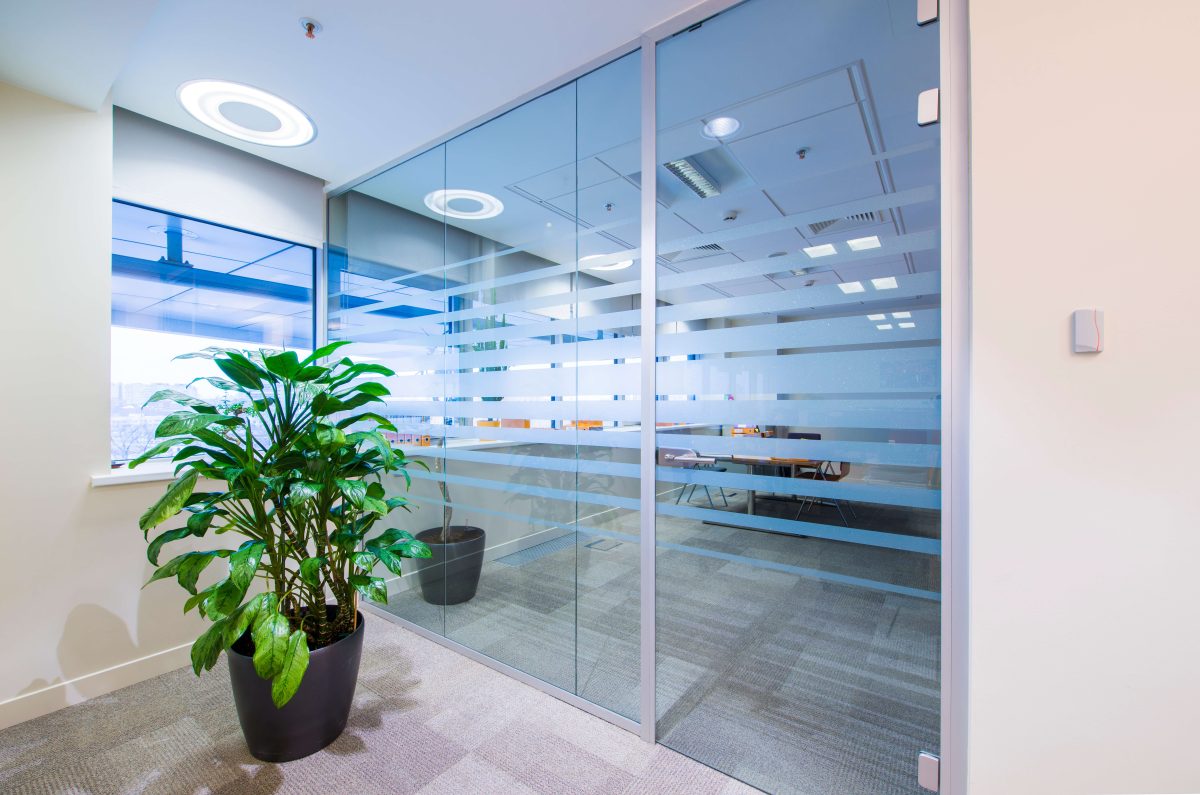
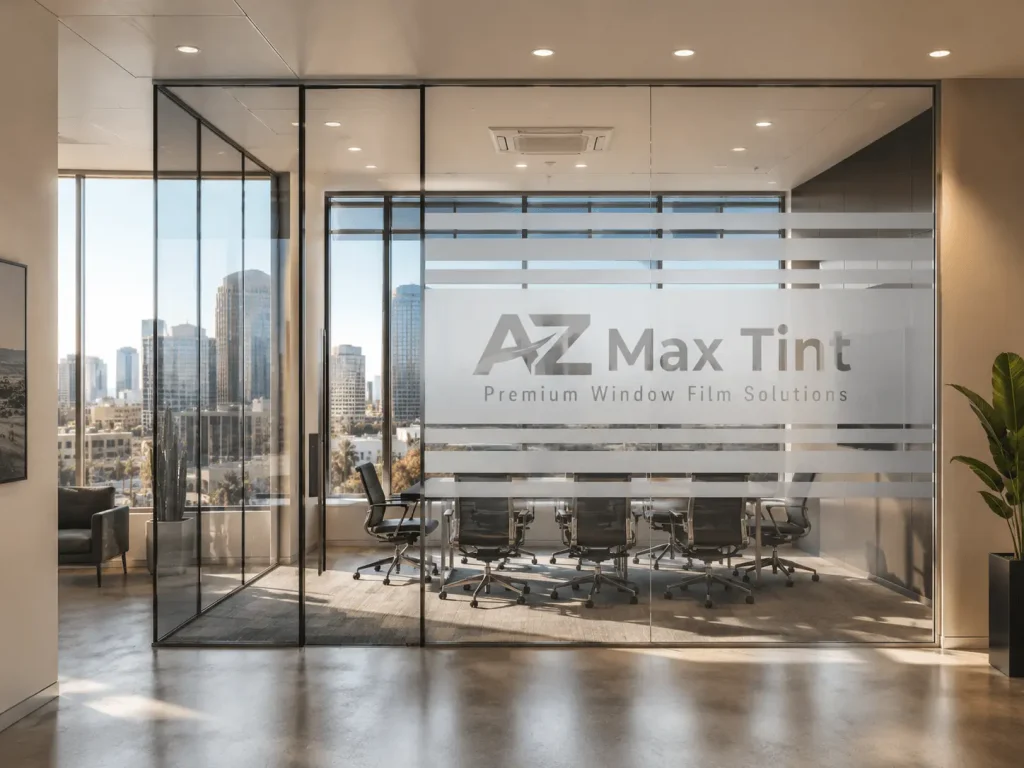
If you do want a visible change, that is available too — mirror window tint for exterior reflectivity and daytime privacy, or decorative and frosted film for patterned glass. The point is that appearance is a choice you make, not a side effect you accept.
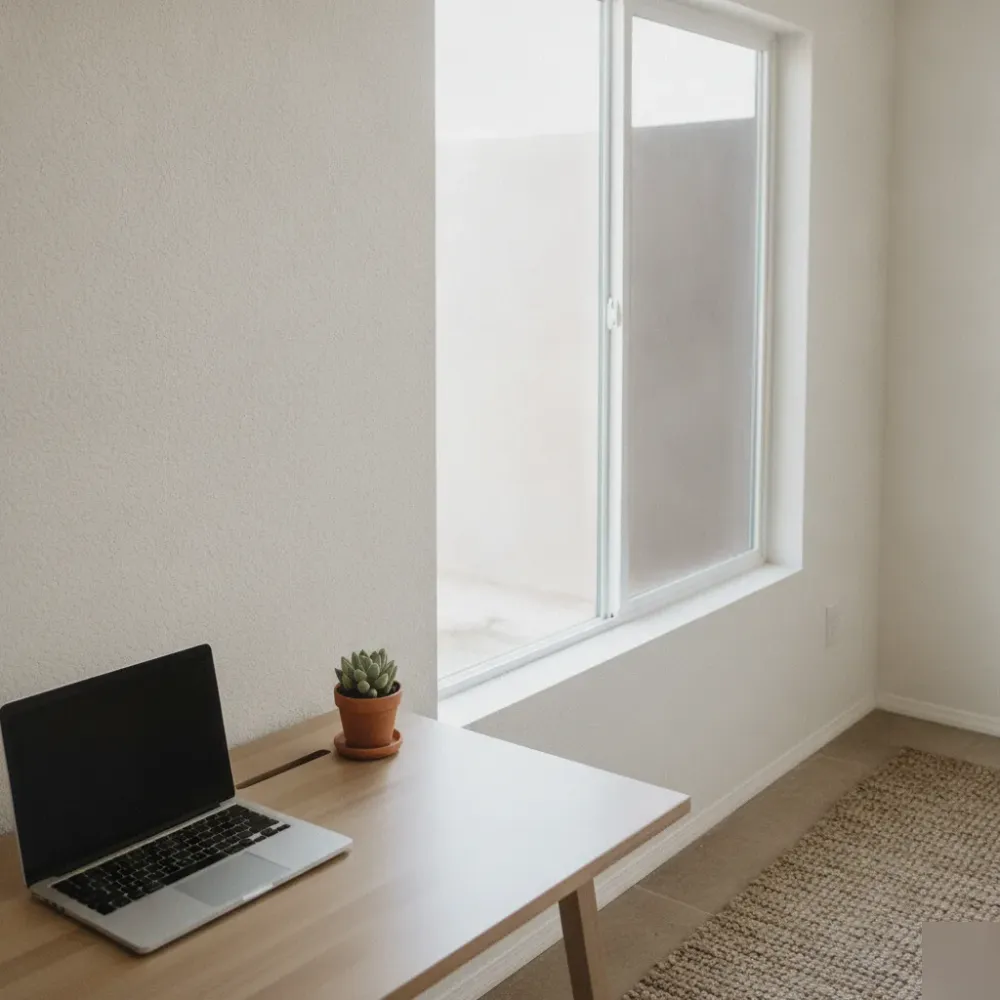
Finished tinted window in Phoenix home office showing reduced glare and even light

Myth #3: "Film Warranties Are Full of Loopholes"

The assumption is that a film warranty is marketing paper that evaporates the moment you try to use it. In practice, premium architectural film warranties from established manufacturers cover the specific failure modes people worry about: peeling, bubbling, crazing, delamination, and demetalizing.

The related worry — that film voids your window warranty — deserves a longer answer than fits here. Short version: most window manufacturers do exclude coverage once aftermarket film is applied, and when a licensed installer uses premium film, the film manufacturer’s warranty steps in behind the glass and seals. We covered the mechanics in detail in our piece on double-pane windows and thermal shock.

Before you hire anyone in the Valley, ask for the film warranty terms in writing. A company that cannot produce them is telling you something about the product they are about to put on your glass.

Myth #4: "Tinting Is a Luxury, Not a Necessity"

This one is climate-dependent, and Phoenix is where it falls apart.

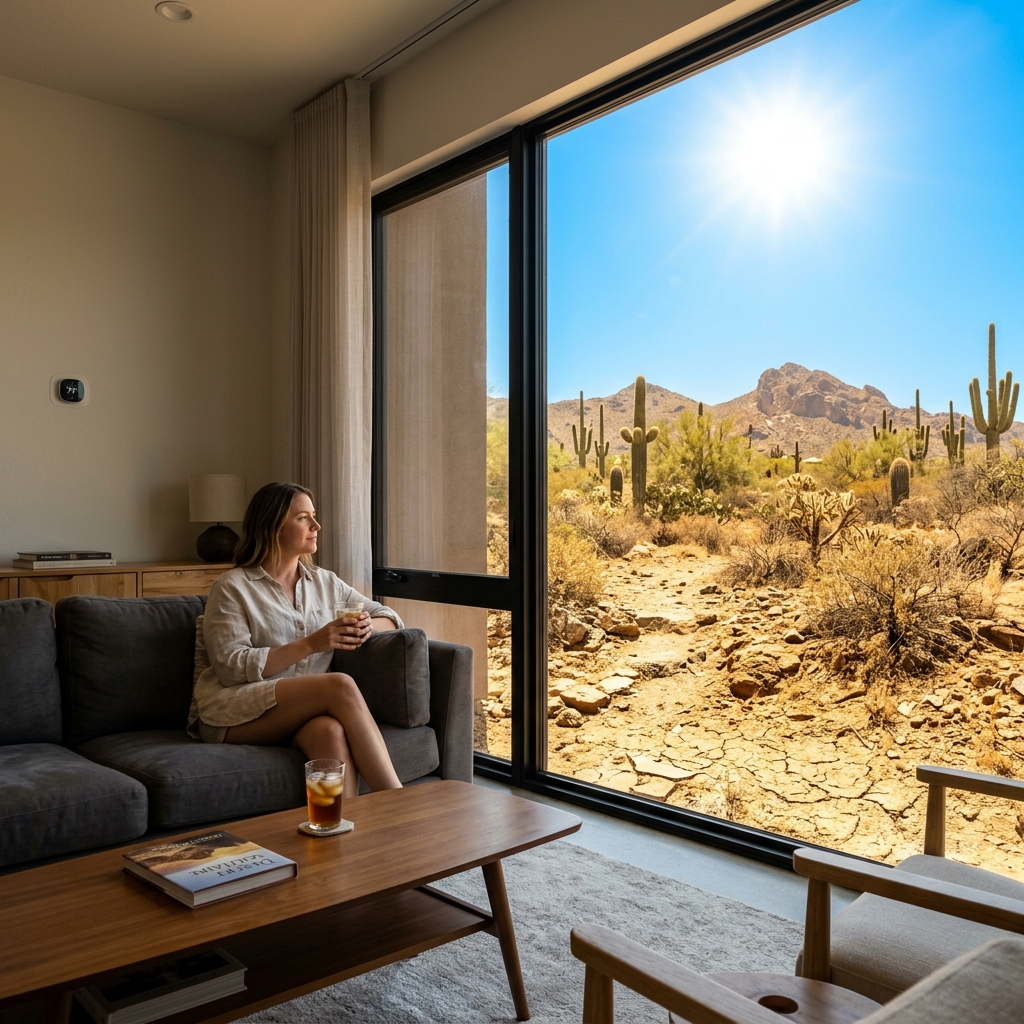
Start with UV. Glass blocks most UVB but transmits a great deal of UVA, which is what drives fading in flooring, furniture, and artwork. Solar control film blocks up to 99% of UV rays. In a city with this much sun exposure through this many windows, that is not a cosmetic concern — it is the difference between hardwood that holds its color and hardwood that develops a bleached stripe where the afternoon sun lands.

Then there is load. According to U.S. Department of Energy figures cited by LLumar, solar heat gain through windows accounts for roughly one third of a building’s cooling cost. Phoenix runs cooling load for about eight months a year. One third of eight months is a meaningful number on an APS or SRP bill.

If fading is your primary concern, UV window tint is the direct answer. If you want the full accounting of what film returns on a Phoenix home, we broke it down in this piece on what home window tinting actually returns.
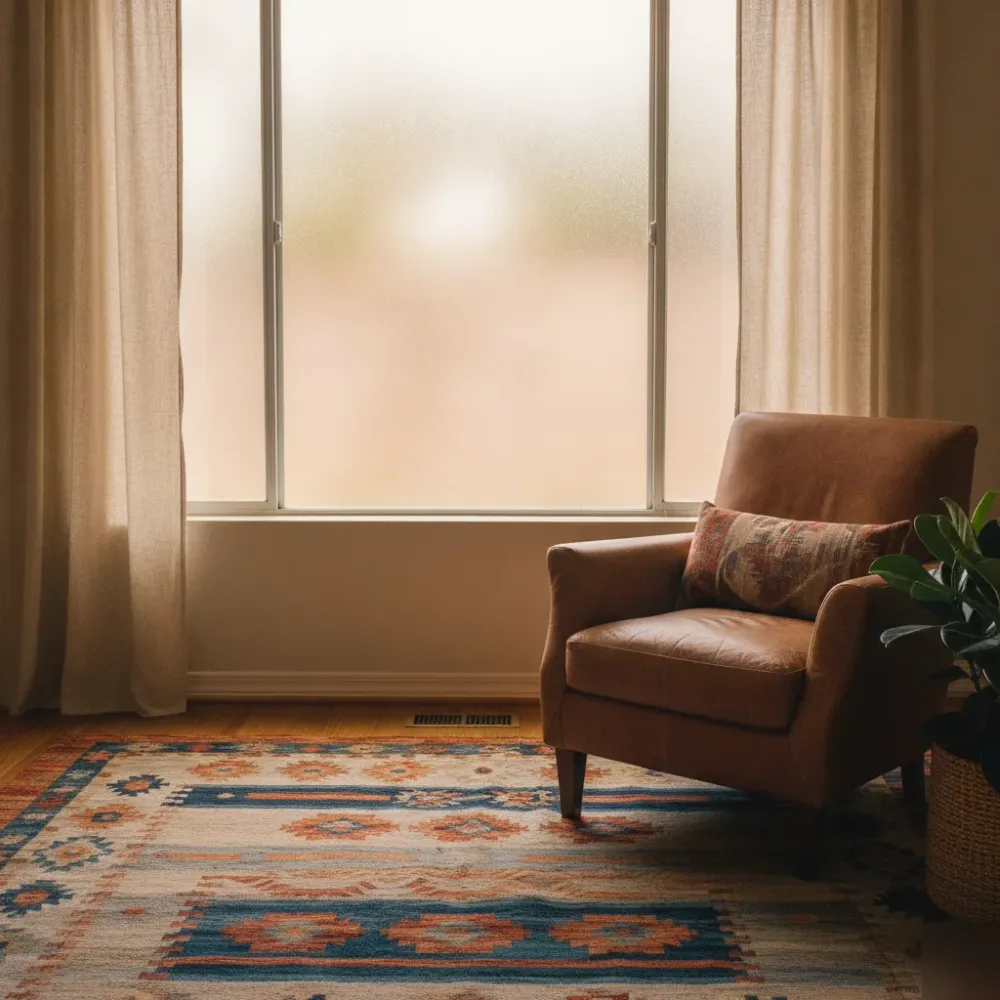
Completed UV window tint on living room window reducing glare in Phoenix home

Myth #5: "Installation Is Messy and Disruptive"

We will be honest about half of this one. DIY film installation genuinely is difficult and frustrating. Getting a large panel onto glass without creases, trapped water, or contamination takes practice most people do not have, and the failure rate is high.

Professional installation is a different process. Film is cut to the glass, applied with water-based solution, and squeegeed out. Most Phoenix homes are completed in a single day. You do not need to move out, empty rooms, or take time off beyond letting the installer in.

After installation there is a curing period. For a few days you may see slight haze or small water pockets as remaining moisture evaporates. This is normal and it clears on its own. Arizona’s dry air actually works in your favor here — curing tends to complete faster in the Valley than in humid climates.
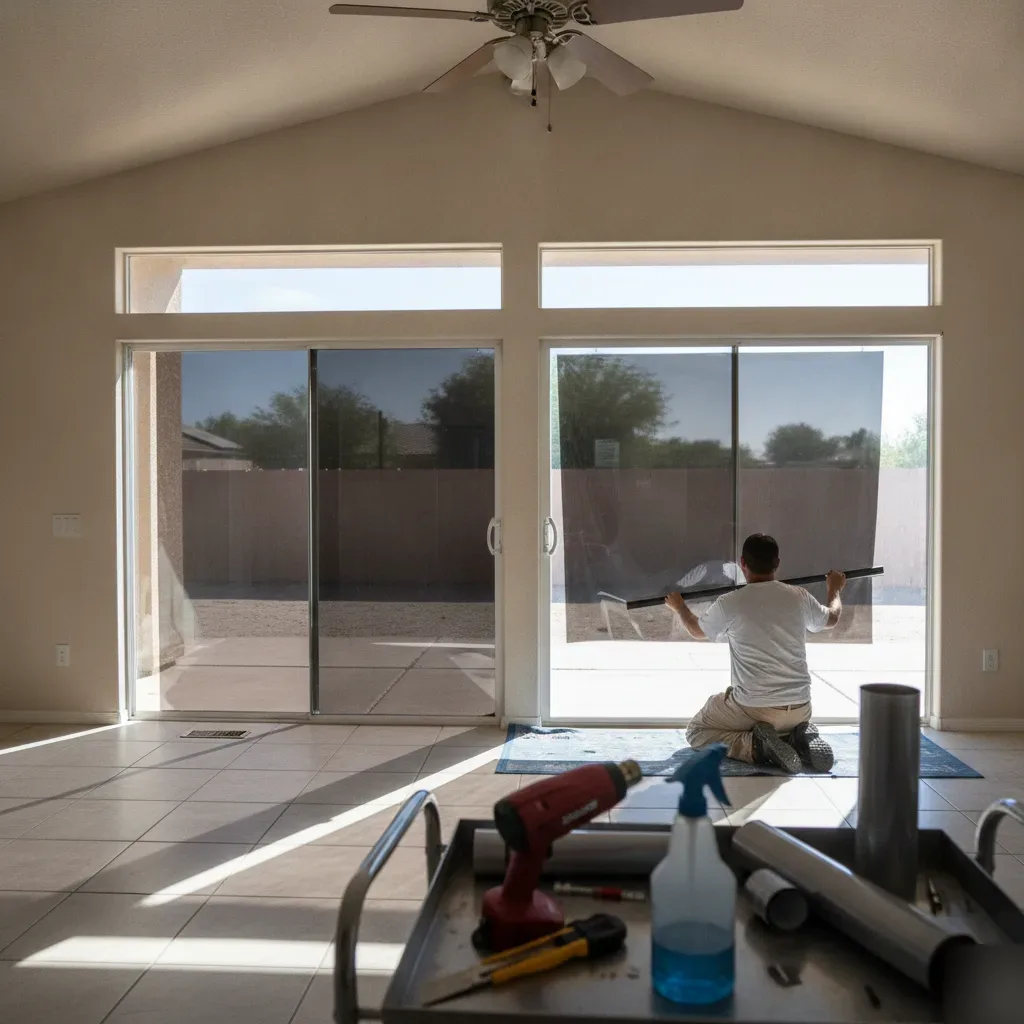
Technician installing window tint film on a Phoenix home's sliding glass door

Myth #6: "Only West-Facing Windows Need Film"

This is the one that costs the most, because it sounds sensible and it is half right.

West and southwest exposures do take the worst of a Phoenix afternoon. Low-angle sun from roughly 3 PM to sunset hits that glass face-on during the hottest hours of the day. If you only film part of the house, that is where you start.

But south-facing glass carries serious load through the shoulder seasons, and east-facing rooms bake in the morning — which matters if that is a bedroom or a home office. Meanwhile, a genuinely north-facing window in Phoenix often does not justify the cost at all.

The useful version of this rule is not “only tint west windows.” It is: a good estimate tells you which openings need film and which ones do not. Any installer who quotes every window in the house at the same specification without walking the property has not actually looked at your home.

The Bottom Line for Phoenix Property Owners

Nearly every myth on this list traces back to a real problem with a product that is no longer representative. Cheap dyed film failed. Early adhesives yellowed. DIY installs bubbled. Those things happened, and then the technology moved on while the reputation stayed put.

What has not changed is that the quality of the product and the quality of the installation determine the outcome. That is true everywhere, and it is true with less margin for error in a climate that puts glass through 110°F afternoons roughly forty days a year.

AZ Max Tint has been installing film across the Valley for over 30 years. Explore residential window tinting, browse the full specialty window film range, or request a free estimate and we will walk your home and tell you which windows actually need attention.

Frequently Asked Questions

Does window tint bubble in Arizona heat?

Quality film installed correctly does not bubble from heat. Bubbling comes from low-grade adhesive breaking down or from contamination trapped during installation. Small water pockets in the first few days after install are normal curing, not failure, and clear on their own.

Will window film make my Phoenix home dark?

Only if you choose a dark film. Ceramic and spectrally selective films reject infrared heat while transmitting most visible light, so rooms stay bright. Many homeowners find filmed rooms brighter in practice because they stop closing blinds against the heat.

Is window tinting worth it in Phoenix?

In a climate with roughly 111 days a year over 100°F and an eight-month cooling season, film addresses heat gain, UV fading, and glare simultaneously. It is most worth it on west and southwest exposures and least worth it on north-facing glass.

How long does window film last?

Premium architectural film is built for long-term installation. Actual lifespan depends on film type, glass type, exposure, and climate. Manufacturers back their products with factory limited warranties covering peeling, bubbling, and color failure.

Decorative & Frosted Window Film: Style Meets Function for Arizona Homes and Offices

About The Founder of AZ Max Tint

Categories
Commercial Window Tint Decorative Window Tint Frosted Window Tint Residential Window Tint

Decorative And Frosted Window Film Arizona Homes Offices

Blog Article

Decorative & Frosted Window Film: Style Meets Function for Arizona Homes and Offices

calendar_today


By AZ Max Tint

There is a specific Phoenix problem that blinds do not solve. A bathroom window that needs light but absolutely no visibility. A front door sidelight that shows anyone on the step your entire entryway. A ground-floor bedroom facing a neighbour’s window across a narrow side yard.

The default fix is a covering — blinds, a shade, frosted spray, or in the worst case a piece of furniture pushed in front of the glass. All of them trade daylight for privacy, which in a house full of natural light is a poor bargain.

Decorative and frosted window film separates the two. You keep the light and lose the sightline.


AZ Max Tint - Frosted Decorative Logo - Phoenix AZ (1)

What Decorative Window Film Is

Decorative film is an adhesive-backed layer applied to the interior surface of glass to change how it looks and how much you can see through it. It ranges from a light etched-glass look to fully opaque, and includes frosted, patterned, gradient, textured, and stained-glass effects.

The important distinction from solar film: decorative film is chosen primarily for appearance and privacy rather than heat rejection. Some products do both. Many do not. If your goal is a cooler west-facing room, that is a different product — see residential window tinting.

Where It Solves Real Problems in Phoenix Homes

Bathrooms and showers

The classic case. A bathroom window needs daylight and total privacy simultaneously, and glass shower enclosures need the same thing without making the space feel like a box. Frosted film handles both, and unlike a permanent obscured-glass replacement it can be changed later.

Entry sidelights and door glass

Sidelights are a security and privacy weak point in a lot of Valley homes — they show the entryway, the alarm panel, and whether anyone is home. Frosted or patterned film obscures the view while keeping the entry bright. Stained glass film is a common choice here because it reads as an intentional design feature rather than a privacy measure.

Street-facing and ground-floor windows

Phoenix subdivisions frequently place homes close to the sidewalk and to each other. A gradient film — opaque at the bottom, clear at the top — blocks the sightline at standing height while leaving the upper glass open for light and sky.

Home offices and media rooms

Rooms where you want diffused, even light and no glare on a screen. Frosted film scatters incoming light rather than blocking it, which softens the hard afternoon contrast without darkening the room.

Interior glass and closet doors

Not every application is on an exterior window. Interior partitions, pantry doors, and closet glass are common places to use decorative film purely as a finish.


AZ Max Tint - Commercial Tint - Frosted Window Tint - Decorative Tint - Phoenix

Decorative Film vs. Etched or Obscured Glass

Real etched or acid-obscured glass is permanent, expensive, and requires replacing the pane. Film achieves a comparable look at a fraction of the cost, on your existing glass, and it is reversible.

That reversibility matters more than people expect. Tastes change, houses get sold, and a bathroom you frosted for one purpose may need something different later. Film can be removed without damaging the glass, even after years in place — LLumar notes that film is designed for durability but removable without damaging the glass beneath.

At close range, high-quality frosted film and true etched glass are difficult to distinguish.

Choosing the Right Film for Your Space

Start with the actual goal

“Privacy” is not specific enough. Do you need to block the view completely, or just obscure detail? From outside only, or both directions? During the day, or at night as well? Those answers point to different products.

Decide on light transmission

Frosted films range from lightly translucent to fully opaque. A bathroom can usually take a denser film than a home office, where you still want usable working light.

Know your glass

Film has to be matched to the glass it is going on. Single-pane, double-pane, and low-E coated units behave differently, and installers work from compatibility guidance rather than applying one product everywhere. On insulated units this matters — see double-pane windows and thermal shock.

Check your HOA

Many Valley master-planned communities have architectural provisions covering anything that changes exterior appearance. Interior-applied frosted film on a bathroom window is rarely an issue; a patterned or reflective treatment on a prominent front elevation can be. Check before installation.

Consider whether you also need heat control

If the window in question is west-facing, you may be solving two problems. Some decorative films offer solar performance; many do not. Say so up front and the specification can account for it.

AZ Max Tint - Frosted Tint - Commercial Window Tint - Phoenix

A Note on Night-Time Privacy

Worth stating plainly, because it is the most common misunderstanding.

Reflective and one-way films work on a light differential: they obscure the view from whichever side is darker. During the day that is the outside looking in. After dark with interior lights on, it reverses, and the film provides little privacy.

Frosted and opaque decorative films do not have this limitation — they diffuse light in both directions at all hours. If night-time privacy is the requirement, that points to frosted or opaque rather than reflective. Related options: privacy window tint and one-way window tint.

Installation and DIY

Frosted film is less forgiving than solar film, because its opacity makes every flaw visible. A trapped speck of dust or a crease that would disappear under clear film shows as a permanent mark on a frosted panel. Pattern alignment across multiple panes is also harder than it looks.

Professional installation is typically completed in hours for a handful of openings, with a short curing period afterwards during which slight haze is normal.

Add Privacy Without Losing Your Daylight

Request a free estimate and we will look at the specific openings you are trying to solve. Running a business? See our companion piece on decorative and frosted film for Phoenix offices and commercial spaces.

Categories
Commercial Window Tint Residential Window Tint Storefront Window Tint UV Blocking Tint

window tinting arizona summer is it too late

Blog Article

It's 115°F Outside — Is It Too Late to Tint Your Windows This Summer?

By AZ Max Tint

It is 115°F outside, your west-facing rooms have been unusable since May, and you have finally started looking into window tinting. Then the doubt arrives: is it too late? Should you wait until things cool down and do it properly in the spring?

No. Summer is a perfectly good time to install window film in Phoenix, and waiting until spring costs you an entire cooling season for no benefit.

But “when should I tint” is a fair question with a real answer, and it is not the same answer everywhere. Here is how timing actually works in the Valley.

Residential window tint protecting a Phoenix living space from UV fading

The Short Answer: The Best Time Is Whenever You Decide

Window film is applied to the interior surface of your glass, in your conditioned home. Outdoor temperature has very little to do with the installation.

There is no seasonal window you have missed, no weather requirement you are failing to meet, and no performance penalty for a July install versus a February one. The only real timing considerations in Phoenix are scheduling and curing, both covered below.

If there is a genuinely optimal time, it is late winter into early spring — not because the film performs better, but because installers are less booked and you get the full cooling season ahead of you rather than half of it. That is a scheduling advantage, not a technical one.

Why Summer Installation Works Fine

The install happens indoors

Film is cut and applied on the inside face of the glass with a water-based solution. Your installer is working in your air conditioning, not on a roof. The 115°F outside is irrelevant to the process.

You start saving on day one

Film begins rejecting solar heat the moment it is on the glass. Install in July and you get the benefit for the remainder of a Phoenix cooling season that typically runs into October. Wait until March and you have paid for a full extra summer of heat gain and UV damage to get the same product.

The difference is noticeable quickly

In a home with significant west glass, the comfort change in the affected rooms is usually apparent within days. Utility impact takes a full billing cycle or two to read clearly, since it depends on weather, occupancy, and thermostat behaviour.

AZ Max Tint - Residential Window Tint 4

"Won't the Heat Damage the Film?"

This concern usually traces back to seeing bubbled, purpled film on older Valley buildings. That was low-grade dyed product whose adhesive and dye components broke down under sustained UV.

Premium architectural film is engineered for exactly this climate. LLumar notes that purpling and bubbling are signs of very low-grade film and warrants its products against that failure. Heat during installation is not what causes it; product quality and installation quality are.

Curing in Arizona: Faster Than Most Places

This is the one genuinely climate-specific part of the answer, and it works in your favour.

After installation, a small amount of mounting solution remains between film and glass and has to evaporate. During that period you may see slight haze or small water pockets. This is normal curing, not a defect, and it clears on its own.

Curing time varies with weather, glass type, and product. In humid climates it can drag out. Phoenix’s dry air and warm glass temperatures tend to shorten it considerably — the same summer heat people worry about actually speeds this step up.

The practical guidance during curing: do not clean the filmed surface, and do not press or poke at water pockets. Let it finish.

Scheduling Reality in the Valley

The honest constraint on summer installation is not weather. It is demand.

Phoenix window film demand tracks the thermometer. Enquiries climb from late spring, peak through the hottest part of summer when everyone reaches the same conclusion at once, and fall off in autumn. Lead times follow that curve.

What that means for you:

  • Booking in peak summer may mean waiting longer for a slot. Call earlier than you think you need to.
  • Autumn and winter generally have the shortest lead times and the most scheduling flexibility.
  • Monsoon season does not stop interior work, though it occasionally affects access and travel.
AZ Max Tint - Residential Window Tint 3

What Waiting Actually Costs

Deferring from July to next spring is not a neutral decision. Over those months:

  • Cooling load continues. Solar heat gain through windows accounts for roughly a third of a building’s cooling cost, and Phoenix keeps cooling for about eight months.
  • UV damage accumulates and does not reverse. Flooring, furniture, and artwork fade permanently. Every additional summer of exposure is damage you cannot undo later.
  • Rooms stay unusable. That is square footage you are paying for and not using.

Which Windows to Do First

If budget means phasing the work, sequence it by exposure rather than by room:

  1. West and southwest glass. Low-angle sun hits these face-on from roughly 3 PM to sunset, the hottest hours of a Phoenix day. Largest single improvement.
  2. South-facing glass. Significant load, more seasonally variable.
  3. East-facing glass. Morning heat — matters most for bedrooms and home offices.
  4. North-facing glass. Usually the lowest priority in Phoenix and often not worth filming at all.

Also prioritise any room with flooring, artwork, or furniture you care about, regardless of orientation — UV window tint addresses that specifically.

What About Double-Pane Windows?

Most Valley homes built since the 1990s have insulated glass units, and there is a real consideration here: film selection has to match the glass. Heat-absorbing films can raise glass temperature on insulated units in high-exposure positions.

This is manageable and routine, not a reason to skip film — but it is a reason to use a professional who identifies your glass before quoting a product. We covered the mechanics in can you tint double-pane windows.

What to Expect From the Process

  • Assessment — glass type, exposure, shading, and what each room needs. This determines which film goes where.
  • Installation — interior application, most homes complete in a single day.
  • Curing — a few days of possible haze or water pockets, clearing on its own, typically faster in Arizona’s dry air.
  • Aftercare — normal glass cleaning. Avoid abrasive pads and harsh chemicals on the film surface.

The Bottom Line

There is no bad month to tint windows in Phoenix. Late winter and early spring give you shorter lead times and a full season of benefit ahead, which makes them the best time if you are planning in advance.

But if it is 115°F right now and you are staring at a room you cannot use, the answer is not to wait eight months. It is to book the west elevation.

See our residential window tinting services, compare ceramic and carbon films, read about what tinting actually returns, or request a free estimate. Running a business rather than a household? See commercial window tinting.

Decorative & Frosted Window Film: Style Meets Function for Arizona Homes and Offices

Ceramic vs. Carbon Window Film: Which Is Right For Your Property

Categories
Commercial Window Tint Residential Window Tint UV Blocking Tint

Ceramic vs Carbon Window Film Property

Blog Article

Ceramic vs. Carbon Window Film: Which One Survives a Phoenix Summer?

By AZ Max Tint

If you have started shopping for window film in the Valley, you have run into this choice. Carbon costs less. Ceramic costs more. Every installer has an opinion, and most of them sell you the one they stock.

Both are legitimate products and both are a large improvement over the dyed film they replaced. The question is not which is better in the abstract. It is which one earns the price difference on your glass, in a climate that puts windows through 110°F afternoons about forty days a year.

Short answer: carbon film is a solid mid-tier choice that rejects heat well and never fades. Ceramic rejects substantially more infrared heat at the same visible light level, does not interfere with signal, and handles extreme exposure better. In Phoenix, the gap between them is widest on west and southwest glass — which is exactly where most of your heat load lives.

Carbon Window Film: The Durable Baseline

Carbon film suspends carbon particles in the film layer rather than using dye or metal. That construction gives it two properties that matter.

First, it does not fade. The color is structural, not a dye that breaks down under UV, so carbon film will not turn purple the way cheap dyed film does. Second, it contains no metal, so it does not interfere with cell signal, Wi-Fi, or garage door remotes.

Carbon rejects heat primarily by absorbing infrared energy and giving it a matte, non-reflective finish that many homeowners prefer aesthetically. For north- and east-facing glass in Phoenix, or for a homeowner working to a fixed budget who wants meaningful improvement across the whole house rather than premium film on two windows, carbon is a genuinely sensible answer.

Where carbon has limits

Because carbon works partly by absorption, it holds more solar energy in the glass than a reflective or ceramic product does. On most windows this is a non-issue. On a double-pane unit facing directly into a Phoenix afternoon, glass temperature matters more than it does elsewhere — which is the subject of our piece on double-pane windows and thermal shock. Film selection on insulated glass should always be matched to the specific unit.

AZ Max Tint - South Mountain - High Lite 70 Panorama - $10 Million Home - UV Blocking Film - Home Window Tint 1

Ceramic Window Film: The Phoenix Default

Ceramic film uses non-conductive ceramic nanoparticles instead of dye, carbon, or metal. The particles filter infrared radiation — the part of sunlight you feel as heat — while allowing visible light through.

That separation is the whole value proposition. With dyed film, cutting heat means cutting light: you get a darker room. With ceramic, you can reject a large share of solar heat while keeping a window that still looks like a window. For a Phoenix homeowner who wants their great room to stop feeling like a greenhouse without turning it into a cave, that is the entire point.

What ceramic gets you that carbon does not

  • Higher infrared rejection at the same visible light transmission. More heat out, same brightness in.
  • Better performance on extreme exposure. The gap widens as sun load increases, which is why it shows up most on west and southwest glass.
  • No signal interference. Ceramic is non-conductive, same as carbon and unlike metalized film.
  • Excellent UV filtering. Quality solar control film blocks up to 99% of UV rays, the primary driver of fading in floors, furniture, and art.

If fading is the specific problem you are solving rather than heat, look at UV window tint directly.

Completed UV window tint on living room window reducing glare in Phoenix home

Carbon vs. Ceramic: The Honest Comparison

  • Heat rejection: Ceramic wins, and wins by more as exposure increases.
  • Clarity at a given darkness: Ceramic wins. Carbon needs to go darker to reach the same heat performance.
  • Fade resistance: Both are stable. Neither purples.
  • Signal interference: Tie — neither contains metal.
  • Appearance: Preference. Carbon has a matte finish some homeowners specifically want.
  • Price: Carbon wins.
  • Absorption behavior on insulated glass: Ceramic is the safer default on double-pane units in high-exposure positions.

Manufacturers publish compatibility guidance for matching film to glass type, and professional installers work from glass compatibility references rather than applying one product everywhere.

The Phoenix Decision: Where You Live Changes the Answer

This is where most comparison articles stop being useful, because the right answer depends on your specific house.

Older Valley homes with single-pane glass

Plenty of Phoenix housing stock from the 1960s through the 1980s still has single-pane glass in aluminum frames. Aluminum conducts heat straight into the glass edge, and single-pane offers no insulating gas layer at all. These homes see the largest absolute comfort improvement from film of any category, and ceramic on the west elevation typically delivers the most noticeable change per dollar.

Newer construction with low-E double-pane

Homes built or re-windowed in the last fifteen years usually have low-emissivity coated double-pane units. Film still adds value here, particularly for glare and UV, but the coating type and its position inside the insulated unit determine which products are appropriate. This is a case where the glass genuinely needs to be identified before a product is quoted.

Orientation drives the budget

West and southwest glass takes low-angle direct sun from roughly 3 PM to sunset, during the hottest hours of a Phoenix day. South exposure shifts seasonally. North-facing glass often does not justify premium film at all. A sensible spec for many Valley homes is ceramic on west and south, carbon on east, and nothing on north — which costs less than filming everything in one product and performs better.

AZ Max Tint - South Mountain - High Lite 70 Panorama - $10 Million Home - UV Blocking Film - Home Window Tint 2

So Which Should You Choose?

Choose carbon if

  • Your priority glass faces north or east
  • You want whole-home coverage on a defined budget
  • You prefer a matte, non-reflective finish
  • Heat is a moderate annoyance rather than the reason you are calling

Choose ceramic if

  • You have significant west or southwest glass
  • You want maximum heat rejection without darkening the room
  • You are protecting flooring, art, or furniture from fading
  • You have double-pane units in high-exposure positions
  • You intend to stay in the home and want the longer-horizon result

If you are still weighing whether film is worth doing at all, our piece on the myths that stop Phoenix homeowners from tinting covers the objections we hear most.

Healthcare Facility Window Film - Commercial Window Film - Ceramic Tint

Frequently Asked Questions

Is ceramic window film worth the extra cost in Phoenix?

On west and southwest exposure, generally yes — that is where the performance gap between ceramic and carbon is largest. On north-facing glass the difference is small enough that carbon is often the better value. The honest answer depends on which windows you are filming.

Does ceramic film block more heat than carbon film?

Yes. At the same visible light transmission, ceramic rejects more infrared energy. To match ceramic’s heat performance, carbon generally has to go darker, which means a dimmer room.

Will either film crack my double-pane windows?

Not when the film is matched to the glass. Thermal stress risk comes from heat-absorbing films on insulated units in high-exposure positions. Ceramic and reflective products redirect solar energy rather than storing it in the pane, which is why they are the standard choice for double-pane glass in Phoenix.

Do carbon or ceramic films interfere with cell signal?

Neither does. Both are non-metallic. Signal interference is associated with metalized films, which use conductive metal layers.

How long does architectural window film last?

Premium film is engineered for long-term installation, with lifespan depending on film type, glass type, exposure, and climate. Manufacturers back their products with factory limited warranties against peeling, bubbling, and color failure.

Whether ceramic or carbon is right for your property, the specification should follow from your glass, your exposure, and your goals. See our residential window tinting and commercial window tinting services, browse the full specialty window film range, or request a free estimate and we will walk the property and tell you exactly which film belongs on which opening.

Get A Fast FREE Estimate

Enter Your Information Below

Get A Fast FREE Estimate

Enter Your Information Below