Categories
Decorative Window Tint Frosted Window Tint Stained Glass Window Tint

Decorative Window Film in Phoenix: Frosted vs. Etched vs. Patterned vs. Stained Glass

Blog Article

Decorative Window Film in Phoenix: Frosted vs. Etched vs. Patterned vs. Stained Glass
calendar_today
By AZ Max Tint
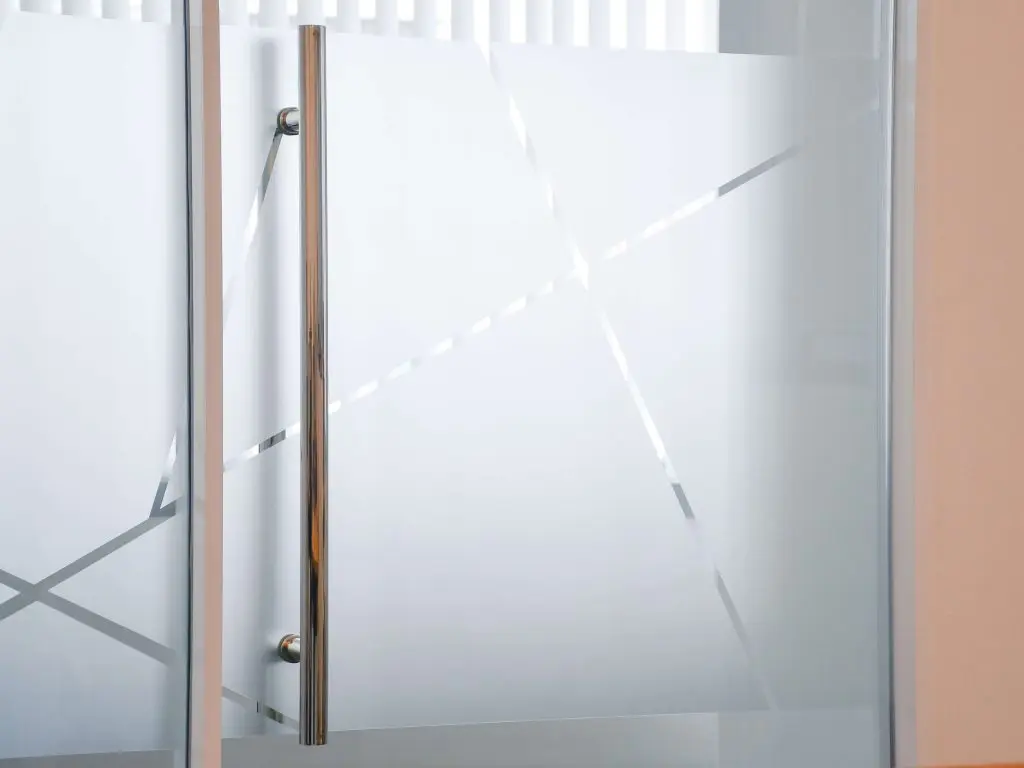
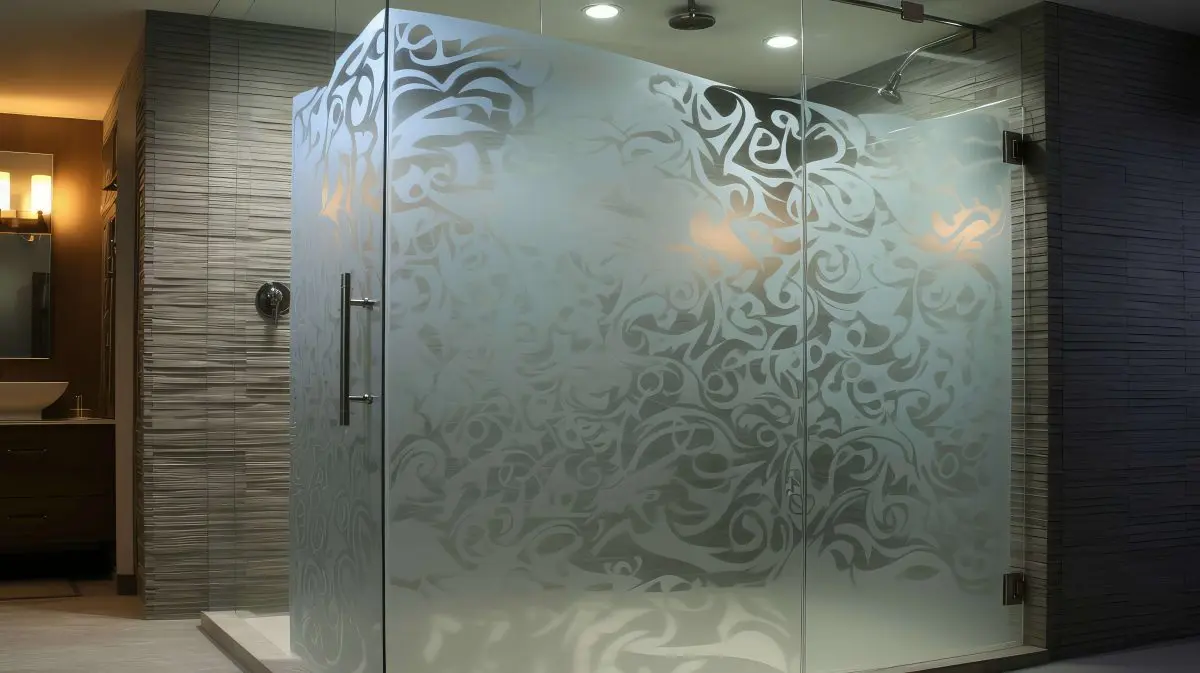
Decorative window film on a glass shower enclosure in a Phoenix home

Start With the Glass, Not the Photo

Choosing a decorative film style starts with matching the product to your glass type, not just picking a look you like in a photo. Four families of film cover almost every job we do in Phoenix, and they are not interchangeable.

Decorative window film does two jobs at once: it dresses up plain glass and it keeps people from walking straight into it. Homeowners use it on shower glass and interior doors, while offices use it on glass walls to add privacy and stop collisions. Both uses come from the same rolls of film, just applied differently.

Frosted Film

Frosted film delivers a soft, uniform privacy layer and works well on almost any flat glass surface, from bathroom windows to office sidelights. It is the simplest and most budget-friendly of the four, and it is what we reach for on windows, office glass and standard shower doors.

If your problem is a glass-walled shower with zero privacy, this is usually the answer. See frosted window film for the full service details.

Etched Film

Etched film mimics the look of sandblasted glass and often includes subtle texture variation that reads as more custom and higher-end. It suits entry doors, conference rooms and decorative accent panels where the glass is part of the first impression.

Patterned Film

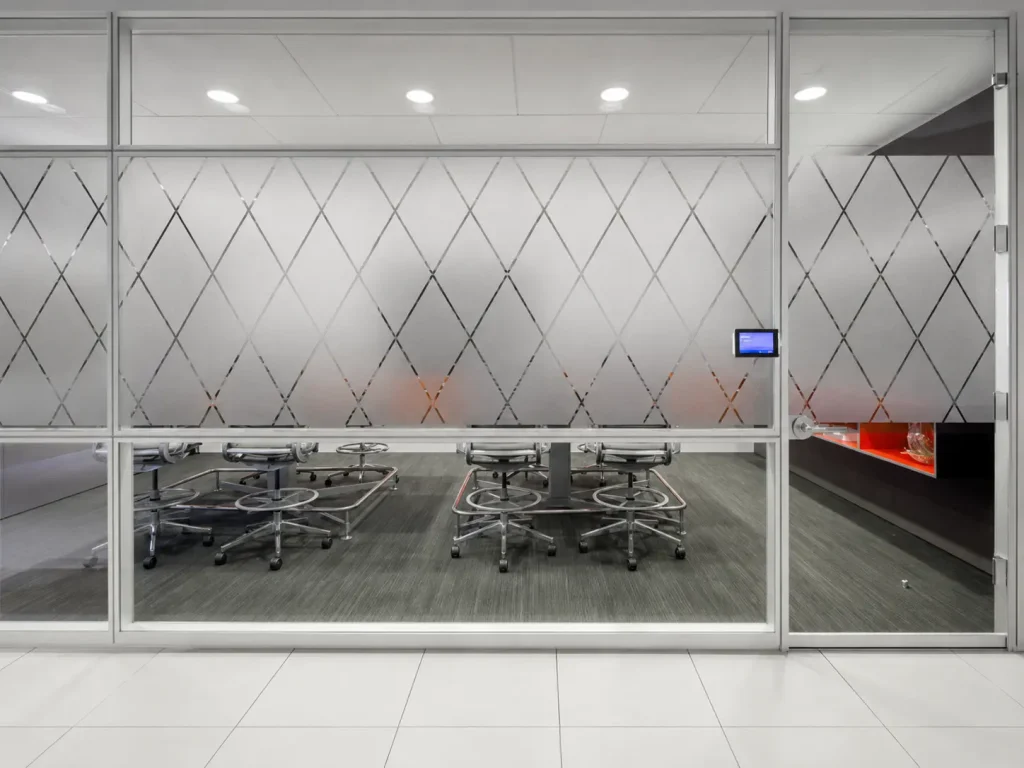
Patterned film introduces repeating geometric or linear designs, which can visually elevate a plain glass door or partition. It requires precise measurement, since the pattern must repeat cleanly across the entire pane, and it works best on single, unobstructed glass.

Patterned decorative window film on interior glass in Phoenix

Stained Glass Film

Real stained glass is gorgeous. It is also thin, old, and one bad monsoon gust away from a crack that costs a fortune to fix. Stained glass window film gives you that same colored, leaded-glass look on your existing window. No fragile panels. No custom glasswork. Just film applied to the glass you already have.

Front doors, sidelights and bath windows are the most common spots. On older Phoenix homes in areas like Encanto and Willo with original leaded glass, we walk the glass carefully before recommending anything — film cannot fix a pane that is already cracked or has lead came pulling away.

The Short Comparison

  • Frosted film: best for simple, budget-friendly privacy on windows, office glass, and standard shower doors
  • Etched film: better for an upscale look on entry doors, conference rooms, and decorative accent panels
  • Patterned film: requires precise measurement and works best on single, unobstructed glass panes
  • Custom logo film: ideal for business branding but needs professional design proofing before installation
  • Frameless multi-panel showers: always require on-site templating to align patterns across seams

Why Frameless Showers Need Templating

This challenge shows up constantly in newer Phoenix construction, where large frameless glass shower enclosures have become standard in remodeled bathrooms and new builds across communities like Verrado, Estrella, and North Phoenix master-planned neighborhoods.

These oversized panels often span two or three seamed sections instead of one continuous sheet of glass, meaning any pattern or etched design has to align precisely across each seam to avoid an obvious visual break. Older Phoenix homes, by contrast, typically have smaller framed windows where slight pattern shifts are far less noticeable because the frame itself interrupts the sightline.

Design complexity affects feasibility far more than most homeowners expect. A simple frosted privacy strip on a single small window is straightforward. A detailed etched pattern spanning multiple panes, or a logo that must sit perfectly centered on an oddly shaped transom, demands careful layout work before a single piece of film is cut. Rushing that planning stage is the most common reason decorative film projects end up looking uneven.
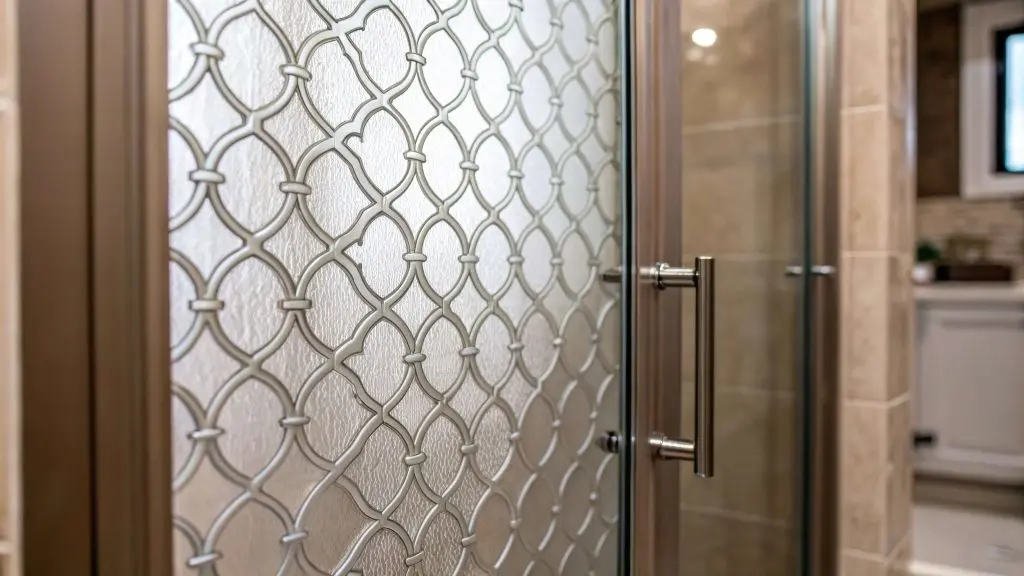
Decorative window tint on residential glass in a Phoenix home

When Decorative Film Isn’t the Right Product

Decorative film solves a style problem. It is not built to solve a privacy problem or a heat problem, and we will tell you that straight up before you spend a dime.

Some decorative patterns still let outlines show through once the lights are on inside at night, especially the lighter, more open designs. If real nighttime privacy is your main goal, not the look, you will get better results from privacy window film or frosted window film instead.

Want an actual mirror effect on the outside, where people cannot see in during the day at all? That is a different job. Mirror window film is built for that. Decorative film will not get you there, no matter how dark the pattern looks.

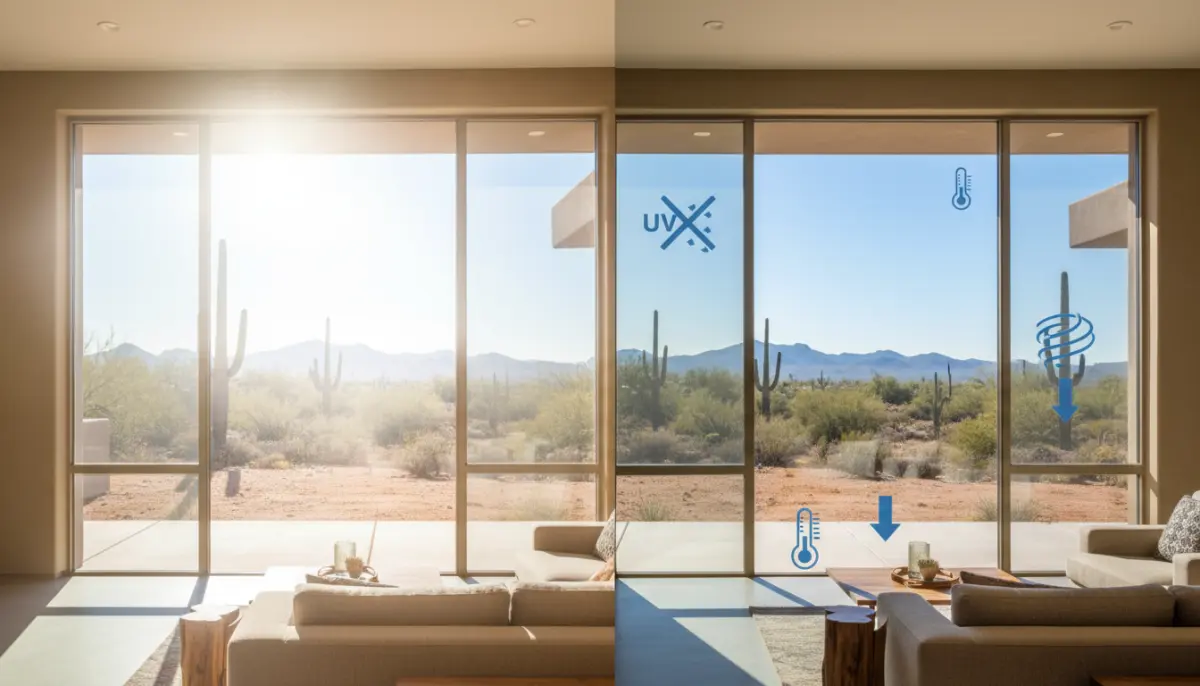
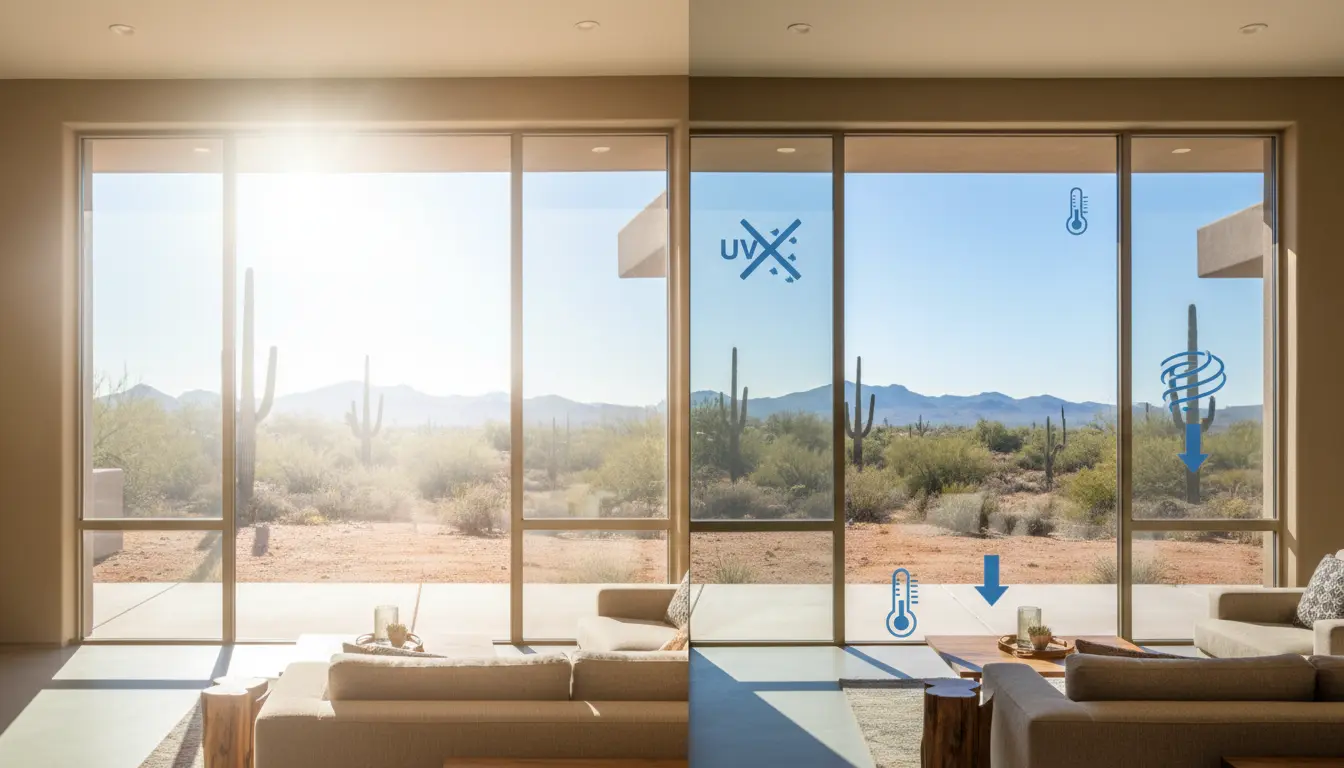
Trying to cut down heat and glare pouring through a west-facing office window off Camelback Road? Decorative film adds style, but it is not doing the heavy lifting on heat rejection. UV window film is the one built for that job.

One more thing worth mentioning. If you are leasing space in a Phoenix office building or renting a home, check with your landlord or property manager before any glass work gets scheduled — some leases have rules about permanent changes to windows.

Common Questions

Will decorative window film keep my bathroom private at night?

It depends on the pattern you pick, and lighter designs can still show outlines once the lights are on. Frosted and etched styles block more than open, linear patterns do. If nighttime privacy matters more to you than the look, ask us about privacy or frosted window film instead. Decorative film is built first for style and safety, like stopping people from walking into glass, not for total blackout privacy after dark.

Does decorative film help with heat from Phoenix’s afternoon sun?

Not much, since decorative film is designed for style and pattern, not heat rejection. A west-facing office window still lets in strong heat and glare even with decorative film applied. If cutting down solar heat is your main goal, UV window film is the product built to handle that job. We are happy to combine both products on the same glass if you want style and heat control together.

Why do frameless shower enclosures need extra measuring?

Frameless showers often span two or three seamed glass panels instead of one solid sheet. Without a frame to break up the sightline, any pattern or etched design has to line up exactly across every seam. Older homes with smaller framed windows hide small pattern shifts easily. Frameless glass does not, so we template on-site before ordering film.

Where This Fits With Your Other Glass Decisions

Explore decorative window film, frosted window film and stained glass window film, or see the full range of specialty window film we install across Phoenix.

Looking for the commercial version? See frosted and decorative window film for Phoenix offices.

Categories
Commercial Window Tint Decorative Window Tint Frosted Window Tint Storefront Window Tint

Frosted & Decorative Window Film for Phoenix Offices and Commercial Spaces

Blog Article

Frosted & Decorative Window Film for Phoenix Offices and Commercial Spaces

calendar_today
By AZ Max Tint
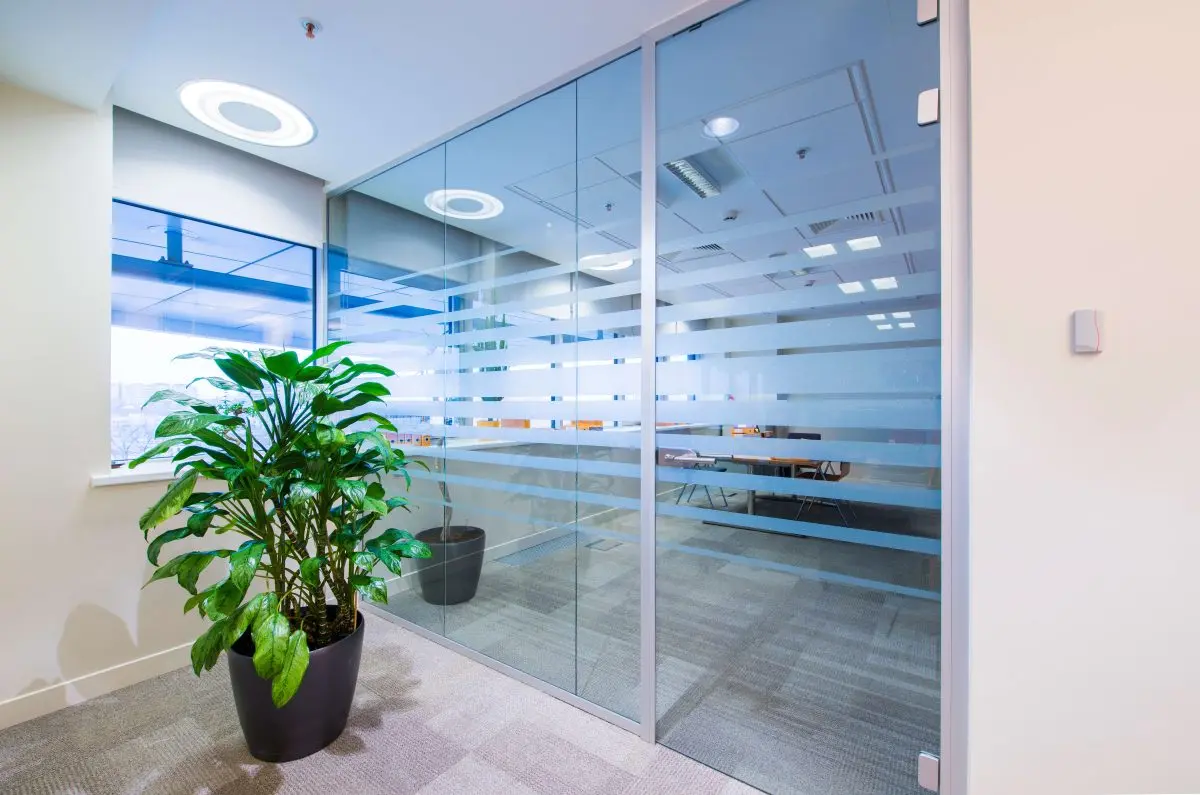
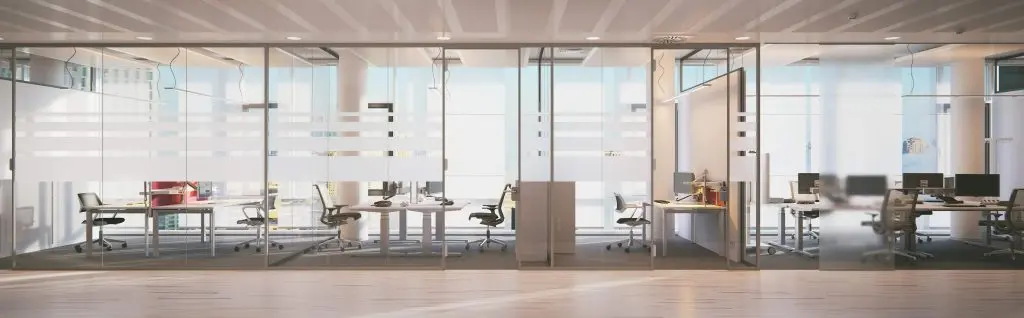
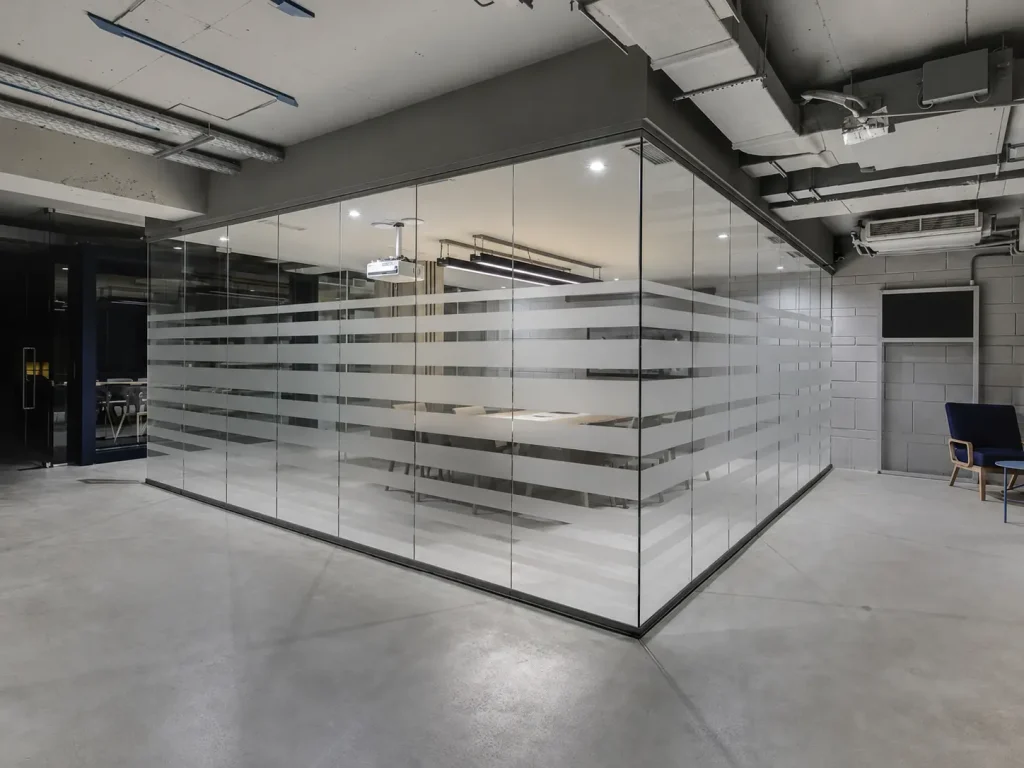
Decorative window film on office glass partitions in Phoenix Arizona

What Commercial Decorative Film Does

Decorative film is applied to the existing glass surface to control visibility and appearance. In a commercial context it typically does one of four jobs: create privacy in glass-walled rooms, apply branding or wayfinding, meet visibility requirements on full-height glass, or improve the finish of a dated space without renovation.

It is not a solar control product. If your problem is heat load or afternoon glare on a west elevation, that is commercial window tinting, and the two are frequently specified together on different parts of the same building.

Where Phoenix Businesses Use It

Conference rooms and private offices

The most common application. A glass-walled conference room is unusable for sensitive discussions and uncomfortable for anyone presenting. A frosted band at seated eye height gives privacy where it is needed while leaving the upper and lower glass clear, so the room still reads as open.

Medical, dental, and behavioural health suites

Patient privacy is not a preference in these environments. Reception glass, exam room partitions, and interior sightlines from waiting areas all need managing, and frosted film does it without the institutional feel of blinds.

Legal and financial offices

Client confidentiality applies to what is visible on a desk as much as what is audible. Partition film and lower-panel frosting handle the sightline into work areas from corridors and reception.

Storefront and retail glass

Retailers use decorative film to define window display backdrops, screen stockroom or office areas visible from the floor, and apply branding directly to glass. Frosted logo work in particular reads as a permanent finish rather than signage.

Salons, spas, and fitness studios

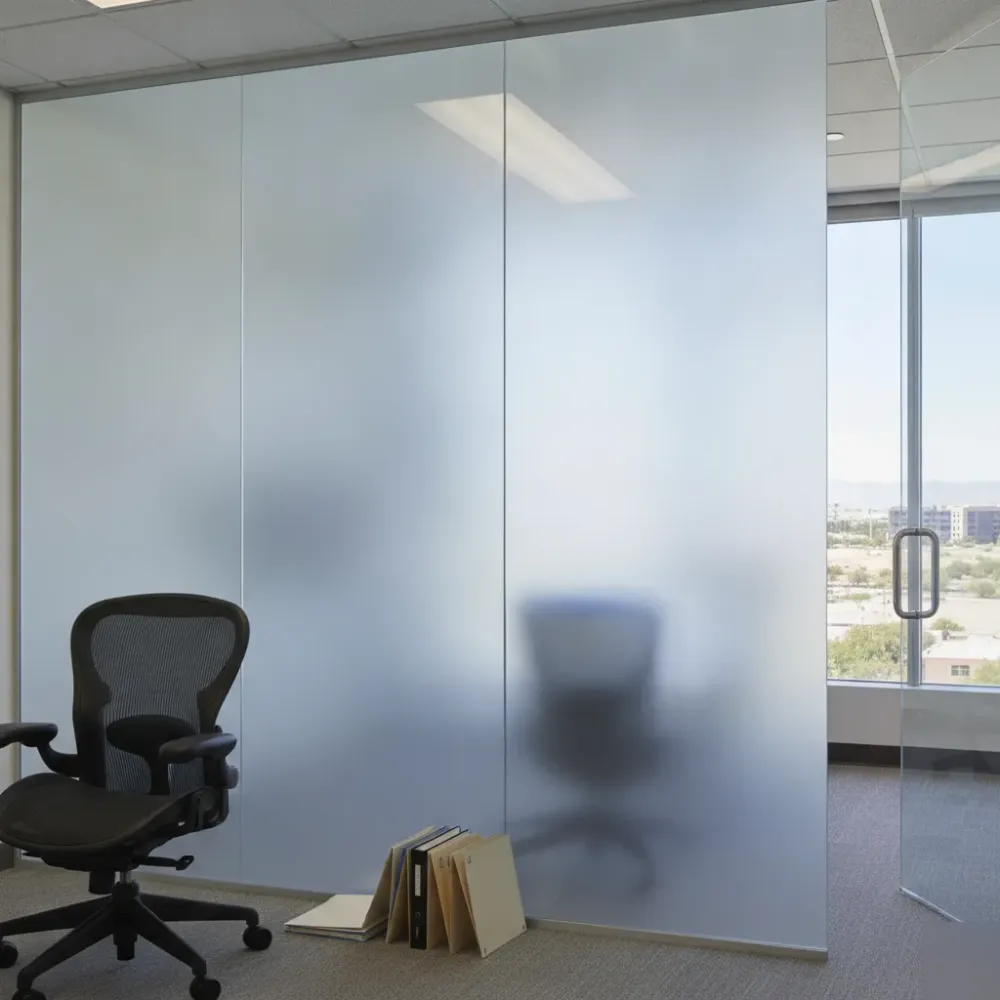
Treatment rooms and studio spaces need privacy without darkness. Frosted and gradient films let daylight through while blocking the view from the street or the main floor.

Finished frosted window tint on conference room glass wall in Phoenix office

Branding on Glass

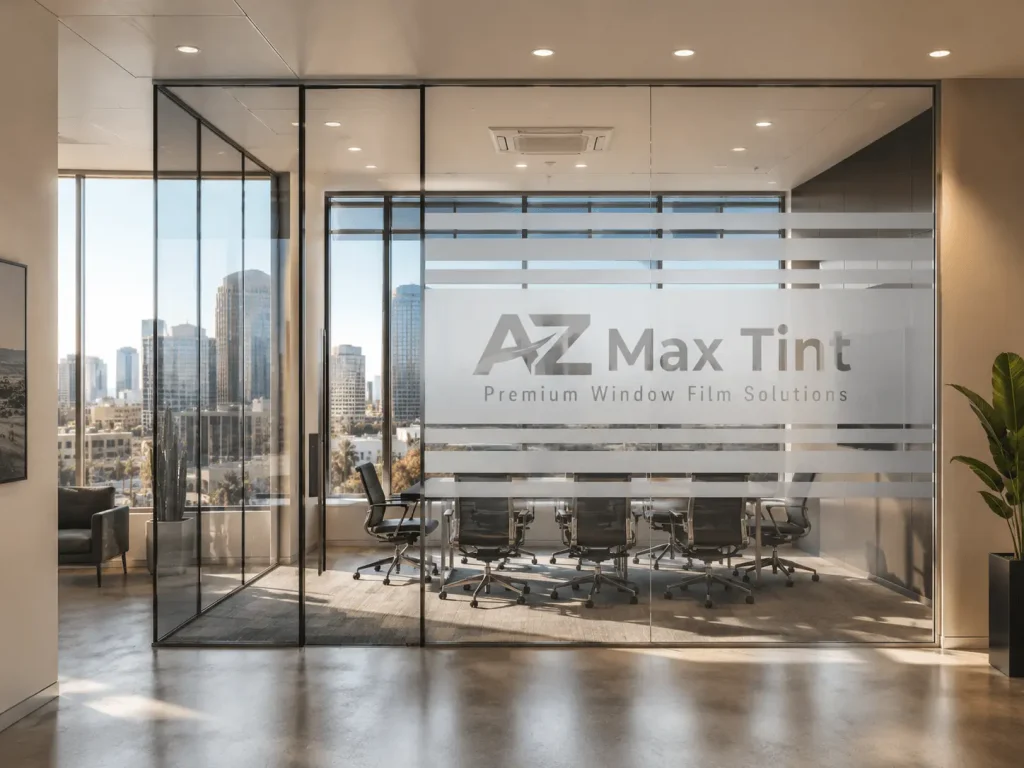
Frosted film can be cut to a logo, wordmark, or pattern and applied directly to entry doors, reception glass, or partitions. Done well it looks like etched glass and reads as part of the build rather than something applied afterward.

The practical advantages over etched or printed glass: it costs a fraction as much, it goes on your existing panes, and it can be changed when you rebrand or when a tenant moves. For leased space that last point matters — you are improving glass you do not own, reversibly.

AZ Max Tint - Frosted Decorative Logo - Phoenix AZ (1)

A Safety Consideration on Full-Height Glass

Large expanses of clear glass in commercial circulation areas present a genuine walk-into hazard, and applied manifestation — a frosted band or pattern at a visible height — is a standard way of marking them.

Requirements vary by occupancy type and jurisdiction, so confirm what applies to your building with your architect, tenant improvement contractor, or local code official rather than assuming. Where marking is required, decorative film is usually the least intrusive way to provide it, and it can carry your branding at the same time.

Specifying It Properly

Define the sightline you are blocking

Stand where the person you are screening from will stand. That determines the height and density of the film, and it is usually a narrower band than people assume.

Decide how much light you can lose

Interior partitions often borrow daylight from perimeter glass. Over-frosting a partition can leave an interior room noticeably darker and push up lighting load.

Confirm the glass type

Tempered, laminated, and insulated units behave differently, and installers work from glass compatibility references rather than applying one product everywhere.

Check the lease

This is the one that catches Phoenix tenants out. Most commercial leases and multi-tenant centre agreements contain provisions covering alterations and anything affecting exterior appearance. Interior partition film is rarely contentious; storefront glass frequently requires landlord approval. Get it in writing first.

Plan around operations

Film is applied to the interior surface and can normally be phased by room, floor, or after hours. Most commercial jobs do not require closing.

Phoenix Decorative Film - Commercial Glass Door Tint

Where This Fits With Your Other Glass Decisions

Decorative film solves visibility and appearance. Phoenix commercial glass usually has other problems running at the same time:

Different elevations usually need different products. Scoping them in one assessment is cheaper than three separate projects.

Looking for the residential version? See frosted and decorative window film for Phoenix homes.

Categories
Anti-Graffiti Film Commercial Window Tint Decorative Window Tint Frosted Window Tint Mirror Window Tint Residential Window Tint Safety Window Tint Security Window Tint Stained Glass Window Tint Storefront Window Tint UV Blocking Tint

5 Common Misconceptions About Window Tinting In Arizona

Blog Article

5 Window Tinting Myths That Cost Phoenix Homeowners Money

Ask ten people in the Valley about window tinting and you will hear the same handful of warnings. The film bubbles in the heat. It makes your house look like a limousine. It voids your window warranty. The installers make a mess and it is not really worth it anyway.

Some of that was true in 1995. Almost none of it is true now, and in a city that runs roughly 111 days a year at or above 100°F, believing it costs real money. Every summer a west-facing Phoenix living room goes untinted because of something a neighbor said, and the homeowner pays for it on the utility bill and in faded flooring.

Here are the five myths we hear most, plus a sixth that costs Phoenix homeowners more than all of them combined.

Myth #1: "Window Film Bubbles and Peels in Phoenix Heat"

This is the most persistent myth, and it comes from real experience — with products that have not been sold in decades. Early dyed films used adhesives that broke down under sustained UV exposure. In Phoenix they broke down faster than anywhere else. People saw purple, bubbled glass on 1980s storefronts and reasonably concluded that is what window film does.

Modern film is a different product. Manufacturers now use color-stable dye chemistries and metal or ceramic layers instead of the dyes that failed. LLumar addresses this directly in its architectural film FAQ, noting that purpling and bubbling indicate very low-grade film whose adhesive and dye components have broken down, and that its film carries a warranty against exactly that.

When film does fail early in Phoenix, the cause is almost always one of two things: a bargain product bought off a hardware store shelf, or a poor installation that trapped contamination under the film. Neither is a property of window film. Both are avoidable.

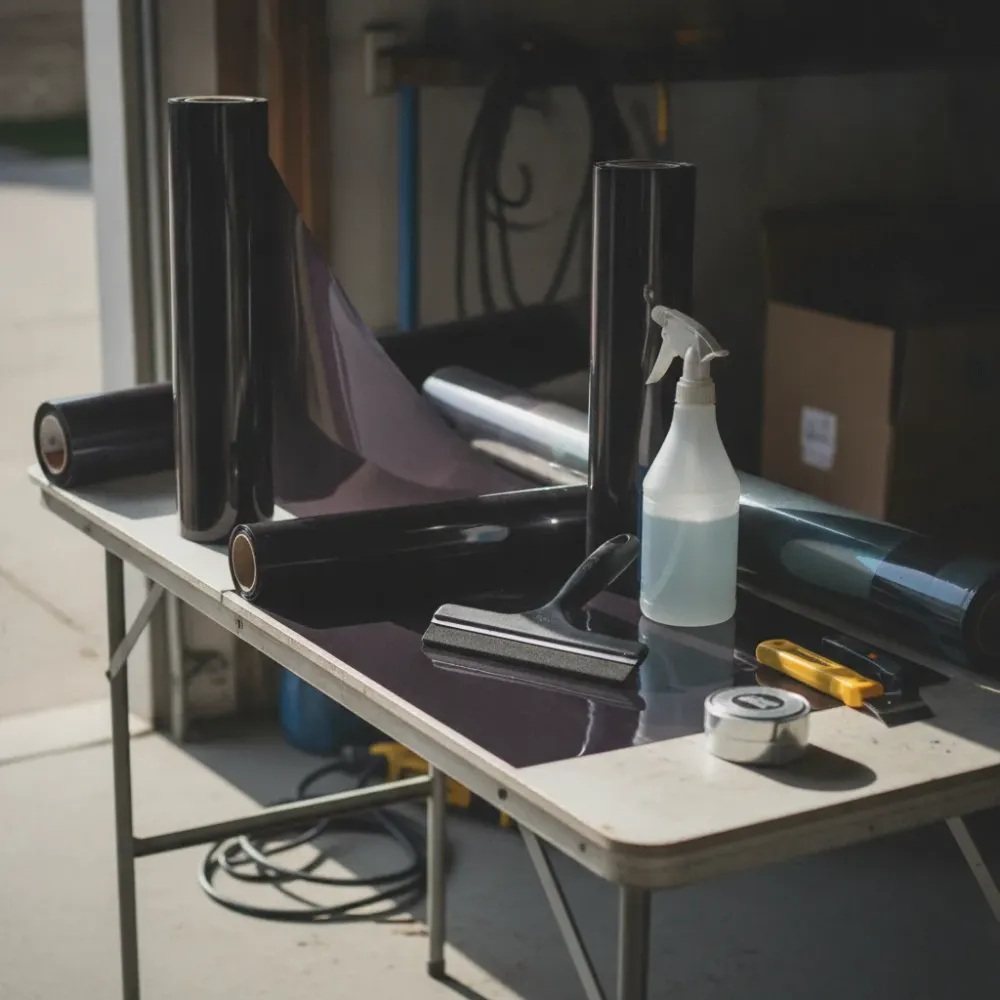
Window tint film rolls and squeegee tools on a Phoenix installer's work table

Myth #2: "Tinted Windows Look Dark and Obvious"

The mental image most people carry is limousine glass — near-black, mirrored, obviously aftermarket. That is one option out of many, and it is not the one most Phoenix homes get.

Film is specified by visible light transmission, and the range runs from nearly clear to fully opaque. Spectrally selective and ceramic films are popular precisely because they reject infrared heat while letting visible light through, so the room stays bright and the window looks essentially unchanged from the street.

If you do want a visible change, that is available too — mirror window tint for exterior reflectivity and daytime privacy, or decorative and frosted film for patterned glass. The point is that appearance is a choice you make, not a side effect you accept.

Finished tinted window in Phoenix home office showing reduced glare and even light

Myth #3: "Film Warranties Are Full of Loopholes"

The assumption is that a film warranty is marketing paper that evaporates the moment you try to use it. In practice, premium architectural film warranties from established manufacturers cover the specific failure modes people worry about: peeling, bubbling, crazing, delamination, and demetalizing.

The related worry — that film voids your window warranty — deserves a longer answer than fits here. Short version: most window manufacturers do exclude coverage once aftermarket film is applied, and when a licensed installer uses premium film, the film manufacturer’s warranty steps in behind the glass and seals. We covered the mechanics in detail in our piece on double-pane windows and thermal shock.

Before you hire anyone in the Valley, ask for the film warranty terms in writing. A company that cannot produce them is telling you something about the product they are about to put on your glass.

Myth #4: "Tinting Is a Luxury, Not a Necessity"

This one is climate-dependent, and Phoenix is where it falls apart.

Start with UV. Glass blocks most UVB but transmits a great deal of UVA, which is what drives fading in flooring, furniture, and artwork. Solar control film blocks up to 99% of UV rays. In a city with this much sun exposure through this many windows, that is not a cosmetic concern — it is the difference between hardwood that holds its color and hardwood that develops a bleached stripe where the afternoon sun lands.

Then there is load. According to U.S. Department of Energy figures cited by LLumar, solar heat gain through windows accounts for roughly one third of a building’s cooling cost. Phoenix runs cooling load for about eight months a year. One third of eight months is a meaningful number on an APS or SRP bill.

If fading is your primary concern, UV window tint is the direct answer. If you want the full accounting of what film returns on a Phoenix home, we broke it down in this piece on what home window tinting actually returns.

Completed UV window tint on living room window reducing glare in Phoenix home

Myth #5: "Installation Is Messy and Disruptive"

We will be honest about half of this one. DIY film installation genuinely is difficult and frustrating. Getting a large panel onto glass without creases, trapped water, or contamination takes practice most people do not have, and the failure rate is high.

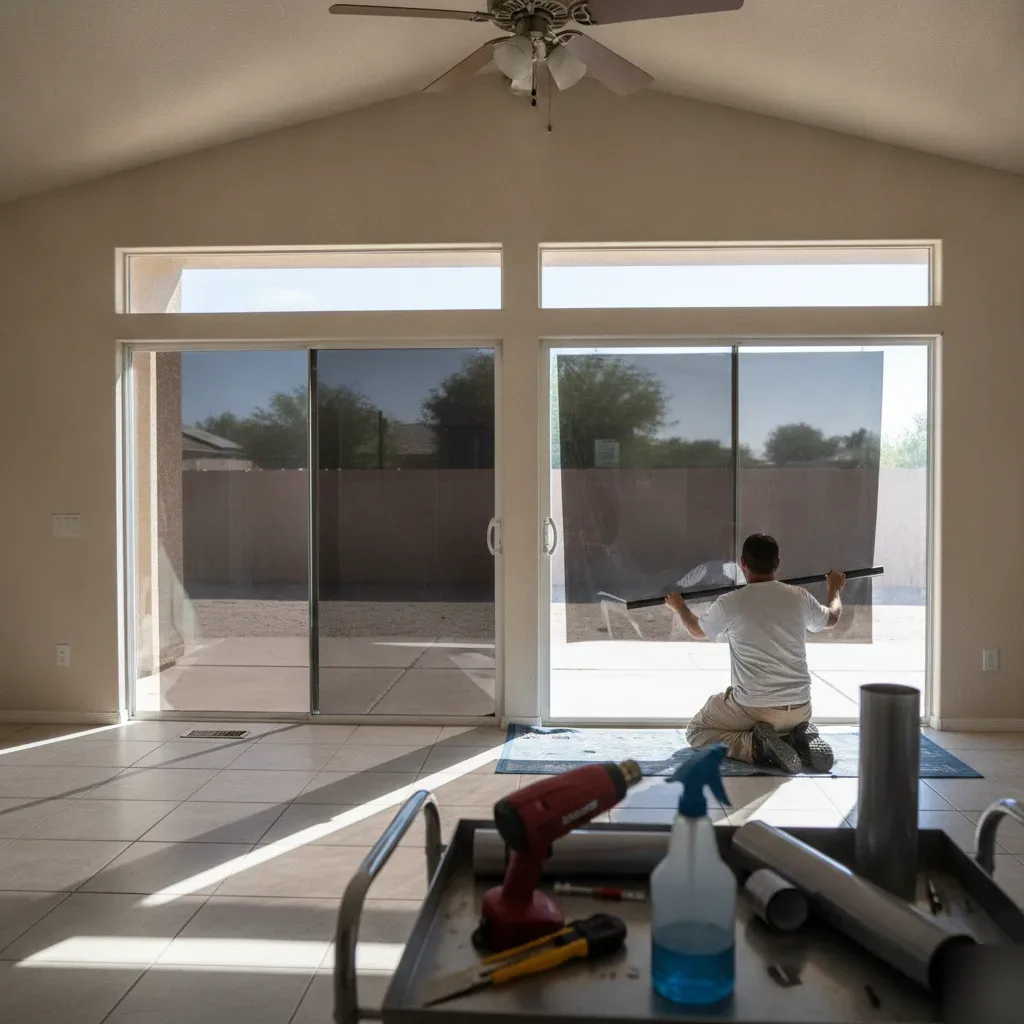
Professional installation is a different process. Film is cut to the glass, applied with water-based solution, and squeegeed out. Most Phoenix homes are completed in a single day. You do not need to move out, empty rooms, or take time off beyond letting the installer in.

After installation there is a curing period. For a few days you may see slight haze or small water pockets as remaining moisture evaporates. This is normal and it clears on its own. Arizona’s dry air actually works in your favor here — curing tends to complete faster in the Valley than in humid climates.

Technician installing window tint film on a Phoenix home's sliding glass door

Myth #6: "Only West-Facing Windows Need Film"

This is the one that costs the most, because it sounds sensible and it is half right.

West and southwest exposures do take the worst of a Phoenix afternoon. Low-angle sun from roughly 3 PM to sunset hits that glass face-on during the hottest hours of the day. If you only film part of the house, that is where you start.

But south-facing glass carries serious load through the shoulder seasons, and east-facing rooms bake in the morning — which matters if that is a bedroom or a home office. Meanwhile, a genuinely north-facing window in Phoenix often does not justify the cost at all.

The useful version of this rule is not “only tint west windows.” It is: a good estimate tells you which openings need film and which ones do not. Any installer who quotes every window in the house at the same specification without walking the property has not actually looked at your home.

The Bottom Line for Phoenix Property Owners

Nearly every myth on this list traces back to a real problem with a product that is no longer representative. Cheap dyed film failed. Early adhesives yellowed. DIY installs bubbled. Those things happened, and then the technology moved on while the reputation stayed put.

What has not changed is that the quality of the product and the quality of the installation determine the outcome. That is true everywhere, and it is true with less margin for error in a climate that puts glass through 110°F afternoons roughly forty days a year.

AZ Max Tint has been installing film across the Valley for over 30 years. Explore residential window tinting, browse the full specialty window film range, or request a free estimate and we will walk your home and tell you which windows actually need attention.

Frequently Asked Questions

Does window tint bubble in Arizona heat?

Quality film installed correctly does not bubble from heat. Bubbling comes from low-grade adhesive breaking down or from contamination trapped during installation. Small water pockets in the first few days after install are normal curing, not failure, and clear on their own.

Will window film make my Phoenix home dark?

Only if you choose a dark film. Ceramic and spectrally selective films reject infrared heat while transmitting most visible light, so rooms stay bright. Many homeowners find filmed rooms brighter in practice because they stop closing blinds against the heat.

Is window tinting worth it in Phoenix?

In a climate with roughly 111 days a year over 100°F and an eight-month cooling season, film addresses heat gain, UV fading, and glare simultaneously. It is most worth it on west and southwest exposures and least worth it on north-facing glass.

How long does window film last?

Premium architectural film is built for long-term installation. Actual lifespan depends on film type, glass type, exposure, and climate. Manufacturers back their products with factory limited warranties covering peeling, bubbling, and color failure.

Decorative & Frosted Window Film: Style Meets Function for Arizona Homes and Offices

About The Founder of AZ Max Tint

Categories
Commercial Window Tint Decorative Window Tint Frosted Window Tint Residential Window Tint

Decorative And Frosted Window Film Arizona Homes Offices

Blog Article

Decorative & Frosted Window Film: Style Meets Function for Arizona Homes and Offices

calendar_today


By AZ Max Tint

There is a specific Phoenix problem that blinds do not solve. A bathroom window that needs light but absolutely no visibility. A front door sidelight that shows anyone on the step your entire entryway. A ground-floor bedroom facing a neighbour’s window across a narrow side yard.

The default fix is a covering — blinds, a shade, frosted spray, or in the worst case a piece of furniture pushed in front of the glass. All of them trade daylight for privacy, which in a house full of natural light is a poor bargain.

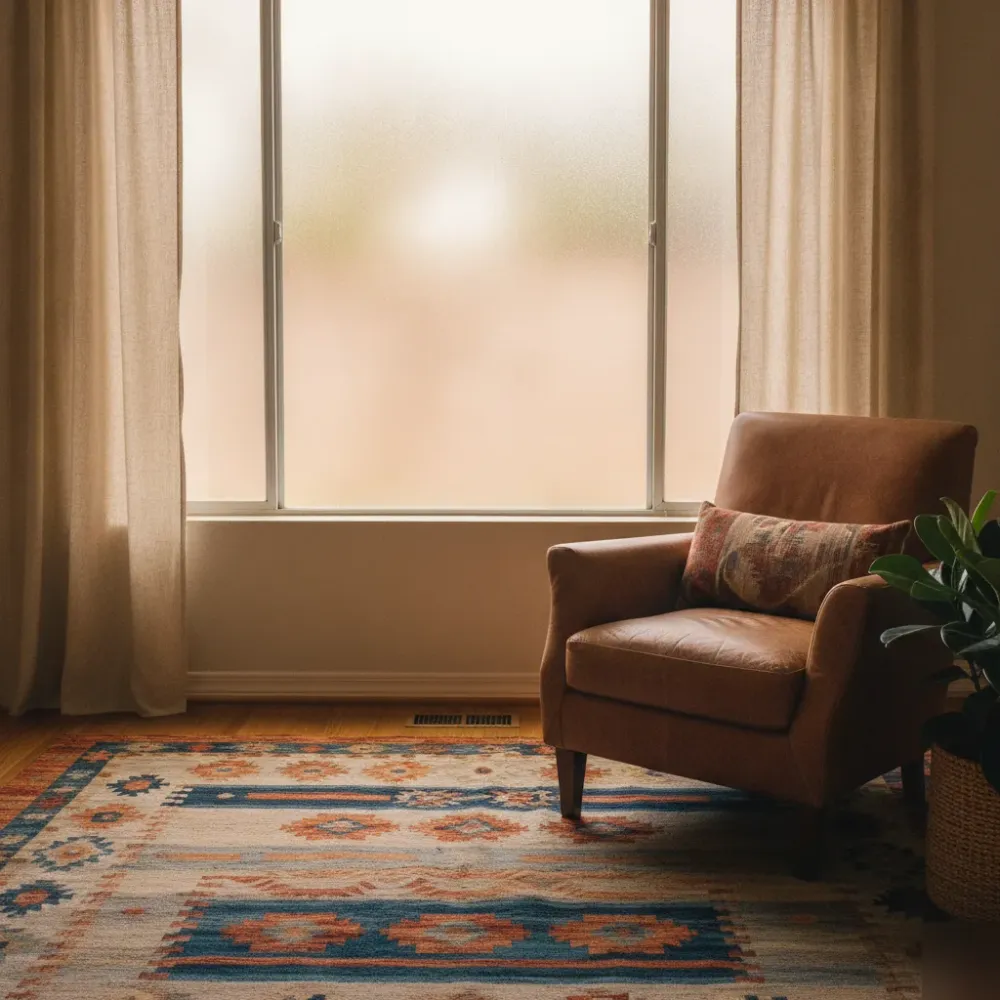
Decorative and frosted window film separates the two. You keep the light and lose the sightline.


AZ Max Tint - Frosted Decorative Logo - Phoenix AZ (1)

What Decorative Window Film Is

Decorative film is an adhesive-backed layer applied to the interior surface of glass to change how it looks and how much you can see through it. It ranges from a light etched-glass look to fully opaque, and includes frosted, patterned, gradient, textured, and stained-glass effects.

The important distinction from solar film: decorative film is chosen primarily for appearance and privacy rather than heat rejection. Some products do both. Many do not. If your goal is a cooler west-facing room, that is a different product — see residential window tinting.

Where It Solves Real Problems in Phoenix Homes

Bathrooms and showers

The classic case. A bathroom window needs daylight and total privacy simultaneously, and glass shower enclosures need the same thing without making the space feel like a box. Frosted film handles both, and unlike a permanent obscured-glass replacement it can be changed later.

Entry sidelights and door glass

Sidelights are a security and privacy weak point in a lot of Valley homes — they show the entryway, the alarm panel, and whether anyone is home. Frosted or patterned film obscures the view while keeping the entry bright. Stained glass film is a common choice here because it reads as an intentional design feature rather than a privacy measure.

Street-facing and ground-floor windows

Phoenix subdivisions frequently place homes close to the sidewalk and to each other. A gradient film — opaque at the bottom, clear at the top — blocks the sightline at standing height while leaving the upper glass open for light and sky.

Home offices and media rooms

Rooms where you want diffused, even light and no glare on a screen. Frosted film scatters incoming light rather than blocking it, which softens the hard afternoon contrast without darkening the room.

Interior glass and closet doors

Not every application is on an exterior window. Interior partitions, pantry doors, and closet glass are common places to use decorative film purely as a finish.


AZ Max Tint - Commercial Tint - Frosted Window Tint - Decorative Tint - Phoenix

Decorative Film vs. Etched or Obscured Glass

Real etched or acid-obscured glass is permanent, expensive, and requires replacing the pane. Film achieves a comparable look at a fraction of the cost, on your existing glass, and it is reversible.

That reversibility matters more than people expect. Tastes change, houses get sold, and a bathroom you frosted for one purpose may need something different later. Film can be removed without damaging the glass, even after years in place — LLumar notes that film is designed for durability but removable without damaging the glass beneath.

At close range, high-quality frosted film and true etched glass are difficult to distinguish.

Choosing the Right Film for Your Space

Start with the actual goal

“Privacy” is not specific enough. Do you need to block the view completely, or just obscure detail? From outside only, or both directions? During the day, or at night as well? Those answers point to different products.

Decide on light transmission

Frosted films range from lightly translucent to fully opaque. A bathroom can usually take a denser film than a home office, where you still want usable working light.

Know your glass

Film has to be matched to the glass it is going on. Single-pane, double-pane, and low-E coated units behave differently, and installers work from compatibility guidance rather than applying one product everywhere. On insulated units this matters — see double-pane windows and thermal shock.

Check your HOA

Many Valley master-planned communities have architectural provisions covering anything that changes exterior appearance. Interior-applied frosted film on a bathroom window is rarely an issue; a patterned or reflective treatment on a prominent front elevation can be. Check before installation.

Consider whether you also need heat control

If the window in question is west-facing, you may be solving two problems. Some decorative films offer solar performance; many do not. Say so up front and the specification can account for it.

AZ Max Tint - Frosted Tint - Commercial Window Tint - Phoenix

A Note on Night-Time Privacy

Worth stating plainly, because it is the most common misunderstanding.

Reflective and one-way films work on a light differential: they obscure the view from whichever side is darker. During the day that is the outside looking in. After dark with interior lights on, it reverses, and the film provides little privacy.

Frosted and opaque decorative films do not have this limitation — they diffuse light in both directions at all hours. If night-time privacy is the requirement, that points to frosted or opaque rather than reflective. Related options: privacy window tint and one-way window tint.

Installation and DIY

Frosted film is less forgiving than solar film, because its opacity makes every flaw visible. A trapped speck of dust or a crease that would disappear under clear film shows as a permanent mark on a frosted panel. Pattern alignment across multiple panes is also harder than it looks.

Professional installation is typically completed in hours for a handful of openings, with a short curing period afterwards during which slight haze is normal.

Add Privacy Without Losing Your Daylight

Request a free estimate and we will look at the specific openings you are trying to solve. Running a business? See our companion piece on decorative and frosted film for Phoenix offices and commercial spaces.

Get A Fast FREE Estimate

Enter Your Information Below

Get A Fast FREE Estimate

Enter Your Information Below