Categories
Commercial Window Tint Projects Storefront Window Tint

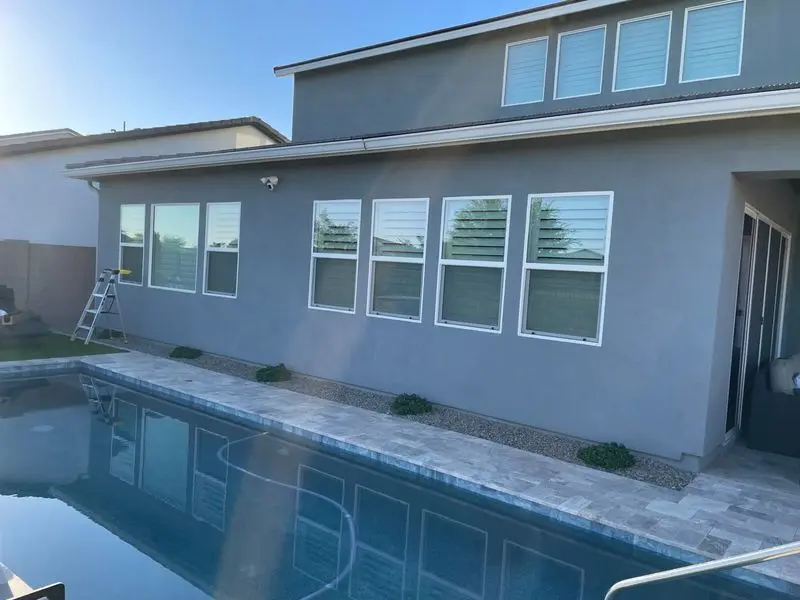
Glare Reduction Window Film In Goodyear: Solving Tremendous Glare At Pawn1st

PROJECT POST

Glare Reduction Window Film In Goodyear: Solving Tremendous Glare At Pawn1st

September 14, 2026

Pawn1st, the pawn shop at 203 N Litchfield Road in Goodyear, came to us through our website with a glare problem, and it was not a subtle one. The glass is large, it faces north, and the light coming through it was tremendous. The request that came with it was just as specific as the complaint: cut the glare, and do it with zero reflection.

The answer was a Limo 5% film across the glass, specified for this building and this exposure in particular.
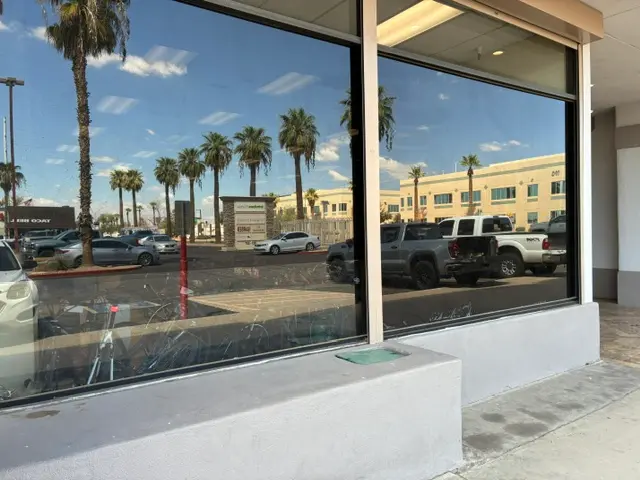
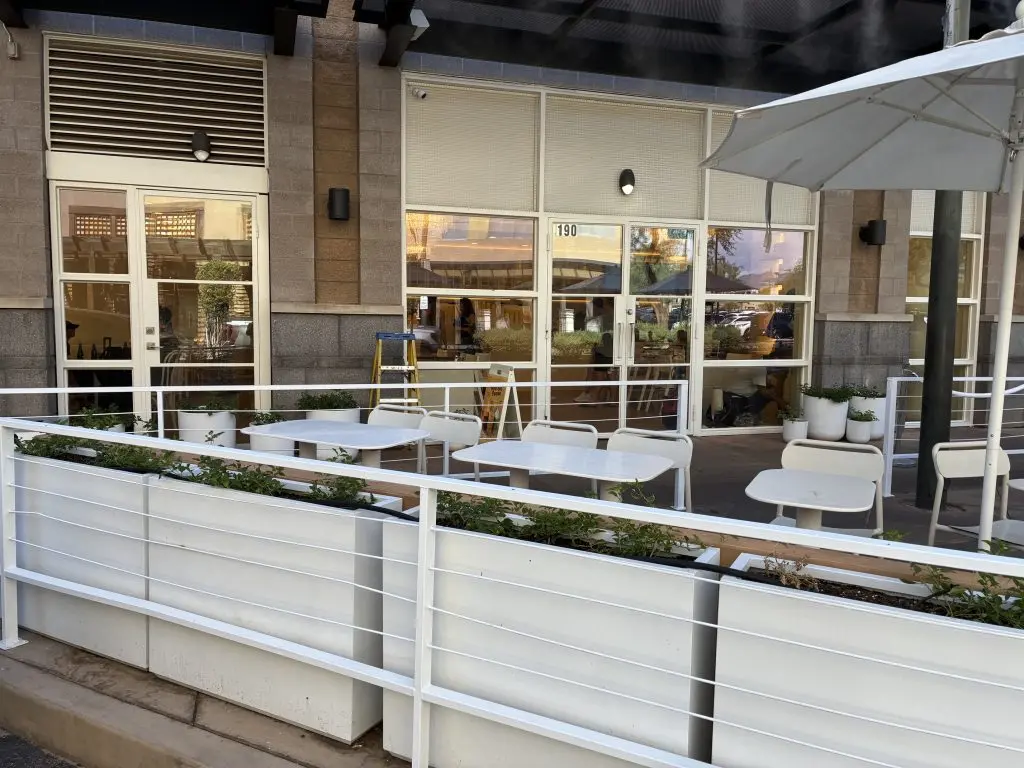
Glare reduction window film on the large north-facing glass at Pawn1st in Goodyear, Arizona

The Problem: Tremendous Glare, And No Mirror Look

Glare is a separate problem from heat, and it gets treated as if it were the same thing far too often. Heat you feel. Glare you fight. It washes out screens, bleaches merchandise displays, forces people to angle away from the window, and makes a bright room genuinely hard to work in.

North-facing glass is an interesting case. It never takes direct sun the way an east or west wall does, so it rarely gets flagged as a heat problem. What it does deliver is steady, bright, diffuse daylight across the entire working day. There is no morning peak and no afternoon relief. The glare is simply there, all day, every day, and on a large north elevation there is a lot of glass delivering it.

Why Glare Matters For Retail In Goodyear And The West Valley

The West Valley gets an enormous amount of daylight. Goodyear, Litchfield Park, Avondale, Buckeye and the surrounding communities sit under open sky with very little in the way of tall buildings or mature tree canopy to break it up. A large glass elevation in that environment is collecting light from horizon to horizon.

On a retail floor like a pawn shop, where most of the merchandise sits under glass, that shows up in the details that cost you: display cases you cannot see into cleanly, customers squinting, jewelry and electronics that do not present the way they should, and staff working with their backs turned to the window. It is the same set of issues we go through in our article on storefront and office window film in Arizona. Glare is a comfort problem and a presentation problem at the same time.

The AZ Max Tint Solution: Limo 5% On North-Facing Glass

The obvious tool for a severe glare problem is a reflective film. It works, and it works well. It also puts a mirrored surface on your storefront, and this customer had ruled that out from the start. Zero reflection was a requirement, not a preference. If a mirrored look is what you are after, that is a different product and we cover it on our mirror window tint page.

So Tom specified Limo 5% instead. A 5% film is about as dark as window film gets, and it deals with glare on sheer light reduction rather than by bouncing light back off the glass. No mirror, no reflection, just far less light coming through.

The important part of that recommendation is the qualifier attached to it. Limo 5% was the right call here because the glass faces north. On any other exposure on this building, Tom would not have recommended it. That is an exposure-specific decision, not a default, and it is the kind of call that separates a film that performs from a film that causes problems later. If you want the reasoning behind it, ask for Tom when you call. It is a short conversation and a useful one.

Pawn1st went with the recommendation.
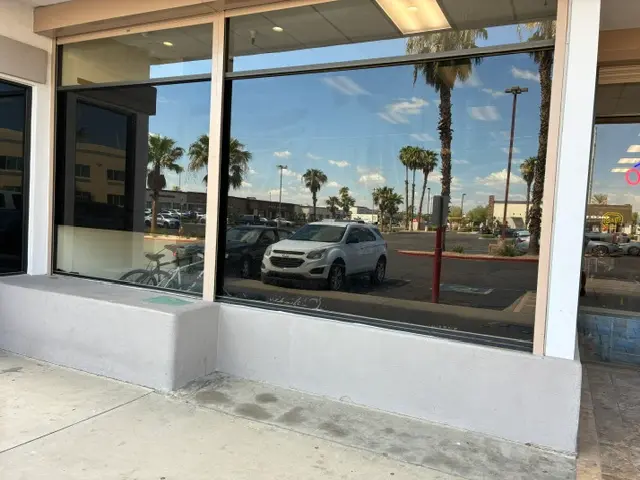
Commercial glare control window tint at Pawn1st, 203 N Litchfield Rd, Goodyear, AZ 85395

The Installation

Damon and Tom handled this one together, and the glass is the reason it took two installers. These are very large panes. Film on a pane that size has to be handled as a single piece, kept clean and square while it is moved into position, and set without creasing or trapping anything underneath. Two sets of hands is not a luxury on glass at this scale, it is the only way to get a clean result.

What The Film Does For The Space

  • Cuts the glare coming through a large north-facing glass elevation
  • Does it without a mirrored or reflective exterior, exactly as the customer asked
  • Makes the space workable through the full daylight day, not just part of it
  • Gives the storefront a consistent, finished appearance across every pane

The Finished Result

The glare is handled. The glass reads dark and even rather than mirrored, which is what Pawn1st asked for, and the sales floor is usable through the whole of the working day instead of only part of it.

If you have a commercial space anywhere in the West Valley or the wider Phoenix metro where glare is the actual complaint, it is worth having the exposure looked at before anyone quotes you a film. Our full range of window film options covers glare, heat, UV and privacy, and our commercial window tinting page runs through what that looks like for a business.

Get A Window Tinting Estimate From AZ Max Tint

If heat, glare, UV exposure, privacy or excessive sunlight is making your Phoenix-area home or commercial property less comfortable, AZ Max Tint can help you find the right window film for your space.

Call AZ Max Tint: (480) 913-5889
Contact AZ Max Tint: https://azmaxtint.com/contact

For directions to AZ Max Tint, just click here.

Visit Us From Goodyear

Driving directions from Litchfield Road in Goodyear to AZ Max Tint at 3734 E Kristal Way, Phoenix, AZ 85050.
Categories
Commercial Window Tint Projects Storefront Window Tint

Commercial Window Tinting In Scottsdale: Stopping Morning Heat At La La Land Cafe

PROJECT POST

Commercial Window Tinting In Scottsdale: Stopping Morning Heat At La La Land Cafe

September 14, 2026

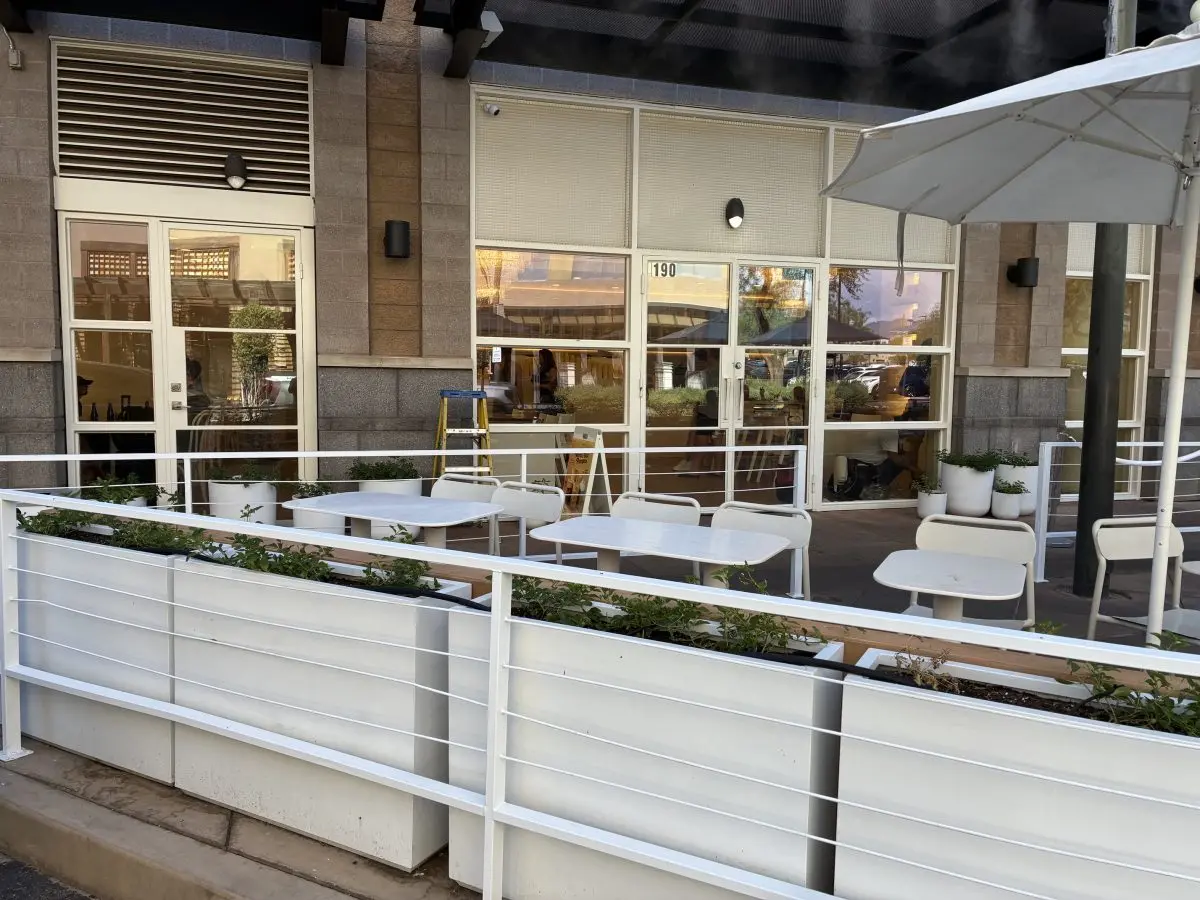
La La Land Cafe sits on North Kierland Boulevard in North Scottsdale, inside the 85254 ZIP code, and like a lot of cafe spaces built around glass, one wall does most of the work. The windows face east. From sunrise through late morning that glass takes the Arizona sun straight on, and the heat coming through it had become impossible to ignore. The owners found AZ Max Tint through a Google search and asked about commercial window tinting that could stop the heat without darkening the storefront.

The answer was Panorama Hi-Lite 70, installed across every eastern-exposure window in the cafe.

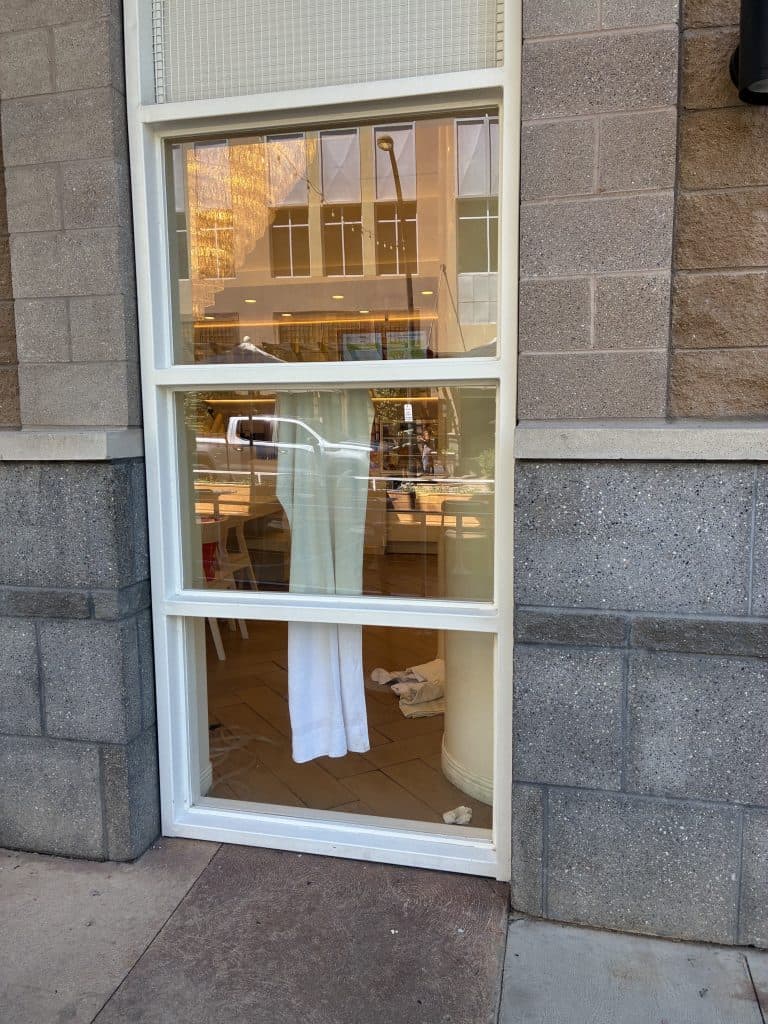
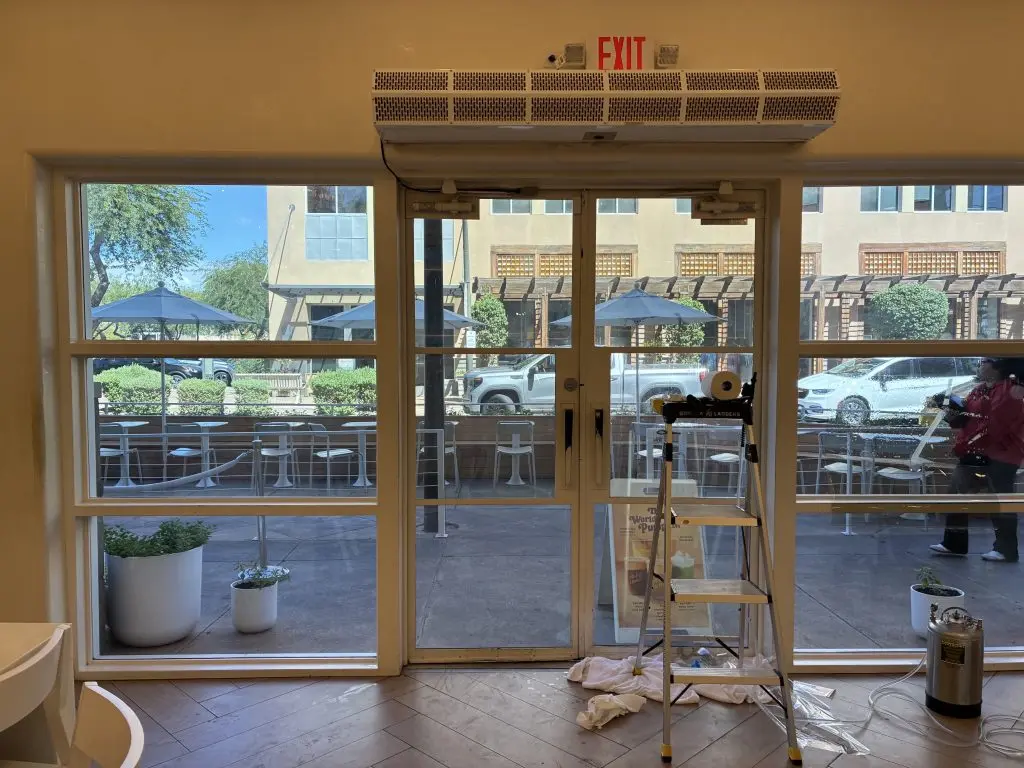
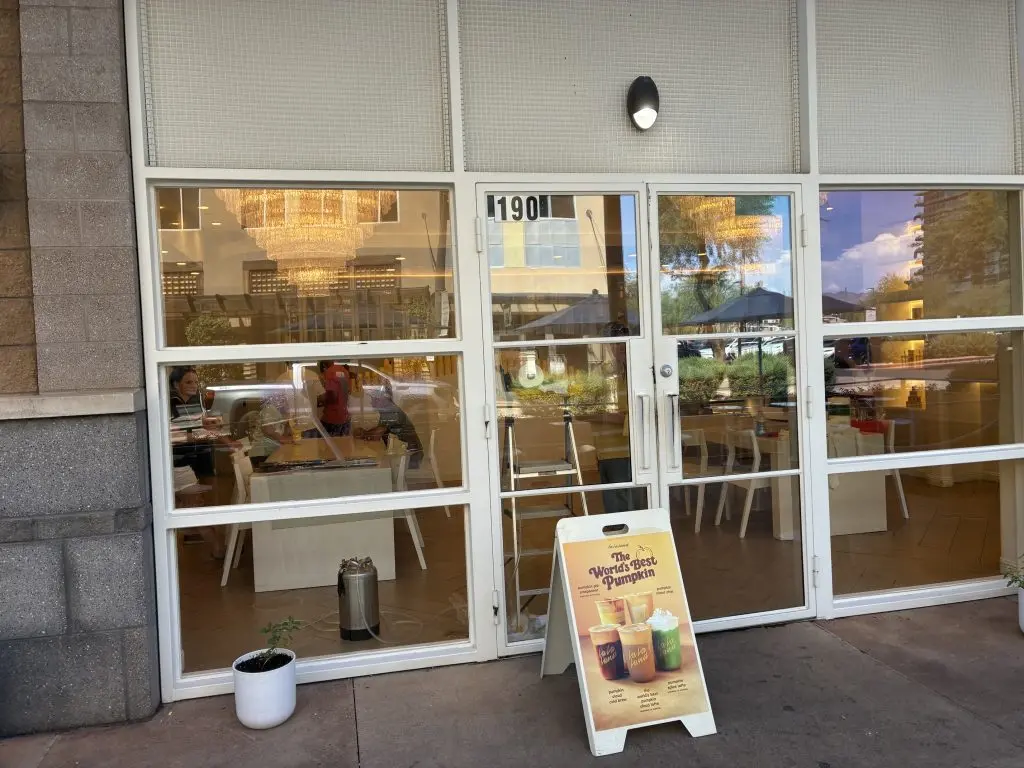
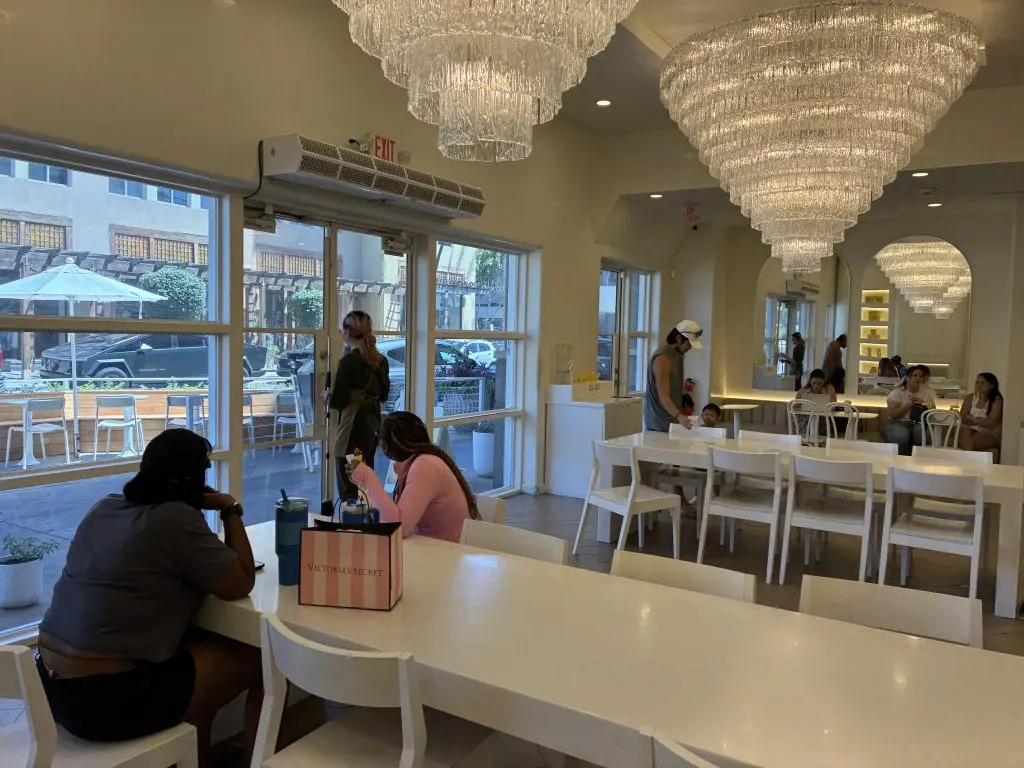
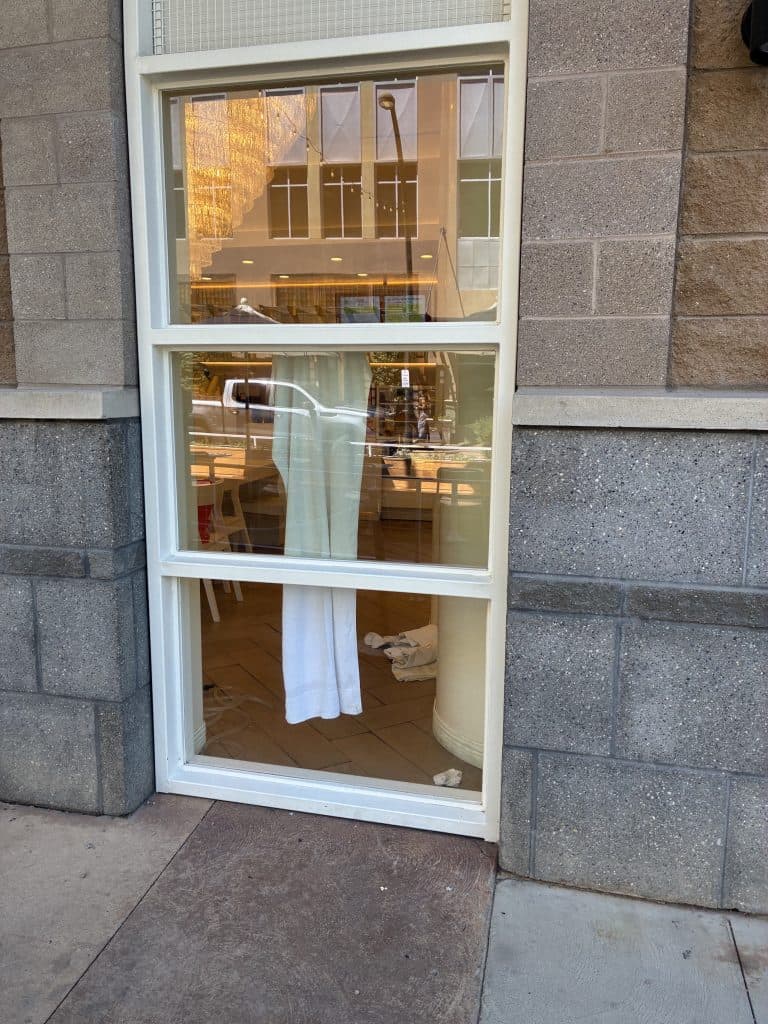
Commercial window tinting on the east-facing storefront glass at La La Land Cafe in Scottsdale, Arizona

The Problem: Heat Pouring Through East-Facing Glass

The brief from the owner was short. Stop the heat.

East-facing glass has a particular problem, and it is not the same one a west wall has. The sun hits it early and hits it low. Low-angle light comes in almost horizontally, sliding under the awnings, overhangs and shade structures that would block a higher midday sun completely. There is nothing between the glass and the sun but air.

By late morning the glass is warm, the air sitting against it is warm, and the tables closest to the windows become the least comfortable seats in the room. Air conditioning can fight it, but an air conditioner is always reacting to heat that is already inside the building. The only way to get ahead of it is to stop the heat at the glass.

Commercial window tint on east-facing cafe glass in North Scottsdale, Arizona

Why This Matters In Scottsdale And Across The Phoenix Metro

The Valley gets sun most days of the year and long stretches of genuine extreme heat. A commercial space in Scottsdale, Paradise Valley, Tempe or Phoenix with a large unshaded window wall is, in practical terms, a solar collector pointed at its own customers.

For a restaurant or cafe that heat lands in three places at once: on the guests sitting near the glass, on the staff working the front of house, and on the cooling system that has to remove it again. It is the same dynamic we cover in our article on how commercial window tinting can lower cooling costs for Arizona businesses. Glass is where the heat gets in, so glass is where it makes sense to deal with it.

The AZ Max Tint Solution: Panorama Hi-Lite 70

Two things had to be true for this project to work.

The first was obvious: reduce the solar heat coming through the eastern windows. The second mattered just as much. A cafe storefront is advertising. People walk past, look in, see a room they want to sit in, and come through the door. A dark film would have handled the heat and cost the cafe its visibility from the sidewalk and the parking area.

Panorama Hi-Lite 70 was proposed and selected because it does the solar work while keeping the glass light and the view into the cafe intact. That combination, heat reduction without losing visibility, is the reason this product was the right call for this building rather than a darker and more conventional heat film.

Heat control window film on cafe storefront windows in Scottsdale, AZ 85254

The Installation

Tom Vanderhoof and Damon handled the install, covering the full eastern exposure of the cafe.

Commercial storefront glass is unforgiving work. The panes are large, they are visible from every angle inside and out, and anything trapped under the film shows. Each pane on the east side was cleaned down to bare glass, the film cut to fit that opening, and the panel set and squeegeed out so the finished surface reads clean. Working in an operating cafe also means leaving the space ready for service at the end of the day.

Storefront window film installation at La La Land Cafe near Kierland in Scottsdale, Arizona

What The Film Does For The Cafe

  • Cuts solar heat on the exposure that was actually causing the problem
  • Keeps the view into the cafe clear from the sidewalk and the parking area
  • Makes the seating nearest the windows usable through the morning
  • Reduces the solar load the cooling system has to chase all day
  • Gives the eastern storefront a consistent, finished look

Those are the priorities on most storefront and office window film projects in Arizona, where comfort and heat control usually come first.

Panorama Hi-Lite 70 window film on La La Land Cafe in North Scottsdale, Arizona

The Finished Result

The eastern windows at La La Land Cafe are filmed end to end, and the film is doing its work exactly where the heat was coming from. The storefront still reads as glass. From the walkway you can see into the room the same way you always could, which for a cafe is not a small detail.

If you run a restaurant, cafe, office or retail space anywhere in the Phoenix metro and one elevation is beating you up every morning or every afternoon, it is a solvable problem. Our full range of window film options covers heat, glare, UV and privacy for commercial and residential buildings alike.

Window film on La La Land Cafe storefront glass in Scottsdale, Arizona 85254

Get A Window Tinting Estimate From AZ Max Tint

If heat, glare, UV exposure, privacy or excessive sunlight is making your Phoenix-area home or commercial property less comfortable, AZ Max Tint can help you find the right window film for your space.

Call AZ Max Tint: (480) 913-5889
Contact AZ Max Tint: https://azmaxtint.com/contact

For directions to AZ Max Tint, just click here.

Visit Us From North Scottsdale

Driving directions from the Kierland area of North Scottsdale to AZ Max Tint at 3734 E Kristal Way, Phoenix, AZ 85050.
Categories
Commercial Window Tint Decorative Window Tint Frosted Window Tint Storefront Window Tint

Frosted & Decorative Window Film for Phoenix Offices and Commercial Spaces

Blog Article

Frosted & Decorative Window Film for Phoenix Offices and Commercial Spaces

calendar_today
By AZ Max Tint
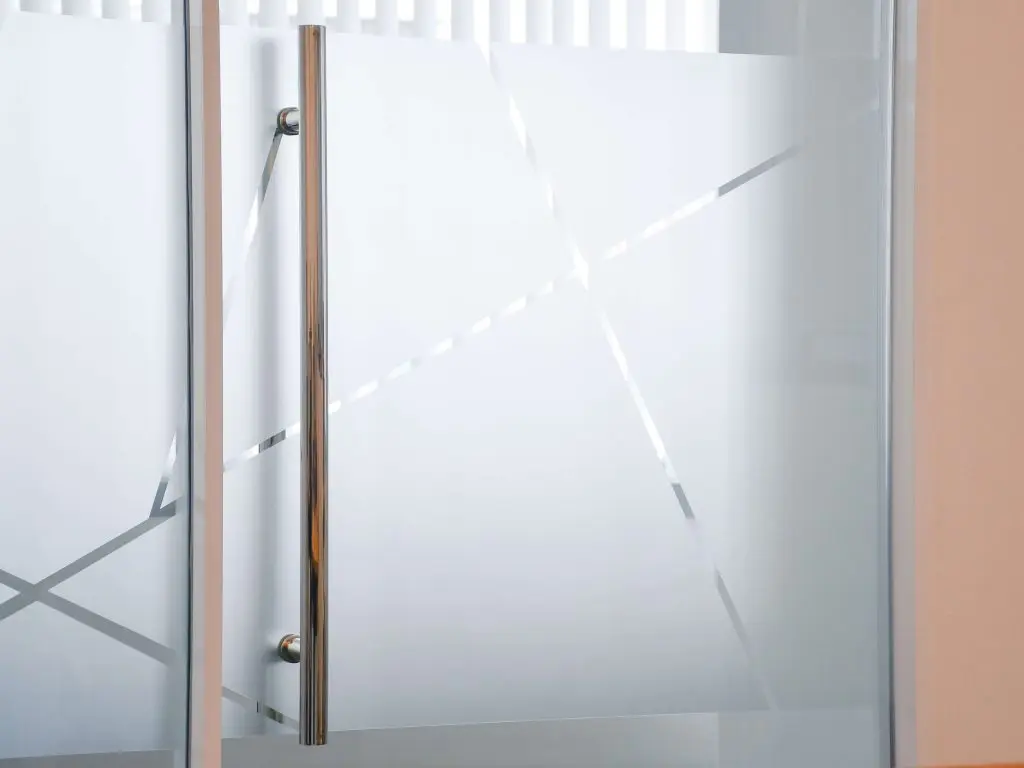
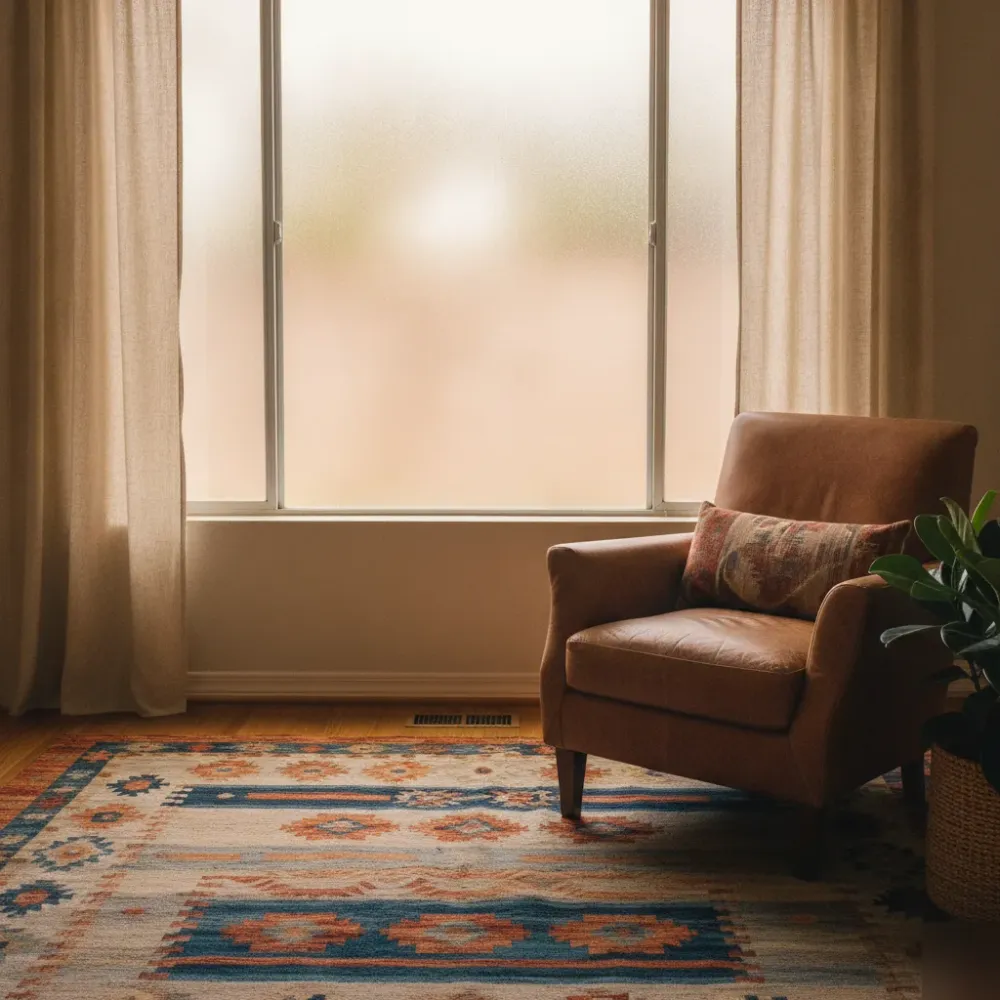
Decorative window film on office glass partitions in Phoenix Arizona

What Commercial Decorative Film Does

Decorative film is applied to the existing glass surface to control visibility and appearance. In a commercial context it typically does one of four jobs: create privacy in glass-walled rooms, apply branding or wayfinding, meet visibility requirements on full-height glass, or improve the finish of a dated space without renovation.
It is not a solar control product. If your problem is heat load or afternoon glare on a west elevation, that is commercial window tinting, and the two are frequently specified together on different parts of the same building.

Where Phoenix Businesses Use It

Conference rooms and private offices

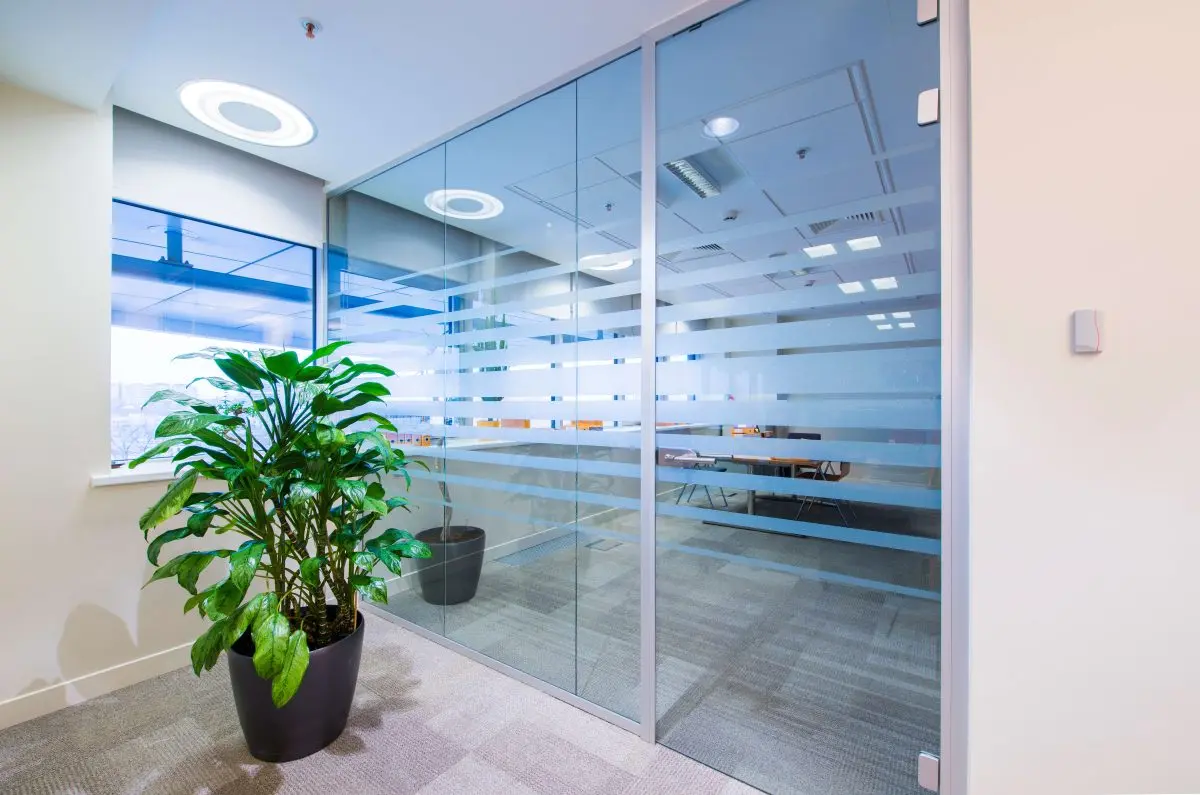
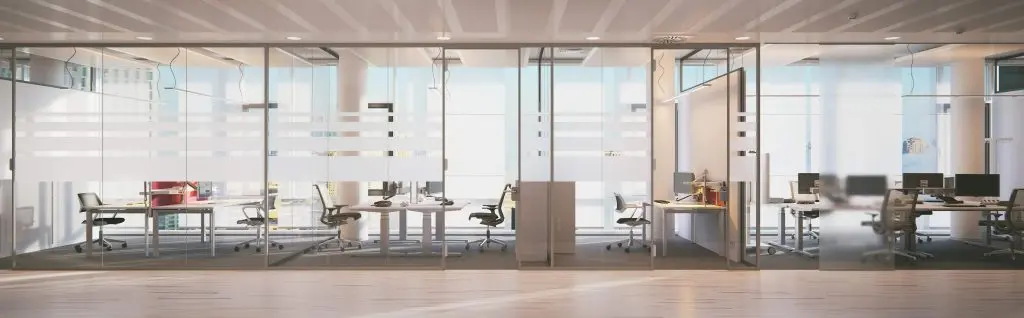
The most common application. A glass-walled conference room is unusable for sensitive discussions and uncomfortable for anyone presenting. A frosted band at seated eye height gives privacy where it is needed while leaving the upper and lower glass clear, so the room still reads as open.

Medical, dental, and behavioural health suites

Patient privacy is not a preference in these environments. Reception glass, exam room partitions, and interior sightlines from waiting areas all need managing, and frosted film does it without the institutional feel of blinds.

Legal and financial offices

Client confidentiality applies to what is visible on a desk as much as what is audible. Partition film and lower-panel frosting handle the sightline into work areas from corridors and reception.

Storefront and retail glass

Retailers use decorative film to define window display backdrops, screen stockroom or office areas visible from the floor, and apply branding directly to glass. Frosted logo work in particular reads as a permanent finish rather than signage.

Salons, spas, and fitness studios

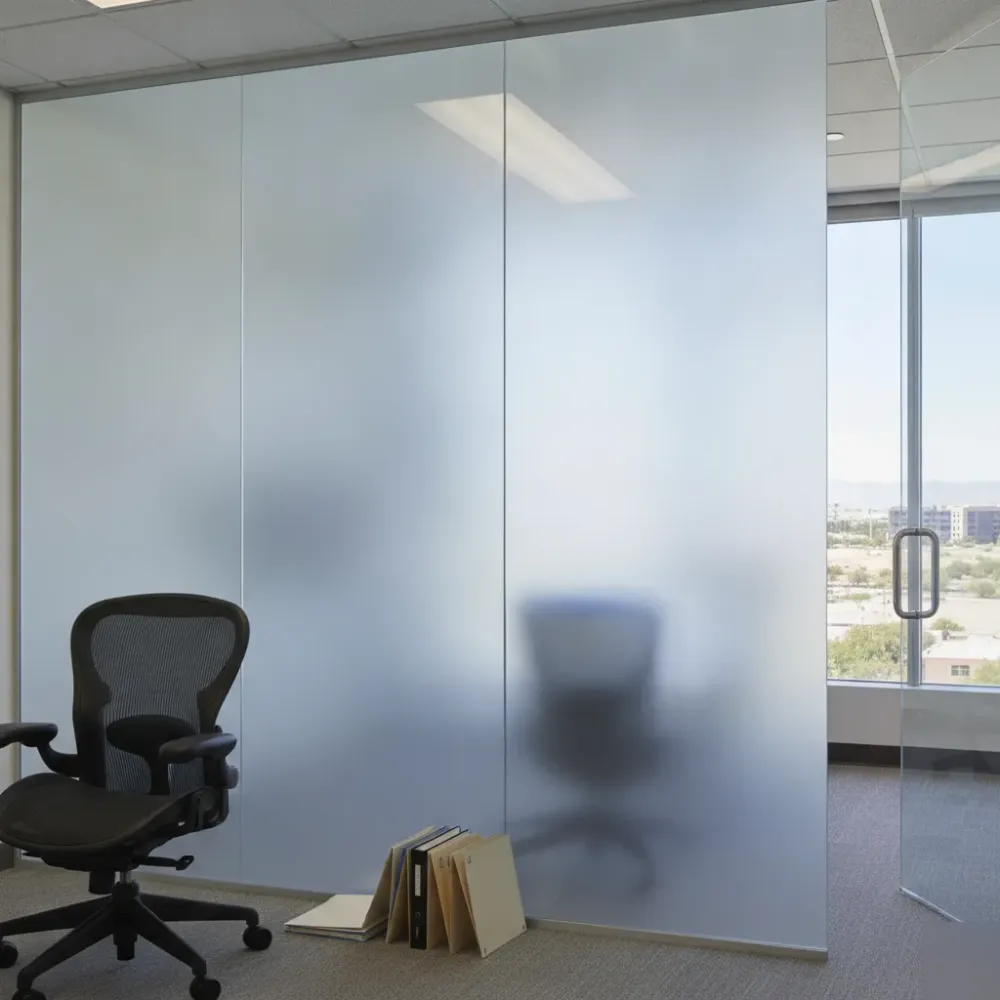
Treatment rooms and studio spaces need privacy without darkness. Frosted and gradient films let daylight through while blocking the view from the street or the main floor.

Finished frosted window tint on conference room glass wall in Phoenix office

Branding on Glass

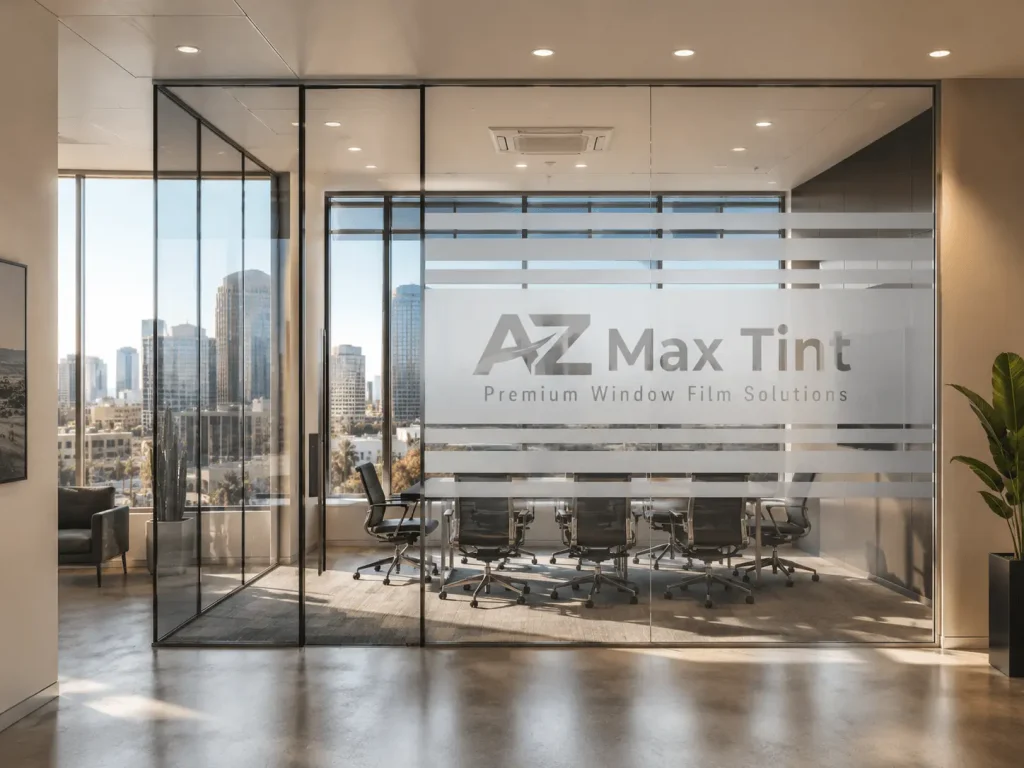
Frosted film can be cut to a logo, wordmark, or pattern and applied directly to entry doors, reception glass, or partitions. Done well it looks like etched glass and reads as part of the build rather than something applied afterward.

The practical advantages over etched or printed glass: it costs a fraction as much, it goes on your existing panes, and it can be changed when you rebrand or when a tenant moves. For leased space that last point matters — you are improving glass you do not own, reversibly.

AZ Max Tint - Frosted Decorative Logo - Phoenix AZ (1)

A Safety Consideration on Full-Height Glass

Large expanses of clear glass in commercial circulation areas present a genuine walk-into hazard, and applied manifestation — a frosted band or pattern at a visible height — is a standard way of marking them.

Requirements vary by occupancy type and jurisdiction, so confirm what applies to your building with your architect, tenant improvement contractor, or local code official rather than assuming. Where marking is required, decorative film is usually the least intrusive way to provide it, and it can carry your branding at the same time.

Specifying It Properly

Define the sightline you are blocking

Stand where the person you are screening from will stand. That determines the height and density of the film, and it is usually a narrower band than people assume.

Decide how much light you can lose

Interior partitions often borrow daylight from perimeter glass. Over-frosting a partition can leave an interior room noticeably darker and push up lighting load.

Confirm the glass type

Tempered, laminated, and insulated units behave differently, and installers work from glass compatibility references rather than applying one product everywhere.

Check the lease

This is the one that catches Phoenix tenants out. Most commercial leases and multi-tenant centre agreements contain provisions covering alterations and anything affecting exterior appearance. Interior partition film is rarely contentious; storefront glass frequently requires landlord approval. Get it in writing first.

Plan around operations

Film is applied to the interior surface and can normally be phased by room, floor, or after hours. Most commercial jobs do not require closing.

Phoenix Decorative Film - Commercial Glass Door Tint

Where This Fits With Your Other Glass Decisions

Decorative film solves visibility and appearance. Phoenix commercial glass usually has other problems running at the same time:

Different elevations usually need different products. Scoping them in one assessment is cheaper than three separate projects.

Looking for the residential version? See frosted and decorative window film for Phoenix homes.

Categories
Anti-Graffiti Film Commercial Window Tint Security Window Tint Storefront Window Tint

Securing Your Business The Real ROI Of Anti-Graffiti And Security Window Films

Blog Article

Anti-Graffiti Window Film Phoenix | Cheaper Than New Glass

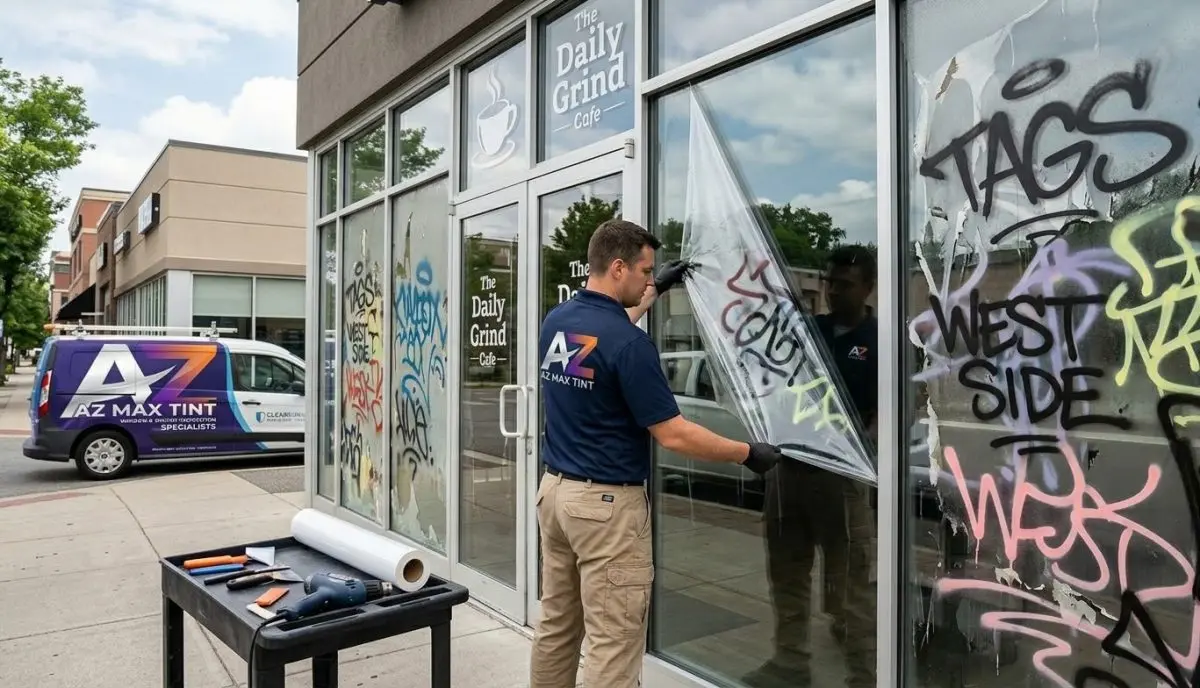
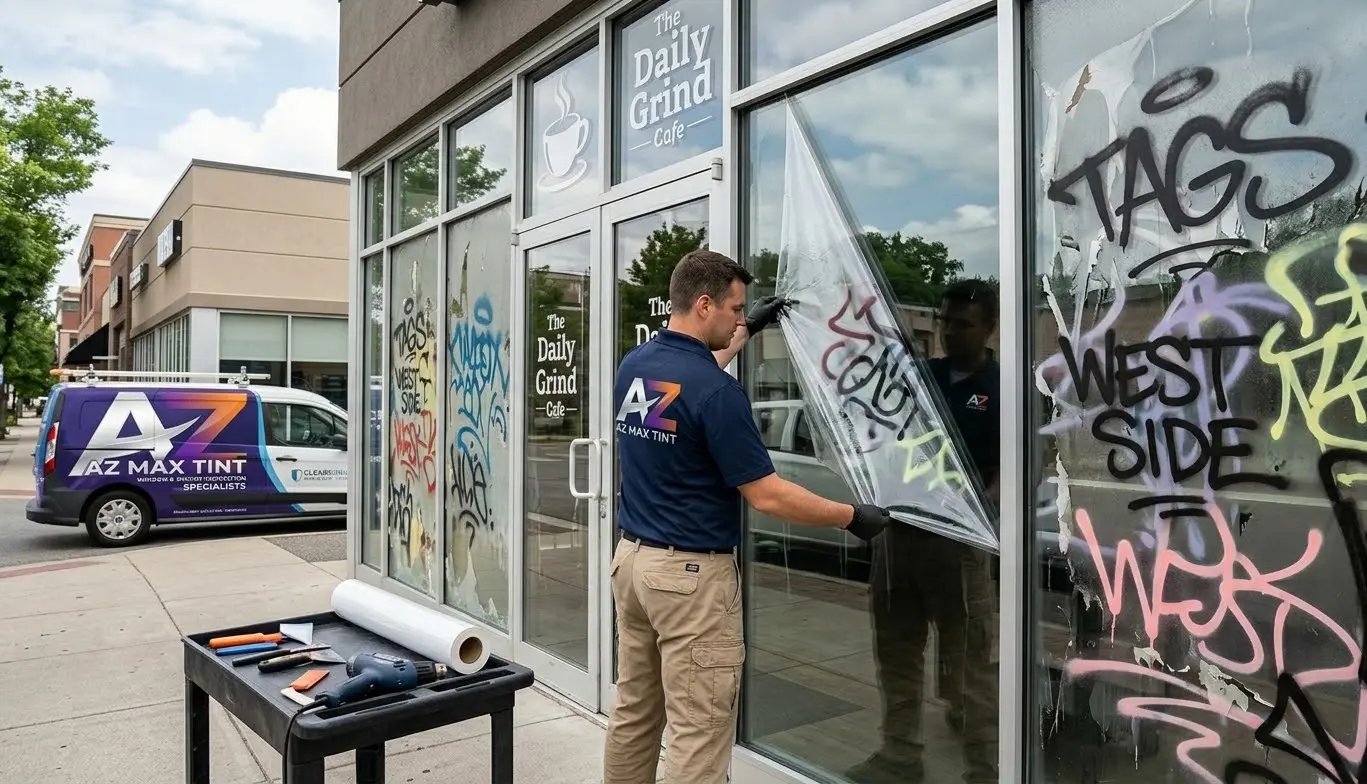
Security and anti-graffiti window film protecting a Phoenix business storefront

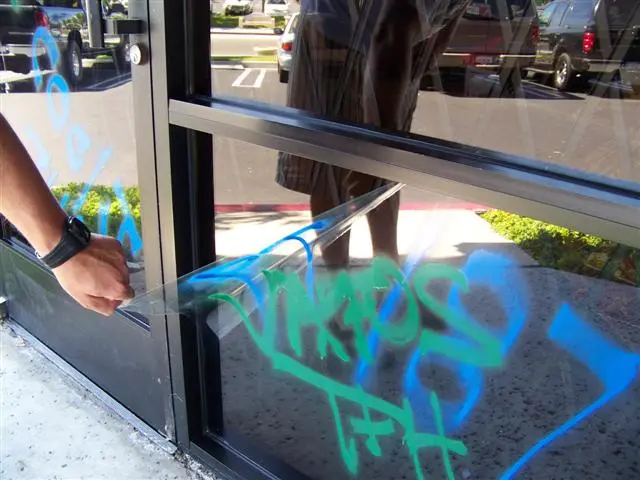
A tagged storefront is a small problem the first time. It becomes an expensive one when you learn that the tag is not on the glass — it is in it.

Acid etching, scratch tagging, and certain paints do not clean off. They cut into the glass surface. Once that happens, the only remedy is replacing the pane, and on a modern commercial storefront that means a large tempered or insulated unit, a glazing crew, and a day with your frontage boarded up.

Anti-graffiti film exists to make sure the damage lands somewhere cheaper.

AZ Max Tint - Phoenix Anti-Graffiti Film

The Sacrificial Layer: How It Actually Works

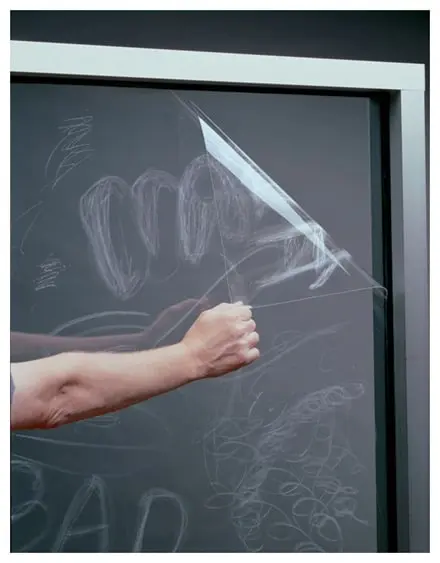
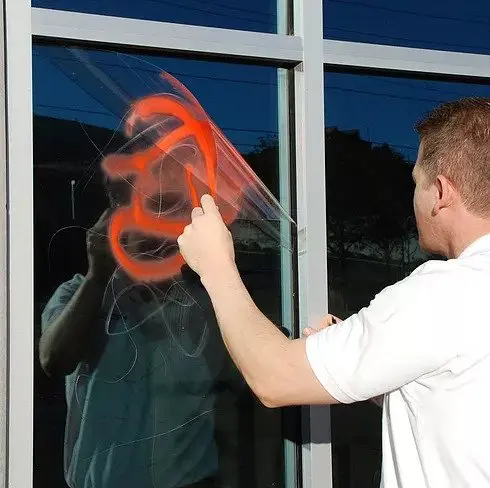
Anti-graffiti film is an optically clear layer bonded to the exterior face of your glass. It is deliberately the weakest element in the assembly, which is the entire design intent.

When someone etches, scratches, or paints the surface, they are working on the film. The glass underneath is untouched. Remediation is peeling the damaged panel off and applying a fresh one — typically a short visit rather than a glazing project.

This is the one category where film is intentionally disposable. LLumar notes in its architectural film documentation that window film is generally engineered for long-term installation with the exception of sacrificial anti-graffiti film. Everything else on your building is meant to last. This layer is meant to be replaced.

The ROI Question, Stated Honestly

The business case is a straightforward comparison, and it turns on one variable: how often does your glass get hit?

On one side, replacing a damaged commercial pane means the glass itself, a glazing crew, and downtime with boarded or exposed frontage. On the other, replacing a film panel is a scheduled visit with no glazing work and no downtime.

We are not going to publish invented figures for either. Get a glazing quote for one of your actual storefront panes, then get a film quote for the same opening, then multiply by how many times you have been tagged in the last two years. If you have been hit once in five years, the film may not pay for itself. If you are cleaning tags off the same elevation every few months, the answer becomes obvious quickly.

The businesses that benefit most are the ones that already know their tagging frequency without having to look it up.

AZ Max Tint - Phoenix Anti-Graffiti Film

Which Phoenix Properties Get Hit Repeatedly

Tagging is not evenly distributed. Across Valley commercial property, the recurring targets share characteristics:

  • Arterial road frontage — large uninterrupted glass visible to through traffic
  • Deep parking setbacks — the building sits far enough back that after-hours activity is not overlooked
  • Rear and side elevations — service doors and side glass out of sight from the street
  • Vacant adjacent units — a quiet neighbour changes the risk on your own glass
  • Ground-floor glass on multi-tenant centres — shared frontage where nobody owns the problem

If your property matches several of these and you are already budgeting for graffiti removal as a recurring line, you are the case for this product.

What Anti-Graffiti Film Does Not Do

Worth being clear, because this product is sometimes sold as more than it is.

It does not deter anyone. A tagger cannot tell it is there, which means it prevents nothing — it only changes what the damage costs you. It also is not a security product: it will not meaningfully slow a break-in. If glass entry is your concern, that is security window film, a different construction solving a different problem.

And it is not permanent. It is consumable by design. Budget for replacement panels the way you would budget for any wear item.

Combining It With Film You Already Need

Most Phoenix storefronts need solar control film regardless, because west-facing commercial glass fades merchandise and creates glare through the busiest hours of the afternoon. That is covered in our piece on storefront and office film for glare and inventory protection.

When you are already treating the glass, adding an exterior sacrificial layer is an incremental decision rather than a standalone project. Similarly, businesses hardening glass against break-ins — see why high-risk Phoenix storefronts install security film first — often specify anti-graffiti on the exterior and security film on the interior of the same pane.

Scoping these together is generally cheaper than three separate mobilisations.

AZ Max Tint - Phoenix Anti-Graffiti Film

Questions to Ask Before You Buy

  • Which elevations actually get tagged? Film the ones that do.
  • Is the film rated for exterior application, and what is its expected service life in direct Phoenix sun?
  • What does a replacement panel cost, and what is the turnaround?
  • Does my centre or landlord have exterior-appearance provisions in the lease?
  • Can it be combined with solar control or security film on the same glass?

The Bottom Line

Anti-graffiti film is not glamorous and it does not prevent anything. What it does is guarantee that when your glass gets hit, you are replacing a film panel instead of a storefront window.

For a Phoenix business on a busy corridor that has been tagged more than once, that is usually a straightforward decision. For a business that has never had a problem, it is a reasonable thing to skip.

See anti-graffiti window tint, browse our commercial window tinting services, or request a free estimate. We will look at which elevations are actually getting hit and quote only those.

Home Window Tinting: The Underrated Upgrade That Pays You Back

Storefront & Office Window Film in Arizona: Cut Glare, Protect Inventory, and Improve Comfort 

Categories
Commercial Window Tint Storefront Window Tint UV Blocking Tint

Storefront And Office Window Film In Arizona Cut Glare Protect Inventory And Improve Comfort

Blog Article

Storefront & Office Window Film in Phoenix: Cut Glare, Protect Inventory

Walk into a Phoenix retail space at 4 PM in July and you can usually tell which windows face west. The staff have angled a display away from the glare. A section of merchandise near the front has lost its color. Someone has propped a sign to block the sun, which also blocks the view of the street.

None of that shows up as a line item. It shows up as merchandise you discount, displays that photograph badly, and a section of your floor that customers walk past instead of into.

This piece is about two specific problems: glare that degrades how people work and shop, and UV that fades what you are trying to sell. Cooling cost and glass security are real commercial film topics too, and they are covered separately — links at the end.

AZ Max Tint - Storefront Window Tint - Commercial Window Film - Cosmo Pro - Privacy Window Film

Who This Is For

Phoenix businesses with meaningful glass frontage and daytime operations: retail, restaurants and cafes, salons and spas, showrooms, galleries, professional offices with perimeter workstations, and medical waiting areas. If your customers or staff spend the afternoon within a few feet of glass, this applies.

The Glare Problem Owners Stop Noticing

Glare is insidious because people adapt to it rather than report it. Staff reposition monitors, tilt screens, squint, and eventually stop mentioning it. The cost is real anyway.

In Phoenix the geometry is specific. West and southwest glass takes low-angle direct sun from roughly 3 PM until sunset. Low-angle means it comes in almost horizontally, straight at eye level and straight onto screens and display surfaces — not overhead where an awning would catch it. That is also, for most retail and hospitality, the busiest part of the day.

What that costs you in practice:

  • Point-of-sale and monitor screens become hard to read, slowing transactions
  • Window displays wash out in exactly the hours with the most foot and vehicle traffic
  • Staff close blinds against glare, eliminating the street visibility you pay rent for
  • Seating or workstations nearest the glass go unused
  • Eye fatigue accumulates across a shift

Solar control film reduces glare across the whole glazed area without closing it off. Glare reduction scales with how much visible light the film blocks, so specification is a genuine tradeoff — enough to fix the problem, not so much that you lose the display.

Softened sunlight through tinted office window in Phoenix break room

Fading: The Cost That Shows Up in Markdowns

This is the one with a direct inventory number attached, and most owners underestimate it because it happens gradually.

Fading is driven by three parts of sunlight working together: ultraviolet radiation, visible light, and infrared heat. UV is the largest single contributor. Quality solar control film blocks up to 99% of UV rays, and also tempers the infrared and visible light that contribute the remainder.

What fades fastest in a Phoenix storefront:

  • Textiles and apparel — dyed fabric near front glass, especially reds and blues
  • Packaging and printed graphics — product boxes facing the window discolour long before the product expires
  • Wood, leather, and finishes — furniture showrooms and salon interiors
  • Printed signage and menu boards — reprinted on a schedule set by sun exposure rather than by design changes
  • Flooring — the bleached stripe inside the entry that no amount of cleaning fixes

The pattern to look for is a gradient: the same SKU is fine at the back of the store and marked down at the front. That gradient is your window, and it repeats every season until the glass is treated.

Choosing Film Without Losing Your Display

The instinct is to go dark. For a retail business that is usually the wrong call, because your glass is doing marketing work as well as enclosure work.

Spectrally selective and ceramic products reject infrared heat and filter UV while transmitting most visible light. That is what lets you cut glare and fading without turning your frontage into a mirror or a wall. Our comparison of ceramic vs. carbon film covers how those products differ.

Where you do want opacity, choose it deliberately. One-way window tint gives daytime privacy while preserving the outward view — useful for offices and treatment rooms. Frosted film handles partition and lower-panel privacy without darkening the space. Those are design decisions, not heat decisions.

AZ Max Tint - Commercial Window Tint - Restaurant Storefront - STK Steakhouse - UV Blocking Tint - Phoenix Arizona 3

A Practical Checklist Before You Buy

  • Identify your worst elevation. Usually west or southwest. Start there rather than filming everything.
  • Photograph the fade gradient. It tells you which glass is actually costing you inventory.
  • Set a minimum light level. Decide what your displays need before anyone quotes a product.
  • Check the glass. Type and construction determine which films are appropriate; installers work from compatibility charts, not guesswork.
  • Check your lease. Many Phoenix commercial leases and centre agreements have exterior-appearance provisions. Confirm before installation, not after.
  • Get warranty terms in writing. Commercial film warranties vary by product.
  • Ask about scheduling. Interior application can usually be phased or done outside trading hours.

What a Professional Project Looks Like

An assessment walks each elevation, identifies glass type, notes exposure and existing shading, and records what the space needs to function. A specification follows from that — often different products on different elevations rather than one film everywhere.

Film is cut to the glass and applied to the interior surface with water-based solution. Most commercial jobs are phased so trading continues. A short curing period follows, during which slight haze or small water pockets are normal and clear on their own; Arizona’s dry air tends to shorten that window compared with humid climates.

Where This Sits Alongside Your Other Glass Decisions

Glare and fading are the daily operational costs of untreated commercial glass. They are not the only ones:

Most Phoenix businesses have more than one of these problems, and scoping them together is usually cheaper than solving them one at a time.

See our commercial window tinting services, browse UV window tint for fade protection, or request a free estimate. We will walk the space and tell you which glass is costing you money.

Categories
Commercial Window Tint Safety Window Tint Security Window Tint Storefront Window Tint

High-Risk Storefronts In Arizona Why Dispensaries Jewelry Stores And Pharmacies Choose Security Window Film First

Blog Article

Why Phoenix Dispensaries, Jewelry Stores, and Pharmacies Install Security Film First

Most Phoenix business owners think about glass twice: when they sign the lease, and when someone breaks it. Dispensaries, jewelry stores, and pharmacies tend to think about it much earlier than that, and they are usually right to.

These three categories share a specific risk profile. They hold concentrated, portable, high-value inventory behind a large sheet of glass, in a building that is empty for a predictable stretch of every night. Security window film does not make that glass unbreakable. It changes the math on how long breaking it takes.

Storefront glass in Phoenix protected with professional security window film

Why These Three Business Types Get Targeted

Dispensaries

Arizona dispensaries operate under federal banking constraints that push more of the business toward cash than a comparable retailer would carry. Combine on-site cash with high-value regulated product and a storefront on a commercial corridor, and the exposure is obvious to the operator and to anyone else paying attention.

Jewelry stores

The highest value-to-volume ratio in retail. A smash-and-grab that lasts under a minute can clear cases holding more value than most businesses hold in inventory all year. Speed is the entire attack model, which makes anything that slows entry disproportionately effective.

Pharmacies

Controlled substances behind glass, with a diversion market and a predictable overnight vacancy. Pharmacy break-ins are typically targeted rather than opportunistic, which means the person at the glass has usually thought about the approach in advance.

What Security Film Actually Changes

It is worth being precise, because security film is frequently oversold.

What it does not do: it does not make glass bulletproof, and it does not make glass unbreakable. A determined person with the right tool and enough time will get through.

What it does do: it bonds to the glass so that when the pane fractures, the fragments stay attached to the film rather than falling away. The glass breaks; the opening does not. Instead of one strike creating an entry point, the attacker faces a spidered but intact membrane that has to be repeatedly struck, cut, or pushed through.

That converts a five-second entry into a sustained, loud, visible effort. Smash-and-grab depends on being gone before anyone responds. Removing the “smash” step removes the model. As LLumar notes in its architectural film documentation, safety and security film helps hold broken glass together and reduces flying fragments — which is also why the same product category is used for severe weather.

Phoenix Security Window Film - Storefront Window Tint

Standards Worth Asking About

Security film is a technical product and its performance is measurable. Films are specified by thickness in mils and by the strength of the attachment system holding film to frame. A film applied only to the glass face performs differently from one anchored to the frame with a wet-glaze or mechanical attachment, because an anchored system resists the pane being pushed out as a unit.

The International Window Film Association publishes guidance on film categories and installer practice, and impact performance is evaluated against recognized test standards. Ask any installer what thickness they are proposing, whether the system includes frame attachment, and what testing the product has been through. Those three questions separate a real security specification from tinted glass sold as one.

Film selection also has to match the existing glass. Installers work from glass compatibility references rather than applying one product to every opening.

Why Phoenix Businesses Move on This Earlier

Valley commercial corridors put a great deal of retail directly on arterial roads with large glass frontage, deep parking setbacks, and limited natural surveillance after close. That is a different environment from dense urban retail where foot traffic continues into the evening.

There is also a practical climate factor: Phoenix storefronts often already need solar control film for heat and fading. When film is going on the glass regardless, the incremental step to a security-rated product is smaller than starting from nothing — which is why we frequently scope both together rather than as separate projects.

Phoenix Commercial Window Tint - Security Film

Film Is One Layer, Not the Plan

Security film works because it buys time. Time only has value if something happens during it.

A layered approach means the delay film creates is spent usefully: monitored alarms that are already dispatching, camera coverage that produces usable identification, lighting that removes concealment, interior barriers that protect the actual product, and a safe or cash-handling routine that limits what is available even after entry.

Film without an alarm just means the break-in takes longer. Film with monitoring means the break-in takes longer and someone is already on the way.

A Better Question Than "Do I Need Security Film?"

Ask instead: if someone struck my front glass right now, how long until they were inside, and what would they reach first?

If the answer is “a few seconds” and “the display case,” that is the case for hardening the glass. If the answer is “a while” and “an empty vestibule,” your exposure is lower and your money may be better spent elsewhere. A useful assessment tells you which of those you are, rather than quoting film for every opening.

Choosing the Right System

  • Identify the actual entry points. Front glass, side lights, rear service doors, ground-floor windows out of sight from the road.
  • Match film to glass type. Annealed, tempered, laminated, and insulated units behave differently.
  • Decide on frame attachment. Anchored systems perform better and cost more; the decision should be deliberate.
  • Consider combined products. Security plus solar control on the same glass is common in Phoenix.
  • Add anti-graffiti where tagging is the recurring cost. Different problem, different film — covered in our piece on anti-graffiti film ROI for Phoenix businesses.
Safety window tint on bank lobby glass in Phoenix Arizona

Protect the Glass Before You Need To

Security film is inexpensive relative to a single break-in, and it is one of the few security measures that keeps working when the power is out, the alarm is ignored, or the response is slow. It is also the only one that does its job in the seconds that actually matter.

Explore security window tint and safety window tint, see our full commercial window tinting services, or request a free estimate. We will walk your storefront and tell you which glass is worth hardening.

If cooling cost rather than security is your primary driver, see how commercial window tinting lowers cooling costs. For glare and merchandise fading, see storefront and office window film.

Categories
Commercial Window Tint Storefront Window Tint UV Blocking Tint

How Commercial Window Tinting Can Lower Cooling Costs For Arizona Businesses

Blog Article

Commercial Window Tinting in Arizona: How It Can Lower Cooling Costs

By AZ Max Tint
Arizona businesses do not have to wait for peak summer to feel the cost of glass. Storefronts, offices, restaurants, medical suites, salons, and showrooms can all look bright and professional from the curb, then become expensive to keep comfortable once the sun hits the windows.
If your space has hot zones near exterior glass, blinds that stay closed most of the day, employees avoiding certain workstations, or customers drifting away from sunny tables and waiting areas, the issue may not be your HVAC system alone. A large part of the cooling load can come from solar heat entering through untreated glass.
Commercial window tinting, also called commercial window film or solar control film, helps address that problem at the glass. It can reduce heat gain, soften glare, and protect interiors without requiring a full window replacement or major renovation.

Phoenix commercial buildings run cooling load about eight months of the year. For a Valley business with significant glass, that is not a seasonal expense — it is a structural one, and a large share of it comes in through the windows.

Quick Answer

Solar control window film reduces the heat entering through commercial glass, which lowers the cooling load your HVAC has to overcome. According to U.S. Department of Energy figures cited by LLumar, solar heat gain through windows accounts for roughly one third of a building’s cooling cost, and many film projects return their investment in three to five years. In Phoenix, where the cooling season is longer than almost anywhere in the country, that payback arrives at the faster end of the range.

Film is not a substitute for a failing HVAC system. It reduces the load that system has to fight.

Why Phoenix Commercial Glass Is a Different Problem

Phoenix averages roughly 111 days a year at or above 100°F, and over recent years has averaged around 40 days a year at 110°F or higher. Cooling demand here is not a summer spike; it is a baseline that runs from roughly March through October.

Three things make Valley commercial glass expensive to condition:

  • Glass-heavy construction. Office buildings, medical suites, and retail frontage built in the last few decades favor large glazed elevations. More glass means more solar gain per square foot of floor area.
  • West and southwest exposure. Low-angle afternoon sun hits vertical glass face-on between roughly 3 PM and sunset — the hottest part of a Phoenix day and, for most retail and office operations, a peak occupancy window.
  • Long peak-demand season. Utility demand charges are driven by your highest usage intervals. Reducing the afternoon cooling spike affects more than just consumption.

Both APS and SRP serve territory across the Valley with different rate structures and demand-charge treatment. Which utility serves your building is worth knowing before you scope a project, because it affects how savings actually show up on the bill.

How Window Film Reduces Cooling Demand

Solar energy arriving at glass is either reflected away, absorbed, or transmitted into the space. Untreated commercial glass transmits a great deal of it. Solar control film shifts that balance toward reflection, so less energy enters the building as heat in the first place.

The practical effects compound:

  • Less heat entering means less runtime for rooftop units
  • Shorter runtime means lower consumption and reduced wear
  • Reduced afternoon peak can affect demand charges, not just kilowatt-hours
  • More even interior temperature reduces thermostat wars and complaint volume

Which Phoenix Businesses See It First​

Film pays back fastest where glass area is high relative to conditioned floor space, and where west or south exposure dominates. In the Valley that typically means:

  • Medical and dental suites — waiting rooms with west glass, patient comfort expectations, and equipment loads already taxing HVAC
  • Professional offices — perimeter workstations where the window seat is unusable by afternoon
  • Retail and restaurants — glass frontage with all-day exposure and occupancy through the peak
  • Fitness and gyms — high internal heat generation compounding solar gain
  • Auto and service businesses — large showroom or bay glazing
UV blocking window tint on a Phoenix business storefront

The Best Film Is Not the Darkest Film

A common assumption is that heat rejection scales with darkness, so the darkest film must be the best one. That was true of dyed film. It is not true of modern architectural products.

Spectrally selective and ceramic films reject infrared energy while transmitting visible light. For a business, that distinction is commercially important: a retail space that goes dark loses display quality, and an office that goes dark starts burning more electricity on lighting, which partially cancels the cooling savings.

The right specification balances heat rejection against the light level your operation actually needs. Our breakdown of ceramic vs. carbon film covers how those tradeoffs work in practice.

What to Ask Before You Commit​

  • What is the glass type and construction on each elevation?
  • Which exposures carry the most load, and should they get different products?
  • What visible light transmission does the space need to stay functional?
  • What does the film manufacturer’s warranty cover, in writing?
  • Can installation be phased or done after hours to avoid disrupting operations?
  • Is our building served by APS or SRP, and does that utility offer commercial rebates for solar control film?

On that last point: LLumar notes that utility companies frequently offer rebates for solar control film installation, sometimes as a named measure and sometimes under a commercial “Custom Measures” category. Programs change, so verify current terms with your utility directly before building them into a business case.

Film vs. Window Replacement

Replacing commercial glazing solves the same problem and solves it permanently. It also costs a multiple of what film costs and takes the affected areas out of service while it happens.

Film upgrades existing glass at a fraction of replacement cost, installs without removing glazing, and can usually be scheduled around business hours. For most Valley businesses with structurally sound windows and a heat problem, film is the proportionate answer. If your glazing is failing — seal failure, fogging between panes, frame damage — that is a replacement conversation, and film is not the fix.

Where This Fits With Other Commercial Film Decisions

Cooling cost is one reason Phoenix businesses install film. It is not the only one, and the right product often addresses more than one goal at once.

If glare on screens and merchandise fading are the bigger day-to-day problems, that is covered in our piece on storefront and office window film for glare and inventory protection. If your concern is glass security rather than energy, see why high-risk Phoenix storefronts install security film first. Those are different products solving different problems, and scoping them together usually costs less than doing them separately.

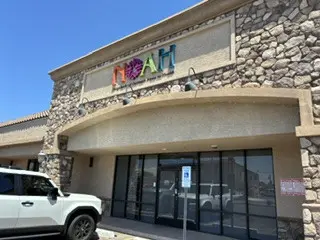
AZ Max Tint - Commercial Window Tint - Noah Storefront - UV Blocking Tint - Phoenix Arizona 3

What Should You Ask Before Choosing Commercial Window Film?

Before choosing a product, ask questions that connect performance to the way your business actually operates:
  • Will this film reduce heat enough for our worst windows?
  • How much visible light will it preserve?
  • Will it make the building look reflective, darker, or more neutral from the outside?
  • Is it compatible with our glass type?
  • Does the manufacturer warranty apply to this application?
  • Can the installation be scheduled around business hours, tenant access, or customer traffic?
Those questions matter because commercial film is not one-size-fits-all. The best recommendation for a west-facing restaurant can be different from the best recommendation for a professional office, storefront, or medical suite.

Where Commercial Film Usually Pays Off First

If you are deciding where to start, focus on the areas where solar heat creates the most operational friction.
High-priority zones often include:
  1. West-facing windows that receive intense afternoon sun
  2. South-facing glass with long daily exposure
  3. Customer seating or waiting areas that become uncomfortable
  4. Registers, reception desks, and workstations affected by glare
  5. Retail displays or inventory exposed to direct sunlight
  6. Large panes or glass doors that make one part of the space harder to cool
You do not always have to film every piece of glass at once. A phased approach can start with the worst exposures, then expand once you see how the building responds.

A Practical Checklist Before Requesting an Estimate

Before contacting an installer, walk your space during the hours when the problem is worst and make a short list.
Ask yourself:
  • Which windows create the most heat?
  • What time of day is the problem most noticeable?
  • Are employees, customers, or equipment affected?
  • Do blinds or shades stay closed most of the day?
  • Are there products, furnishings, or finishes near the glass that need protection?
  • Is the priority energy savings, comfort, glare reduction, privacy, appearance, or a combination?
This information helps the installer recommend film based on your real conditions instead of guessing from square footage alone.

Commercial Window Tinting vs. Window Replacement

Window replacement can improve building performance, but it is often expensive, disruptive, and unnecessary when the existing glass is structurally sound.
Commercial window film is usually a more practical first step because it works with the windows you already have. Installation is typically less invasive than replacement, and most businesses can continue operating with minimal disruption depending on scope, access, and scheduling.
For many Arizona businesses, the question is not whether new windows would perform better. The better question is whether a professionally installed film can solve the immediate heat, glare, and comfort problems at a fraction of the disruption.
AZ Max Tint - Storefront Window Tint - Commercial Window Film - Cosmo Pro 4

Is Commercial Window Tinting Worth It in Arizona?

Commercial window tinting is worth evaluating when direct sun is making a business harder to cool, harder to work in, or harder to present well to customers. The value is strongest when the same windows are causing several problems at once: heat, glare, fading, privacy concerns, and uncomfortable customer or employee areas.
The return is not only measured on the utility bill. A cooler reception area, a usable conference room, a more comfortable dining section, or protected merchandise near the windows can all affect how the business operates day to day.

When Security Film Should Be Part of the Conversation

Solar control film focuses on heat, glare, UV, and comfort. Security film is designed for a different purpose: helping hold broken glass together and slowing access after impact.
Some businesses need both conversations, especially street-facing storefronts, dispensaries, jewelry stores, pharmacies, salons, and other locations with valuable inventory or vulnerable glass. In those cases, it is smart to discuss solar performance and glass protection together instead of treating them as unrelated upgrades.

For more on that side of the decision, read our guide on security window film for high-risk storefronts.

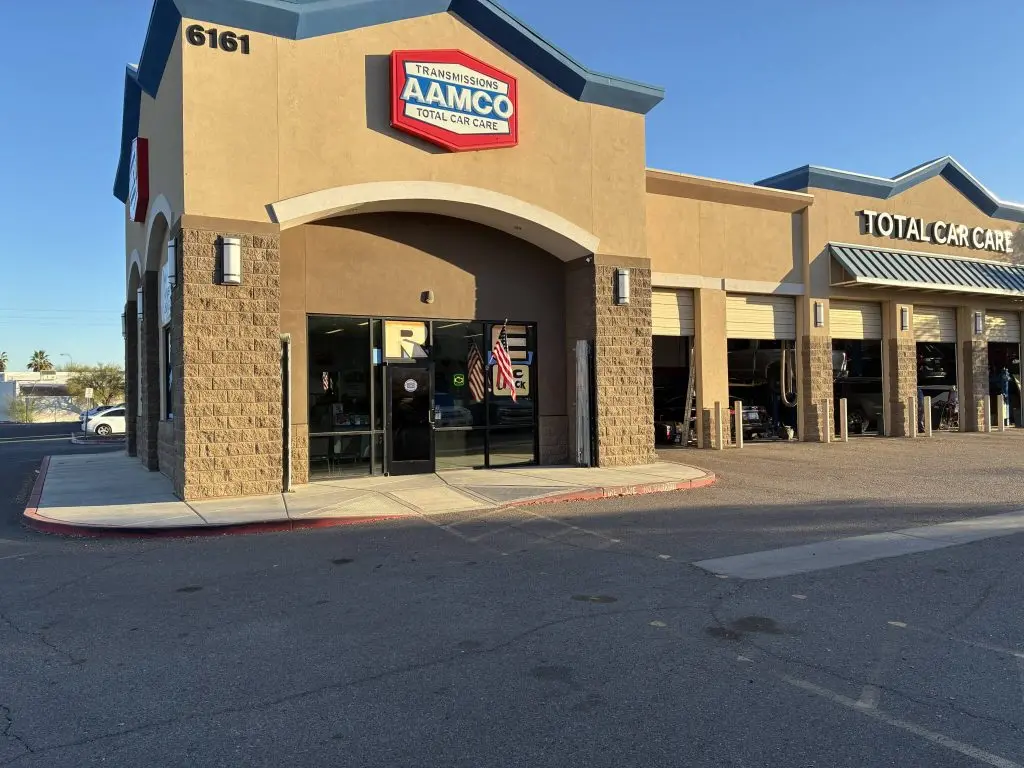
AZ Max Tint - Commercial Window Tint - Aamco Car Care - Phoenix Arizona 2

Frequently Asked Questions

Does commercial window tinting really lower energy bills in Phoenix?

It lowers the cooling load your HVAC has to overcome by reducing solar heat gain through glass. DOE figures put solar gain through windows at roughly a third of a building’s cooling cost. Actual savings depend on glass area, orientation, existing glazing, film selection, and your utility rate structure.

Will window film make my business too dark?

Not unless you specify a dark film. Spectrally selective and ceramic products reject heat while transmitting most visible light. Retail and office spaces generally should not go dark, because lost display quality and added lighting load work against the savings.

Can film be installed while we stay open?

Usually yes. Film is applied to the interior surface with water-based solution and can typically be phased by elevation or floor. Larger commercial projects can be scheduled after hours. Discuss timing constraints when you book.

How long before we see savings?

Comfort improvement is immediate. Bill impact appears over full billing cycles and is clearest across a Phoenix cooling season. Industry figures commonly cite three to five year payback on commercial film projects, varying with energy rates and building specifics.

Is commercial window film only for storefronts?

No. Offices, medical suites, schools, government buildings, hospitality, and industrial facilities all use architectural film. Any conditioned space with significant glass is a candidate.

Ready to scope it? See commercial window tinting, browse the full specialty window film range, or request a free estimate. We will assess each elevation and tell you where film pays off first — and where it does not.

Build a Cooler, More Usable Business Space

Commercial window tinting can help Arizona businesses reduce solar heat gain, improve comfort, control glare, and protect interiors without changing the footprint of the building. The best results come from matching the film to the glass, the exposure, and the way the space is actually used.

AZ Max Tint is a family-owned window film company serving the Greater Phoenix area and Arizona by appointment. We are licensed, bonded, and insured, ROC #363904. We help business owners, property managers, and commercial tenants evaluate problem windows and choose film that fits the building, the glass, and the goals for the space.

Call or text (480) 913-5889 or request a quote online to schedule a commercial window film estimate.

Categories
Anti-Graffiti Film Commercial Window Tint Decorative Window Tint Frosted Window Tint Mirror Window Tint Residential Window Tint Safety Window Tint Security Window Tint Stained Glass Window Tint Storefront Window Tint UV Blocking Tint

5 Common Misconceptions About Window Tinting In Arizona

Blog Article

5 Window Tinting Myths That Cost Phoenix Homeowners Money

Ask ten people in the Valley about window tinting and you will hear the same handful of warnings. The film bubbles in the heat. It makes your house look like a limousine. It voids your window warranty. The installers make a mess and it is not really worth it anyway.

Some of that was true in 1995. Almost none of it is true now, and in a city that runs roughly 111 days a year at or above 100°F, believing it costs real money. Every summer a west-facing Phoenix living room goes untinted because of something a neighbor said, and the homeowner pays for it on the utility bill and in faded flooring.

Here are the five myths we hear most, plus a sixth that costs Phoenix homeowners more than all of them combined.

Myth #1: "Window Film Bubbles and Peels in Phoenix Heat"

This is the most persistent myth, and it comes from real experience — with products that have not been sold in decades. Early dyed films used adhesives that broke down under sustained UV exposure. In Phoenix they broke down faster than anywhere else. People saw purple, bubbled glass on 1980s storefronts and reasonably concluded that is what window film does.

Modern film is a different product. Manufacturers now use color-stable dye chemistries and metal or ceramic layers instead of the dyes that failed. LLumar addresses this directly in its architectural film FAQ, noting that purpling and bubbling indicate very low-grade film whose adhesive and dye components have broken down, and that its film carries a warranty against exactly that.

When film does fail early in Phoenix, the cause is almost always one of two things: a bargain product bought off a hardware store shelf, or a poor installation that trapped contamination under the film. Neither is a property of window film. Both are avoidable.

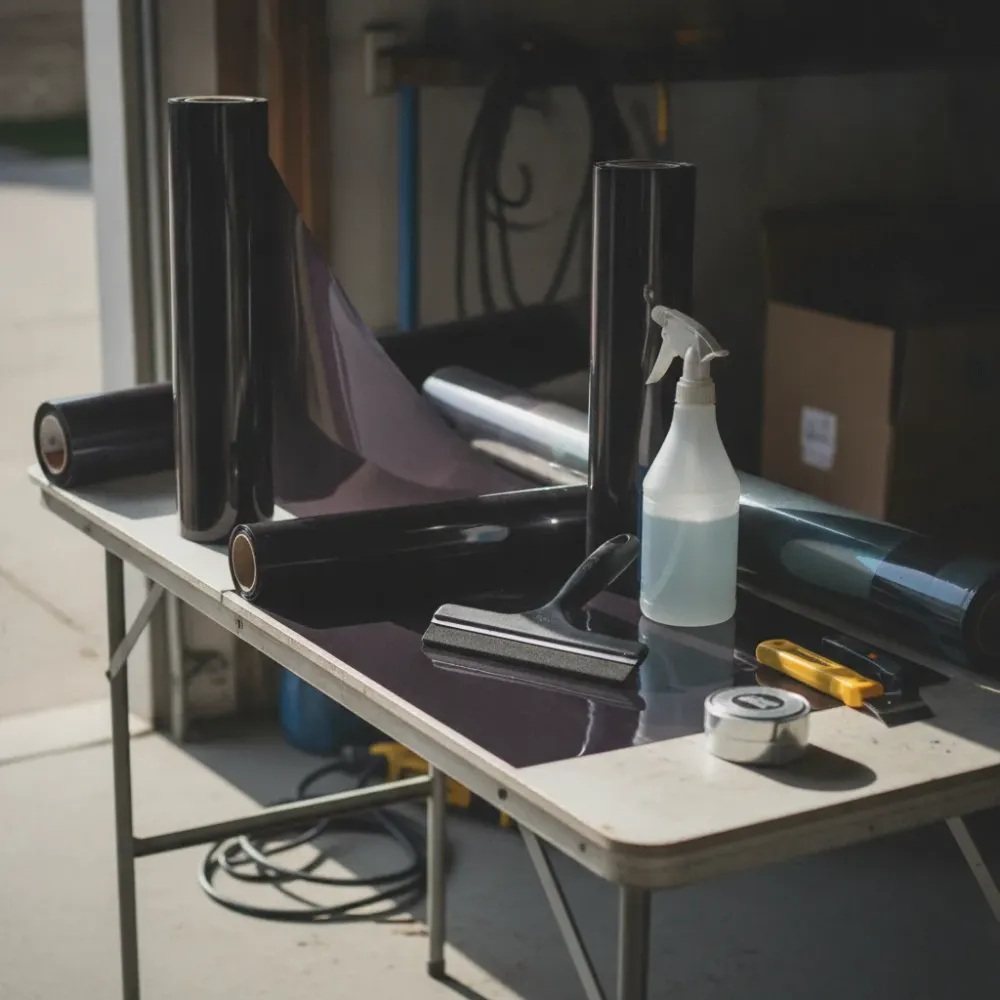
Window tint film rolls and squeegee tools on a Phoenix installer's work table

Myth #2: "Tinted Windows Look Dark and Obvious"

The mental image most people carry is limousine glass — near-black, mirrored, obviously aftermarket. That is one option out of many, and it is not the one most Phoenix homes get.

Film is specified by visible light transmission, and the range runs from nearly clear to fully opaque. Spectrally selective and ceramic films are popular precisely because they reject infrared heat while letting visible light through, so the room stays bright and the window looks essentially unchanged from the street.

If you do want a visible change, that is available too — mirror window tint for exterior reflectivity and daytime privacy, or decorative and frosted film for patterned glass. The point is that appearance is a choice you make, not a side effect you accept.

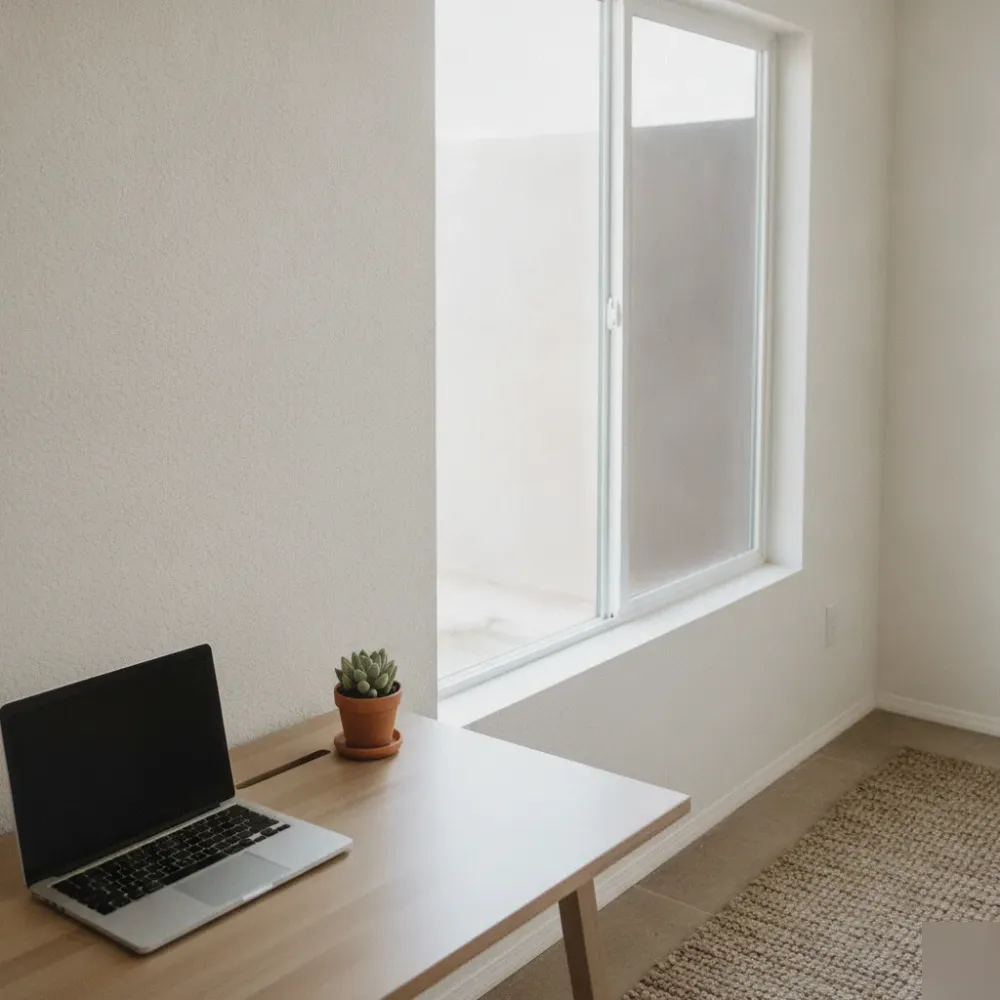
Finished tinted window in Phoenix home office showing reduced glare and even light

Myth #3: "Film Warranties Are Full of Loopholes"

The assumption is that a film warranty is marketing paper that evaporates the moment you try to use it. In practice, premium architectural film warranties from established manufacturers cover the specific failure modes people worry about: peeling, bubbling, crazing, delamination, and demetalizing.

The related worry — that film voids your window warranty — deserves a longer answer than fits here. Short version: most window manufacturers do exclude coverage once aftermarket film is applied, and when a licensed installer uses premium film, the film manufacturer’s warranty steps in behind the glass and seals. We covered the mechanics in detail in our piece on double-pane windows and thermal shock.

Before you hire anyone in the Valley, ask for the film warranty terms in writing. A company that cannot produce them is telling you something about the product they are about to put on your glass.

Myth #4: "Tinting Is a Luxury, Not a Necessity"

This one is climate-dependent, and Phoenix is where it falls apart.

Start with UV. Glass blocks most UVB but transmits a great deal of UVA, which is what drives fading in flooring, furniture, and artwork. Solar control film blocks up to 99% of UV rays. In a city with this much sun exposure through this many windows, that is not a cosmetic concern — it is the difference between hardwood that holds its color and hardwood that develops a bleached stripe where the afternoon sun lands.

Then there is load. According to U.S. Department of Energy figures cited by LLumar, solar heat gain through windows accounts for roughly one third of a building’s cooling cost. Phoenix runs cooling load for about eight months a year. One third of eight months is a meaningful number on an APS or SRP bill.

If fading is your primary concern, UV window tint is the direct answer. If you want the full accounting of what film returns on a Phoenix home, we broke it down in this piece on what home window tinting actually returns.

Completed UV window tint on living room window reducing glare in Phoenix home

Myth #5: "Installation Is Messy and Disruptive"

We will be honest about half of this one. DIY film installation genuinely is difficult and frustrating. Getting a large panel onto glass without creases, trapped water, or contamination takes practice most people do not have, and the failure rate is high.

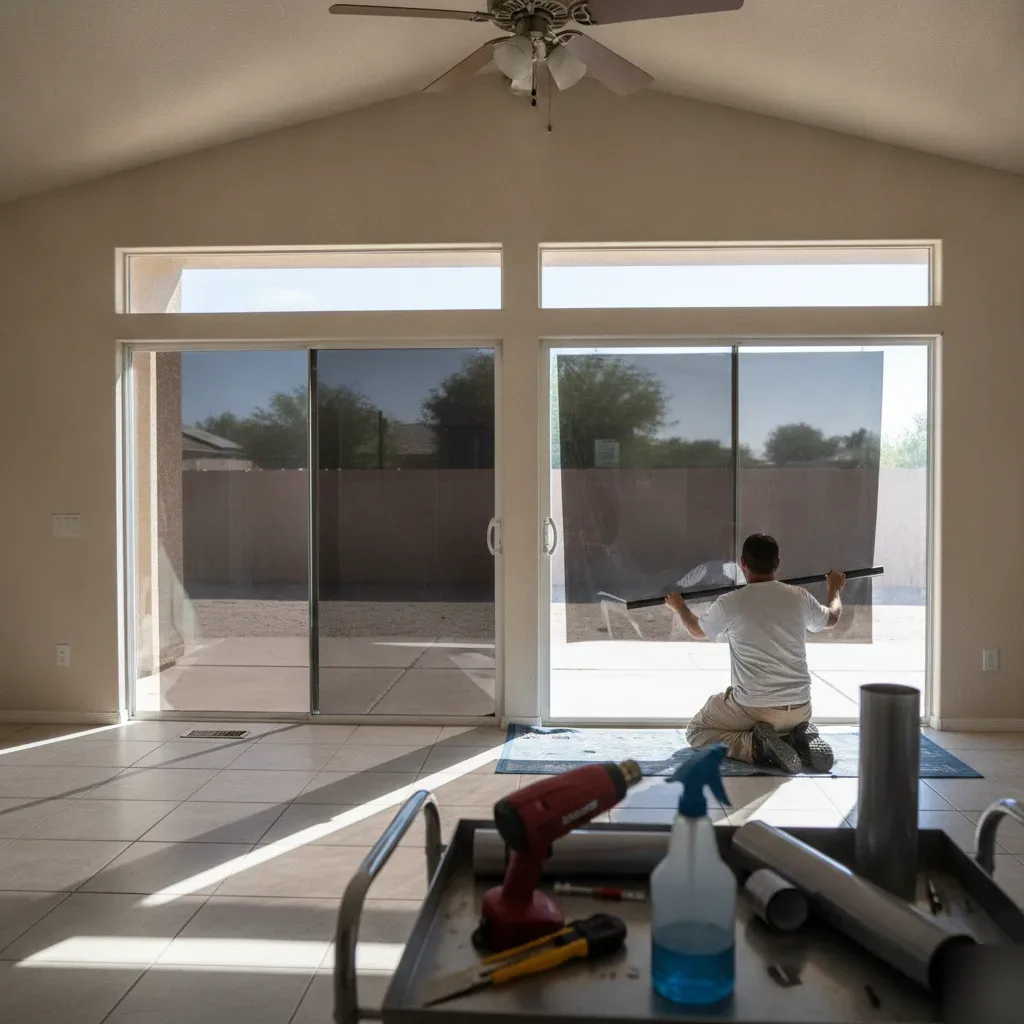
Professional installation is a different process. Film is cut to the glass, applied with water-based solution, and squeegeed out. Most Phoenix homes are completed in a single day. You do not need to move out, empty rooms, or take time off beyond letting the installer in.

After installation there is a curing period. For a few days you may see slight haze or small water pockets as remaining moisture evaporates. This is normal and it clears on its own. Arizona’s dry air actually works in your favor here — curing tends to complete faster in the Valley than in humid climates.

Technician installing window tint film on a Phoenix home's sliding glass door

Myth #6: "Only West-Facing Windows Need Film"

This is the one that costs the most, because it sounds sensible and it is half right.

West and southwest exposures do take the worst of a Phoenix afternoon. Low-angle sun from roughly 3 PM to sunset hits that glass face-on during the hottest hours of the day. If you only film part of the house, that is where you start.

But south-facing glass carries serious load through the shoulder seasons, and east-facing rooms bake in the morning — which matters if that is a bedroom or a home office. Meanwhile, a genuinely north-facing window in Phoenix often does not justify the cost at all.

The useful version of this rule is not “only tint west windows.” It is: a good estimate tells you which openings need film and which ones do not. Any installer who quotes every window in the house at the same specification without walking the property has not actually looked at your home.

The Bottom Line for Phoenix Property Owners

Nearly every myth on this list traces back to a real problem with a product that is no longer representative. Cheap dyed film failed. Early adhesives yellowed. DIY installs bubbled. Those things happened, and then the technology moved on while the reputation stayed put.

What has not changed is that the quality of the product and the quality of the installation determine the outcome. That is true everywhere, and it is true with less margin for error in a climate that puts glass through 110°F afternoons roughly forty days a year.

AZ Max Tint has been installing film across the Valley for over 30 years. Explore residential window tinting, browse the full specialty window film range, or request a free estimate and we will walk your home and tell you which windows actually need attention.

Frequently Asked Questions

Does window tint bubble in Arizona heat?

Quality film installed correctly does not bubble from heat. Bubbling comes from low-grade adhesive breaking down or from contamination trapped during installation. Small water pockets in the first few days after install are normal curing, not failure, and clear on their own.

Will window film make my Phoenix home dark?

Only if you choose a dark film. Ceramic and spectrally selective films reject infrared heat while transmitting most visible light, so rooms stay bright. Many homeowners find filmed rooms brighter in practice because they stop closing blinds against the heat.

Is window tinting worth it in Phoenix?

In a climate with roughly 111 days a year over 100°F and an eight-month cooling season, film addresses heat gain, UV fading, and glare simultaneously. It is most worth it on west and southwest exposures and least worth it on north-facing glass.

How long does window film last?

Premium architectural film is built for long-term installation. Actual lifespan depends on film type, glass type, exposure, and climate. Manufacturers back their products with factory limited warranties covering peeling, bubbling, and color failure.

Decorative & Frosted Window Film: Style Meets Function for Arizona Homes and Offices

About The Founder of AZ Max Tint

Categories
Commercial Window Tint Residential Window Tint Storefront Window Tint UV Blocking Tint

window tinting arizona summer is it too late

Blog Article

It's 115°F Outside — Is It Too Late to Tint Your Windows This Summer?

By AZ Max Tint

It is 115°F outside, your west-facing rooms have been unusable since May, and you have finally started looking into window tinting. Then the doubt arrives: is it too late? Should you wait until things cool down and do it properly in the spring?

No. Summer is a perfectly good time to install window film in Phoenix, and waiting until spring costs you an entire cooling season for no benefit.

But “when should I tint” is a fair question with a real answer, and it is not the same answer everywhere. Here is how timing actually works in the Valley.

Residential window tint protecting a Phoenix living space from UV fading

The Short Answer: The Best Time Is Whenever You Decide

Window film is applied to the interior surface of your glass, in your conditioned home. Outdoor temperature has very little to do with the installation.

There is no seasonal window you have missed, no weather requirement you are failing to meet, and no performance penalty for a July install versus a February one. The only real timing considerations in Phoenix are scheduling and curing, both covered below.

If there is a genuinely optimal time, it is late winter into early spring — not because the film performs better, but because installers are less booked and you get the full cooling season ahead of you rather than half of it. That is a scheduling advantage, not a technical one.

Why Summer Installation Works Fine

The install happens indoors

Film is cut and applied on the inside face of the glass with a water-based solution. Your installer is working in your air conditioning, not on a roof. The 115°F outside is irrelevant to the process.

You start saving on day one

Film begins rejecting solar heat the moment it is on the glass. Install in July and you get the benefit for the remainder of a Phoenix cooling season that typically runs into October. Wait until March and you have paid for a full extra summer of heat gain and UV damage to get the same product.

The difference is noticeable quickly

In a home with significant west glass, the comfort change in the affected rooms is usually apparent within days. Utility impact takes a full billing cycle or two to read clearly, since it depends on weather, occupancy, and thermostat behaviour.

AZ Max Tint - Residential Window Tint 4

"Won't the Heat Damage the Film?"

This concern usually traces back to seeing bubbled, purpled film on older Valley buildings. That was low-grade dyed product whose adhesive and dye components broke down under sustained UV.

Premium architectural film is engineered for exactly this climate. LLumar notes that purpling and bubbling are signs of very low-grade film and warrants its products against that failure. Heat during installation is not what causes it; product quality and installation quality are.

Curing in Arizona: Faster Than Most Places

This is the one genuinely climate-specific part of the answer, and it works in your favour.

After installation, a small amount of mounting solution remains between film and glass and has to evaporate. During that period you may see slight haze or small water pockets. This is normal curing, not a defect, and it clears on its own.

Curing time varies with weather, glass type, and product. In humid climates it can drag out. Phoenix’s dry air and warm glass temperatures tend to shorten it considerably — the same summer heat people worry about actually speeds this step up.

The practical guidance during curing: do not clean the filmed surface, and do not press or poke at water pockets. Let it finish.

Scheduling Reality in the Valley

The honest constraint on summer installation is not weather. It is demand.

Phoenix window film demand tracks the thermometer. Enquiries climb from late spring, peak through the hottest part of summer when everyone reaches the same conclusion at once, and fall off in autumn. Lead times follow that curve.

What that means for you:

  • Booking in peak summer may mean waiting longer for a slot. Call earlier than you think you need to.
  • Autumn and winter generally have the shortest lead times and the most scheduling flexibility.
  • Monsoon season does not stop interior work, though it occasionally affects access and travel.
AZ Max Tint - Residential Window Tint 3

What Waiting Actually Costs

Deferring from July to next spring is not a neutral decision. Over those months:

  • Cooling load continues. Solar heat gain through windows accounts for roughly a third of a building’s cooling cost, and Phoenix keeps cooling for about eight months.
  • UV damage accumulates and does not reverse. Flooring, furniture, and artwork fade permanently. Every additional summer of exposure is damage you cannot undo later.
  • Rooms stay unusable. That is square footage you are paying for and not using.

Which Windows to Do First

If budget means phasing the work, sequence it by exposure rather than by room:

  1. West and southwest glass. Low-angle sun hits these face-on from roughly 3 PM to sunset, the hottest hours of a Phoenix day. Largest single improvement.
  2. South-facing glass. Significant load, more seasonally variable.
  3. East-facing glass. Morning heat — matters most for bedrooms and home offices.
  4. North-facing glass. Usually the lowest priority in Phoenix and often not worth filming at all.

Also prioritise any room with flooring, artwork, or furniture you care about, regardless of orientation — UV window tint addresses that specifically.

What About Double-Pane Windows?

Most Valley homes built since the 1990s have insulated glass units, and there is a real consideration here: film selection has to match the glass. Heat-absorbing films can raise glass temperature on insulated units in high-exposure positions.

This is manageable and routine, not a reason to skip film — but it is a reason to use a professional who identifies your glass before quoting a product. We covered the mechanics in can you tint double-pane windows.

What to Expect From the Process

  • Assessment — glass type, exposure, shading, and what each room needs. This determines which film goes where.
  • Installation — interior application, most homes complete in a single day.
  • Curing — a few days of possible haze or water pockets, clearing on its own, typically faster in Arizona’s dry air.
  • Aftercare — normal glass cleaning. Avoid abrasive pads and harsh chemicals on the film surface.

The Bottom Line

There is no bad month to tint windows in Phoenix. Late winter and early spring give you shorter lead times and a full season of benefit ahead, which makes them the best time if you are planning in advance.

But if it is 115°F right now and you are staring at a room you cannot use, the answer is not to wait eight months. It is to book the west elevation.

See our residential window tinting services, compare ceramic and carbon films, read about what tinting actually returns, or request a free estimate. Running a business rather than a household? See commercial window tinting.

Decorative & Frosted Window Film: Style Meets Function for Arizona Homes and Offices

Ceramic vs. Carbon Window Film: Which Is Right For Your Property

Get A Fast FREE Estimate

Enter Your Information Below

Get A Fast FREE Estimate

Enter Your Information Below