Categories
Commercial Window Tint Projects Security Window Tint

Commercial Security Window Film In North Phoenix: 9 Mil Solar Gard With A Structural Attachment System

PROJECT POST

Commercial Security Window Film In North Phoenix: 9 Mil Solar Gard With A Structural Attachment System

September 14, 2026

A commercial property in North Phoenix came to us through our website with three problems on the same glass: security, heat and glare. That combination is more common than people expect, and it is one of the few situations where a single specification can address all three at once.

The answer was Solar Gard 9 mil silver security film, installed with a Dow Corning structural attachment system. Five installers, five days on site.
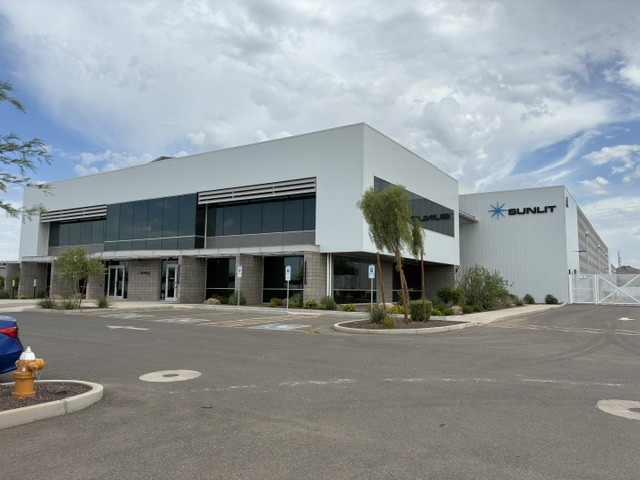
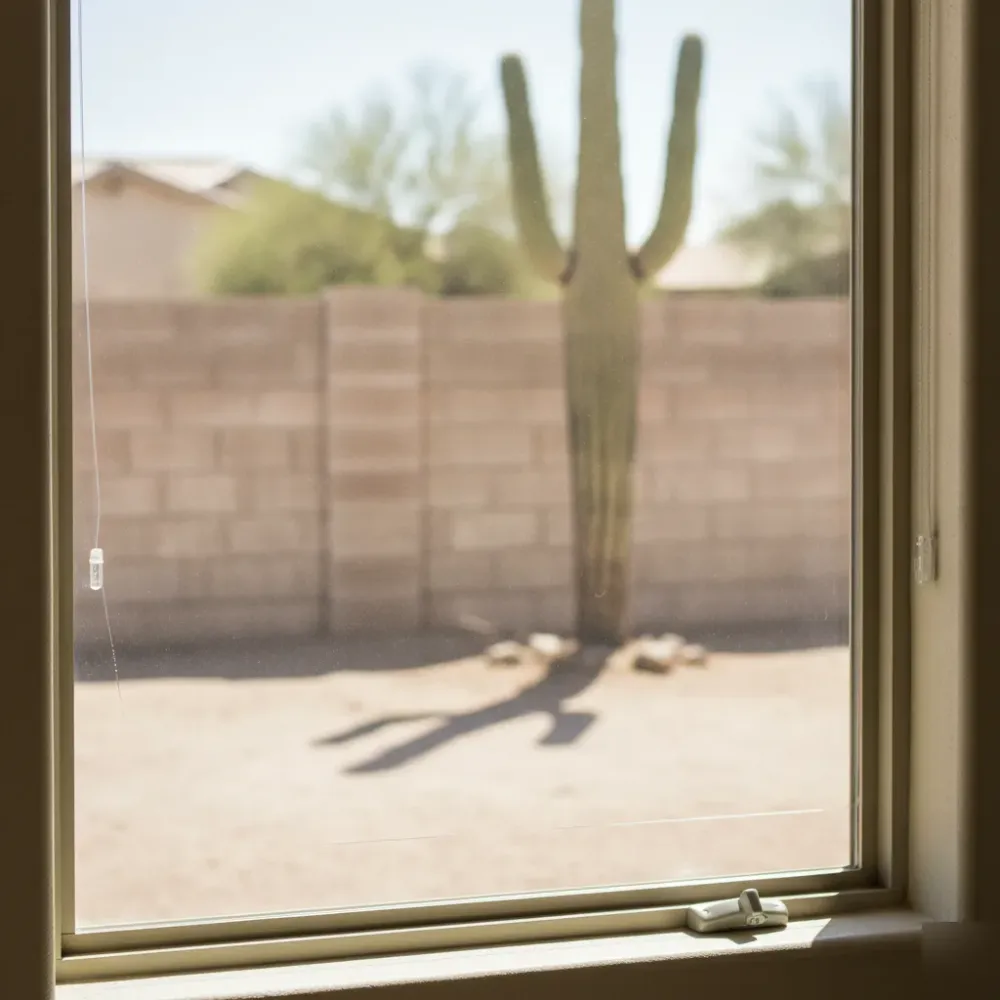
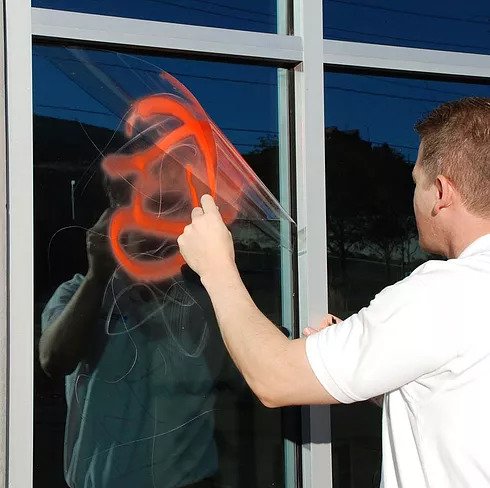
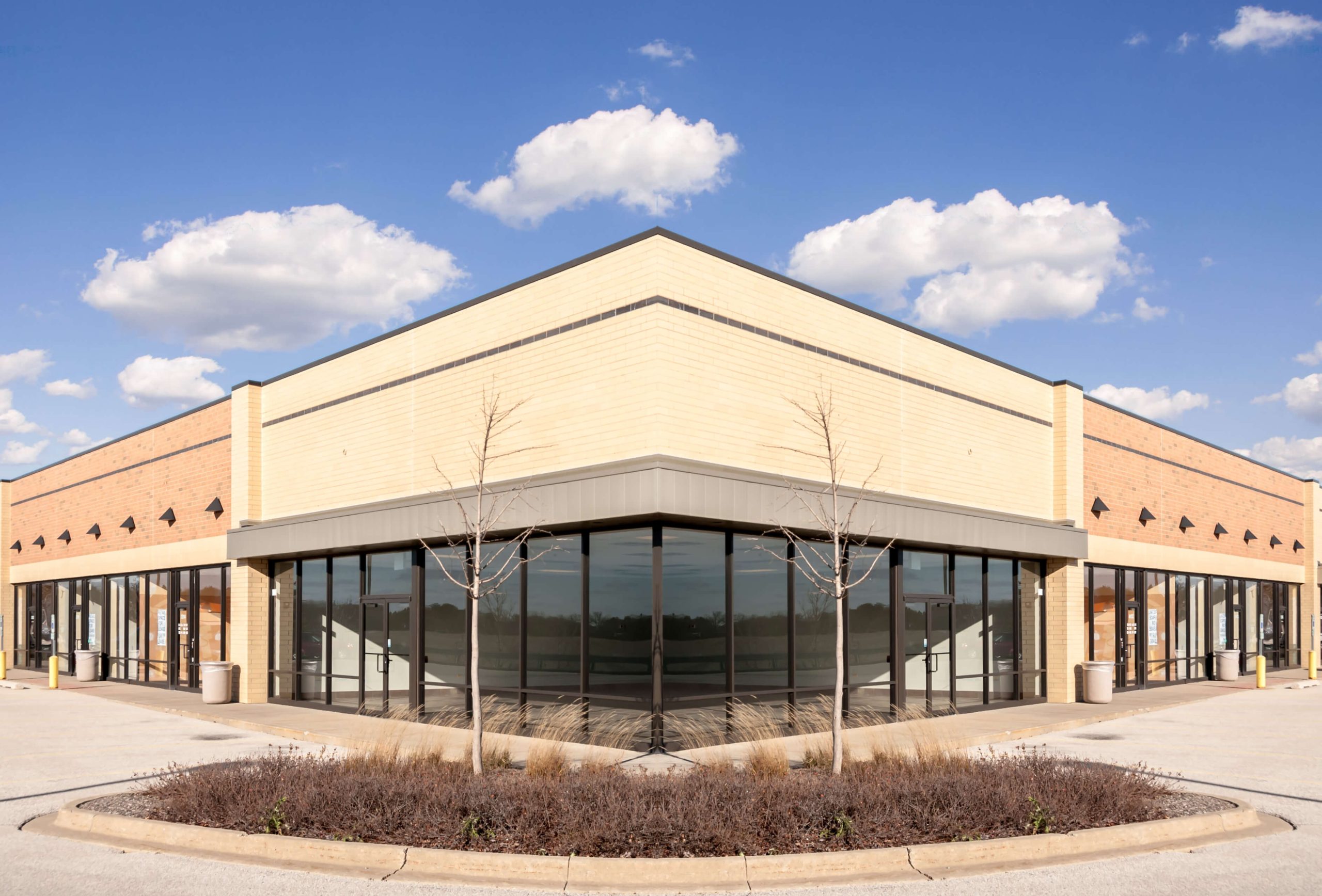
9 mil Solar Gard silver security window film on a commercial building in North Phoenix, Arizona

The Problem: Three Issues On One Piece Of Glass

Most window film projects start with one complaint. This one started with three, and they were not competing with each other. They were all coming through the same glazing.

Security. Glass is the softest part of any commercial building. Walls, doors and locks get specified carefully; the glass next to them is often left as the one element that gives way to a single hard impact.

Heat. A Phoenix building with significant glass area is absorbing solar load through every hour of daylight, and the cooling system carries that load all summer.

Glare. Bright, unfiltered daylight through large openings makes interior space harder to work in, regardless of what the thermostat says.

Why This Shows Up So Often In North Phoenix

The north Valley has built out fast, and much of what has gone up along the Deer Valley and Norterra corridors is modern commercial construction: large glazed elevations, open sightlines, and a lot of glass per square foot of building.

That design is good for daylight and bad for everything else Arizona brings. The sun is relentless most of the year, the heat load is real, and a large glass elevation is simultaneously the building’s biggest solar gain and its most vulnerable surface. Addressing those separately means three different products and three different trades. Addressing them at the glass means one.

The AZ Max Tint Solution: Solar Gard 9 Mil Silver Security Film

Tom specified a 9 mil Solar Gard silver security film, and the customer went with the recommendation.

The thickness is the security part. Standard solar control film is a fraction of a millimetre thick and is not built to hold glass together. A 9 mil film is a substantially thicker polyester layer bonded across the interior face of the pane, and its job is fragment retention: when the glass breaks, the pieces stay bonded to the film instead of falling out of the opening. It does not make glass unbreakable, and nobody honest will tell you it does. What it changes is what happens after the break.

The silver construction is the solar part. It reflects a meaningful share of incoming solar energy at the glass surface rather than letting it into the building, which is what makes it work on heat and glare at the same time as it works on security. That is the reason this single product answered all three complaints.

We go through the same thinking on a different building type in our article on security window film for high-risk Phoenix storefronts.

The Attachment System: Why Film Alone Is Only Half The Job

This is the part of the project most people have never heard of, and it is the part that matters most.

Security film bonded only to the face of the glass does exactly what it is designed to do — it holds the fragments together. But it holds them together as a sheet, and that whole filmed sheet can still be pushed out of the frame in one piece. The film did its job. The opening is still open.

A structural attachment system closes that gap. The Dow Corning system bonds the filmed glass to the window frame itself with a structural silicone, so the glazing is anchored into the opening rather than simply sitting in it. Film plus attachment is a system. Film on its own is a component.

If you are comparing security film quotes for a commercial building and one includes an attachment system and one does not, you are not comparing the same thing. Our security window tint and safety window tint pages cover where each approach fits.

The Installation: Five Days, Five Installers

This was a five-day job with five installers on site, and it ran in two distinct phases. The film went on first, across the glazing. The attachment system went on second, once the film was in place.

That sequence is not optional. The attachment bonds to the filmed glass and to the frame, so the film has to be installed, set and correct before any of it is anchored. Work of this scale is as much about sequencing and coordination across a crew as it is about the film itself, which is why a job like this takes a team rather than one or two installers working through it.

What The System Delivers

  • Fragment retention on every treated pane, with the glass anchored to the frame rather than free to be pushed through
  • Solar reflection at the glass, reducing the heat load the building has to remove
  • Glare control across large glazed elevations
  • Energy savings from a lower cooling demand through the Arizona cooling season
  • Better interior comfort for the people using the space every day

The Finished Result

One specification, three problems addressed. The glass is harder to get through, the solar load coming into the building is lower, and the interior is more comfortable to be in. For a commercial property in Phoenix carrying security concerns alongside a serious cooling bill, that combination is difficult to beat on any other line item in the building.

If you manage a commercial property in North Phoenix, Deer Valley, Anthem, Scottsdale or anywhere in the Valley and you are weighing security glazing against replacement glass, film with a structural attachment system is worth pricing first. Start with our commercial window tinting page or call and we will walk the building with you.

Get A Window Tinting Estimate From AZ Max Tint

If heat, glare, UV exposure, privacy, security or excessive sunlight is making your Phoenix-area home or commercial property less comfortable, AZ Max Tint can help you find the right window film for your space.

Call AZ Max Tint: (480) 913-5889
Contact AZ Max Tint: https://azmaxtint.com/contact

For directions to AZ Max Tint, just click here.

Visit Us From North Phoenix

Driving directions from North Phoenix and the 85085 area to AZ Max Tint at 3734 E Kristal Way, Phoenix, AZ 85050.
Categories
Residential Window Tint Safety Window Tint Security Window Tint

Security & Safety Window Film for Phoenix Homes: What It Actually Does

Blog Article

Security & Safety Window Film for Phoenix Homes: What It Actually Does

Phoenix Security Window Film - Storefront Window Tint

Most home security spending goes toward detection. Cameras, sensors, monitoring, a sign in the yard. All of it tells you something is happening. None of it slows anyone down.

In a Phoenix home, the thing that actually gets broken is glass — a rear slider, a ground-floor window on the side yard, the glass beside the front door. Security and safety film is the one measure that operates in the seconds between the strike and the entry.

This is about residential glass. If you are hardening a storefront, see security film for high-risk Phoenix storefronts instead.

Security window film on a high-risk Phoenix storefront glass entrance

How Security Film Works

Security film is a thick, optically clear polyester layer bonded to the interior face of your glass with a high-strength adhesive. It does not make glass stronger in the sense of harder to break.

What it changes is what happens after the break. On untreated glass, one solid strike creates an opening. With film, the pane fractures but the fragments stay bonded to the film. The glass spiders; the hole does not appear. Getting through requires repeated strikes, cutting, or pushing the whole membrane out of the frame — all of which take time and make noise.

LLumar describes the same principle in its architectural film documentation: safety and security film helps hold broken glass together and reduces flying fragments.

That is the whole mechanism. Anyone selling it as bulletproof or unbreakable is overselling it.

The Phoenix Glass Problem

Valley residential construction has a few characteristics that concentrate risk on specific openings.

  • Large sliding glass doors. Nearly universal on Phoenix homes with a patio or pool, usually at the rear of the property where a wall or landscaping blocks the view from neighbours and the street.
  • Single-storey layouts. Much Valley housing stock puts every bedroom window at ground level.
  • Block walls and mature landscaping. The privacy that makes a Phoenix backyard pleasant also removes natural surveillance from the rear elevation.
  • Side yards. The narrow gap between houses is out of sight from both the street and the neighbour, and it is where side-facing glass lives.

The pattern is consistent: the most vulnerable glass is the glass nobody can see. That is where film belongs, and it is usually a handful of openings rather than the whole house.

Finished security window tint on ground-floor window in Phoenix home

Safety Film: The Other Half

The same fragment-retention property that resists break-ins also addresses accidental breakage, and for many Phoenix families this is the more relevant benefit.

Monsoon debris

Valley monsoon season brings straight-line winds that carry gravel, palm fronds, and patio furniture. A wind-driven object hitting an untreated pane sends glass into the room. Filmed glass holds the fragments in place.

Children and sliding doors

A clean, well-lit slider is close to invisible to a running child. Safety film does not prevent the impact, but it changes the outcome from broken glass falling into the room to a cracked pane that stays intact.

Pool areas

Glass around a pool enclosure combines wet floors, running children, and hard surfaces. Fragment retention matters more here than almost anywhere else in the house.

AZ Max Tint - Fogo Brazilian Steak House - Santan Village - Gilbert AZ - Commercial Window Tint - Safety Window Tint 3

Specification: What to Actually Ask For

Security film performance is measurable, and the questions that separate a real specification from tinted glass sold as one are short.

Thickness

Security films are specified in mils. Standard solar film is a fraction of the thickness of a security product. If nobody has told you a thickness, you are not being quoted security film.

Frame attachment

Film bonded only to the glass face can still allow the whole filmed pane to be pushed out of the frame as a unit. An attachment system — wet-glaze sealant or a mechanical anchor bonding film to frame — resists that. It costs more. Whether you need it depends on the opening, and it should be a deliberate decision rather than an omission.

Testing and standards

Ask what impact testing the product has been through. The International Window Film Association publishes guidance on film categories and installer practice, and reputable manufacturers publish test documentation for their safety and security lines.

Glass compatibility

Thick film on an insulated unit in a high-exposure Phoenix position is a case where glass type genuinely matters — see double-pane windows and thermal shock. Installers work from compatibility references rather than applying one product everywhere.

Combining Security With Film You Already Need

Most Phoenix homes need solar control film on the west elevation regardless, for heat and UV. Security and safety films are available in clear and in solar-performing versions, which means a rear slider can address heat, fading, and glass retention in a single product.

If you are already planning residential window tinting, it is worth asking what upgrading the vulnerable openings to a security-rated product would add. It is a smaller increment than a separate project later.

Storefront Window Tint - Safety Window Tint Phoenix

Being Realistic About What It Does

Security film buys time. Time is only useful if something happens during it.

Film plus a monitored alarm means a longer entry and a dispatch already in progress. Film with no alarm means the break-in simply takes longer. Film is a layer in a plan, not the plan.

It also does not deter. Nobody can tell it is on the glass, so it prevents no attempt — it changes the outcome of one.

And it does not need to go everywhere. Second-storey windows, glass in full view of a busy street, and small fixed openings generally do not justify it. A useful assessment tells you which three or four openings are actually worth hardening.

Harden the Glass That Matters

Explore security window tint and safety window tint, or see all residential window tinting options. For daytime privacy on ground-floor glass, privacy window tint is a related consideration.

Request a free estimate and we will walk the property and tell you which openings are worth hardening — and which ones are not.

Home Window Tinting: The Underrated Upgrade That Pays You Back

Storefront & Office Window Film in Arizona: Cut Glare, Protect Inventory, and Improve Comfort 

Categories
Anti-Graffiti Film Commercial Window Tint Security Window Tint Storefront Window Tint

Securing Your Business The Real ROI Of Anti-Graffiti And Security Window Films

Blog Article

Anti-Graffiti Window Film Phoenix | Cheaper Than New Glass

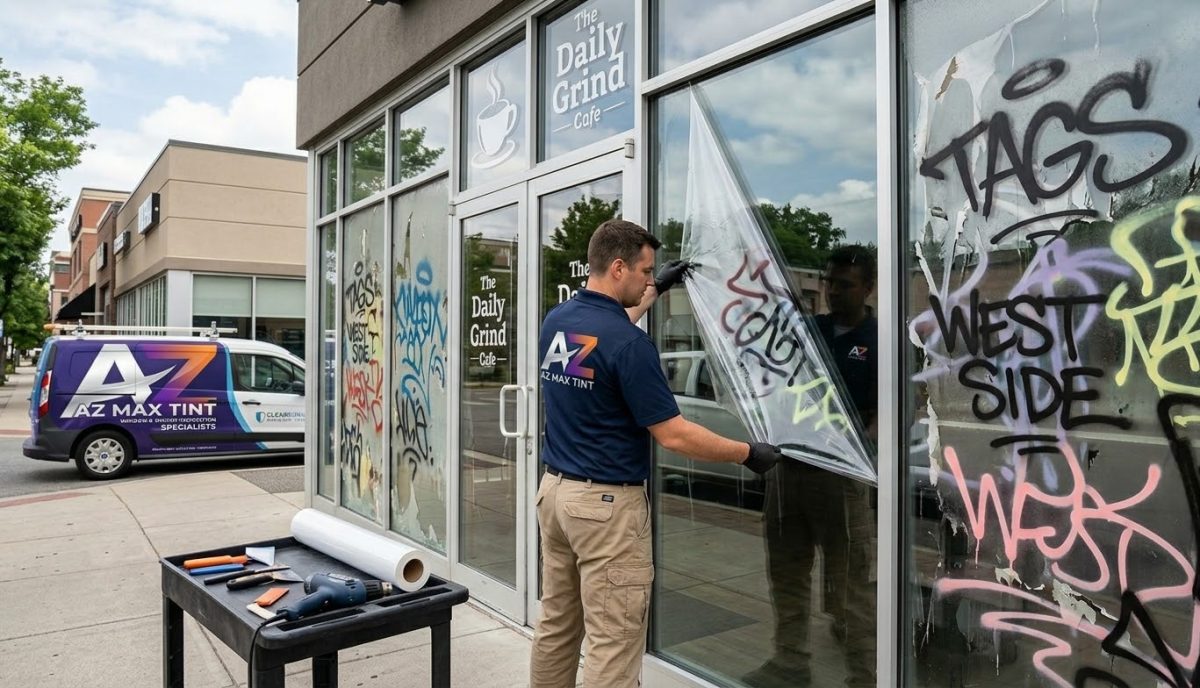
Security and anti-graffiti window film protecting a Phoenix business storefront

A tagged storefront is a small problem the first time. It becomes an expensive one when you learn that the tag is not on the glass — it is in it.

Acid etching, scratch tagging, and certain paints do not clean off. They cut into the glass surface. Once that happens, the only remedy is replacing the pane, and on a modern commercial storefront that means a large tempered or insulated unit, a glazing crew, and a day with your frontage boarded up.

Anti-graffiti film exists to make sure the damage lands somewhere cheaper.

AZ Max Tint - Phoenix Anti-Graffiti Film

The Sacrificial Layer: How It Actually Works

Anti-graffiti film is an optically clear layer bonded to the exterior face of your glass. It is deliberately the weakest element in the assembly, which is the entire design intent.

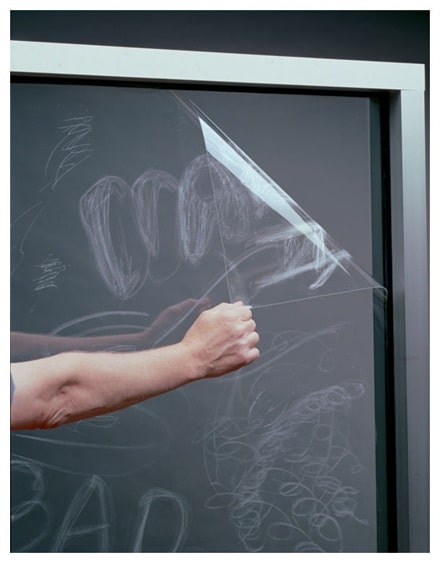
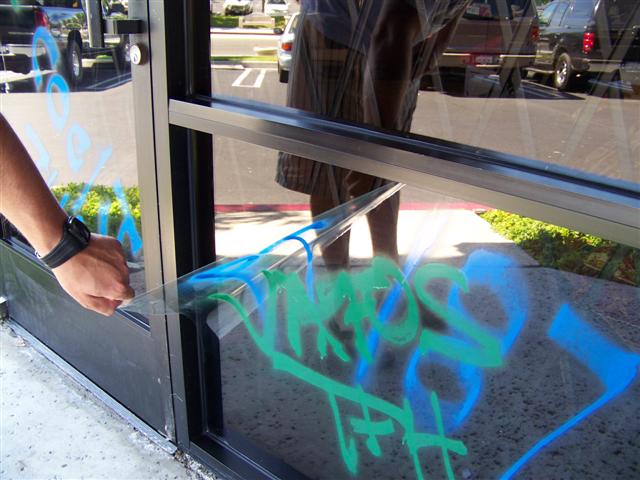
When someone etches, scratches, or paints the surface, they are working on the film. The glass underneath is untouched. Remediation is peeling the damaged panel off and applying a fresh one — typically a short visit rather than a glazing project.

This is the one category where film is intentionally disposable. LLumar notes in its architectural film documentation that window film is generally engineered for long-term installation with the exception of sacrificial anti-graffiti film. Everything else on your building is meant to last. This layer is meant to be replaced.

The ROI Question, Stated Honestly

The business case is a straightforward comparison, and it turns on one variable: how often does your glass get hit?

On one side, replacing a damaged commercial pane means the glass itself, a glazing crew, and downtime with boarded or exposed frontage. On the other, replacing a film panel is a scheduled visit with no glazing work and no downtime.

We are not going to publish invented figures for either. Get a glazing quote for one of your actual storefront panes, then get a film quote for the same opening, then multiply by how many times you have been tagged in the last two years. If you have been hit once in five years, the film may not pay for itself. If you are cleaning tags off the same elevation every few months, the answer becomes obvious quickly.

The businesses that benefit most are the ones that already know their tagging frequency without having to look it up.

AZ Max Tint - Phoenix Anti-Graffiti Film

Which Phoenix Properties Get Hit Repeatedly

Tagging is not evenly distributed. Across Valley commercial property, the recurring targets share characteristics:

  • Arterial road frontage — large uninterrupted glass visible to through traffic
  • Deep parking setbacks — the building sits far enough back that after-hours activity is not overlooked
  • Rear and side elevations — service doors and side glass out of sight from the street
  • Vacant adjacent units — a quiet neighbour changes the risk on your own glass
  • Ground-floor glass on multi-tenant centres — shared frontage where nobody owns the problem

If your property matches several of these and you are already budgeting for graffiti removal as a recurring line, you are the case for this product.

What Anti-Graffiti Film Does Not Do

Worth being clear, because this product is sometimes sold as more than it is.

It does not deter anyone. A tagger cannot tell it is there, which means it prevents nothing — it only changes what the damage costs you. It also is not a security product: it will not meaningfully slow a break-in. If glass entry is your concern, that is security window film, a different construction solving a different problem.

And it is not permanent. It is consumable by design. Budget for replacement panels the way you would budget for any wear item.

Combining It With Film You Already Need

Most Phoenix storefronts need solar control film regardless, because west-facing commercial glass fades merchandise and creates glare through the busiest hours of the afternoon. That is covered in our piece on storefront and office film for glare and inventory protection.

When you are already treating the glass, adding an exterior sacrificial layer is an incremental decision rather than a standalone project. Similarly, businesses hardening glass against break-ins — see why high-risk Phoenix storefronts install security film first — often specify anti-graffiti on the exterior and security film on the interior of the same pane.

Scoping these together is generally cheaper than three separate mobilisations.

AZ Max Tint - Phoenix Anti-Graffiti Film

Questions to Ask Before You Buy

  • Which elevations actually get tagged? Film the ones that do.
  • Is the film rated for exterior application, and what is its expected service life in direct Phoenix sun?
  • What does a replacement panel cost, and what is the turnaround?
  • Does my centre or landlord have exterior-appearance provisions in the lease?
  • Can it be combined with solar control or security film on the same glass?

The Bottom Line

Anti-graffiti film is not glamorous and it does not prevent anything. What it does is guarantee that when your glass gets hit, you are replacing a film panel instead of a storefront window.

For a Phoenix business on a busy corridor that has been tagged more than once, that is usually a straightforward decision. For a business that has never had a problem, it is a reasonable thing to skip.

See anti-graffiti window tint, browse our commercial window tinting services, or request a free estimate. We will look at which elevations are actually getting hit and quote only those.

Home Window Tinting: The Underrated Upgrade That Pays You Back

Storefront & Office Window Film in Arizona: Cut Glare, Protect Inventory, and Improve Comfort 

Categories
Commercial Window Tint Safety Window Tint Security Window Tint Storefront Window Tint

High-Risk Storefronts In Arizona Why Dispensaries Jewelry Stores And Pharmacies Choose Security Window Film First

Blog Article

Why Phoenix Dispensaries, Jewelry Stores, and Pharmacies Install Security Film First

Most Phoenix business owners think about glass twice: when they sign the lease, and when someone breaks it. Dispensaries, jewelry stores, and pharmacies tend to think about it much earlier than that, and they are usually right to.

These three categories share a specific risk profile. They hold concentrated, portable, high-value inventory behind a large sheet of glass, in a building that is empty for a predictable stretch of every night. Security window film does not make that glass unbreakable. It changes the math on how long breaking it takes.

Storefront glass in Phoenix protected with professional security window film

Why These Three Business Types Get Targeted

Dispensaries

Arizona dispensaries operate under federal banking constraints that push more of the business toward cash than a comparable retailer would carry. Combine on-site cash with high-value regulated product and a storefront on a commercial corridor, and the exposure is obvious to the operator and to anyone else paying attention.

Jewelry stores

The highest value-to-volume ratio in retail. A smash-and-grab that lasts under a minute can clear cases holding more value than most businesses hold in inventory all year. Speed is the entire attack model, which makes anything that slows entry disproportionately effective.

Pharmacies

Controlled substances behind glass, with a diversion market and a predictable overnight vacancy. Pharmacy break-ins are typically targeted rather than opportunistic, which means the person at the glass has usually thought about the approach in advance.

What Security Film Actually Changes

It is worth being precise, because security film is frequently oversold.

What it does not do: it does not make glass bulletproof, and it does not make glass unbreakable. A determined person with the right tool and enough time will get through.

What it does do: it bonds to the glass so that when the pane fractures, the fragments stay attached to the film rather than falling away. The glass breaks; the opening does not. Instead of one strike creating an entry point, the attacker faces a spidered but intact membrane that has to be repeatedly struck, cut, or pushed through.

That converts a five-second entry into a sustained, loud, visible effort. Smash-and-grab depends on being gone before anyone responds. Removing the “smash” step removes the model. As LLumar notes in its architectural film documentation, safety and security film helps hold broken glass together and reduces flying fragments — which is also why the same product category is used for severe weather.

Phoenix Security Window Film - Storefront Window Tint

Standards Worth Asking About

Security film is a technical product and its performance is measurable. Films are specified by thickness in mils and by the strength of the attachment system holding film to frame. A film applied only to the glass face performs differently from one anchored to the frame with a wet-glaze or mechanical attachment, because an anchored system resists the pane being pushed out as a unit.

The International Window Film Association publishes guidance on film categories and installer practice, and impact performance is evaluated against recognized test standards. Ask any installer what thickness they are proposing, whether the system includes frame attachment, and what testing the product has been through. Those three questions separate a real security specification from tinted glass sold as one.

Film selection also has to match the existing glass. Installers work from glass compatibility references rather than applying one product to every opening.

Why Phoenix Businesses Move on This Earlier

Valley commercial corridors put a great deal of retail directly on arterial roads with large glass frontage, deep parking setbacks, and limited natural surveillance after close. That is a different environment from dense urban retail where foot traffic continues into the evening.

There is also a practical climate factor: Phoenix storefronts often already need solar control film for heat and fading. When film is going on the glass regardless, the incremental step to a security-rated product is smaller than starting from nothing — which is why we frequently scope both together rather than as separate projects.

Phoenix Commercial Window Tint - Security Film

Film Is One Layer, Not the Plan

Security film works because it buys time. Time only has value if something happens during it.

A layered approach means the delay film creates is spent usefully: monitored alarms that are already dispatching, camera coverage that produces usable identification, lighting that removes concealment, interior barriers that protect the actual product, and a safe or cash-handling routine that limits what is available even after entry.

Film without an alarm just means the break-in takes longer. Film with monitoring means the break-in takes longer and someone is already on the way.

A Better Question Than "Do I Need Security Film?"

Ask instead: if someone struck my front glass right now, how long until they were inside, and what would they reach first?

If the answer is “a few seconds” and “the display case,” that is the case for hardening the glass. If the answer is “a while” and “an empty vestibule,” your exposure is lower and your money may be better spent elsewhere. A useful assessment tells you which of those you are, rather than quoting film for every opening.

Choosing the Right System

  • Identify the actual entry points. Front glass, side lights, rear service doors, ground-floor windows out of sight from the road.
  • Match film to glass type. Annealed, tempered, laminated, and insulated units behave differently.
  • Decide on frame attachment. Anchored systems perform better and cost more; the decision should be deliberate.
  • Consider combined products. Security plus solar control on the same glass is common in Phoenix.
  • Add anti-graffiti where tagging is the recurring cost. Different problem, different film — covered in our piece on anti-graffiti film ROI for Phoenix businesses.
Safety window tint on bank lobby glass in Phoenix Arizona

Protect the Glass Before You Need To

Security film is inexpensive relative to a single break-in, and it is one of the few security measures that keeps working when the power is out, the alarm is ignored, or the response is slow. It is also the only one that does its job in the seconds that actually matter.

Explore security window tint and safety window tint, see our full commercial window tinting services, or request a free estimate. We will walk your storefront and tell you which glass is worth hardening.

If cooling cost rather than security is your primary driver, see how commercial window tinting lowers cooling costs. For glare and merchandise fading, see storefront and office window film.

Categories
Anti-Graffiti Film Commercial Window Tint Decorative Window Tint Frosted Window Tint Mirror Window Tint Residential Window Tint Safety Window Tint Security Window Tint Stained Glass Window Tint Storefront Window Tint UV Blocking Tint

5 Common Misconceptions About Window Tinting In Arizona

Blog Article

5 Window Tinting Myths That Cost Phoenix Homeowners Money

Ask ten people in the Valley about window tinting and you will hear the same handful of warnings. The film bubbles in the heat. It makes your house look like a limousine. It voids your window warranty. The installers make a mess and it is not really worth it anyway.

Some of that was true in 1995. Almost none of it is true now, and in a city that runs roughly 111 days a year at or above 100°F, believing it costs real money. Every summer a west-facing Phoenix living room goes untinted because of something a neighbor said, and the homeowner pays for it on the utility bill and in faded flooring.

Here are the five myths we hear most, plus a sixth that costs Phoenix homeowners more than all of them combined.

Myth #1: "Window Film Bubbles and Peels in Phoenix Heat"

This is the most persistent myth, and it comes from real experience — with products that have not been sold in decades. Early dyed films used adhesives that broke down under sustained UV exposure. In Phoenix they broke down faster than anywhere else. People saw purple, bubbled glass on 1980s storefronts and reasonably concluded that is what window film does.

Modern film is a different product. Manufacturers now use color-stable dye chemistries and metal or ceramic layers instead of the dyes that failed. LLumar addresses this directly in its architectural film FAQ, noting that purpling and bubbling indicate very low-grade film whose adhesive and dye components have broken down, and that its film carries a warranty against exactly that.

When film does fail early in Phoenix, the cause is almost always one of two things: a bargain product bought off a hardware store shelf, or a poor installation that trapped contamination under the film. Neither is a property of window film. Both are avoidable.

Window tint film rolls and squeegee tools on a Phoenix installer's work table

Myth #2: "Tinted Windows Look Dark and Obvious"

The mental image most people carry is limousine glass — near-black, mirrored, obviously aftermarket. That is one option out of many, and it is not the one most Phoenix homes get.

Film is specified by visible light transmission, and the range runs from nearly clear to fully opaque. Spectrally selective and ceramic films are popular precisely because they reject infrared heat while letting visible light through, so the room stays bright and the window looks essentially unchanged from the street.

If you do want a visible change, that is available too — mirror window tint for exterior reflectivity and daytime privacy, or decorative and frosted film for patterned glass. The point is that appearance is a choice you make, not a side effect you accept.

Finished tinted window in Phoenix home office showing reduced glare and even light

Myth #3: "Film Warranties Are Full of Loopholes"

The assumption is that a film warranty is marketing paper that evaporates the moment you try to use it. In practice, premium architectural film warranties from established manufacturers cover the specific failure modes people worry about: peeling, bubbling, crazing, delamination, and demetalizing.

The related worry — that film voids your window warranty — deserves a longer answer than fits here. Short version: most window manufacturers do exclude coverage once aftermarket film is applied, and when a licensed installer uses premium film, the film manufacturer’s warranty steps in behind the glass and seals. We covered the mechanics in detail in our piece on double-pane windows and thermal shock.

Before you hire anyone in the Valley, ask for the film warranty terms in writing. A company that cannot produce them is telling you something about the product they are about to put on your glass.

Myth #4: "Tinting Is a Luxury, Not a Necessity"

This one is climate-dependent, and Phoenix is where it falls apart.

Start with UV. Glass blocks most UVB but transmits a great deal of UVA, which is what drives fading in flooring, furniture, and artwork. Solar control film blocks up to 99% of UV rays. In a city with this much sun exposure through this many windows, that is not a cosmetic concern — it is the difference between hardwood that holds its color and hardwood that develops a bleached stripe where the afternoon sun lands.

Then there is load. According to U.S. Department of Energy figures cited by LLumar, solar heat gain through windows accounts for roughly one third of a building’s cooling cost. Phoenix runs cooling load for about eight months a year. One third of eight months is a meaningful number on an APS or SRP bill.

If fading is your primary concern, UV window tint is the direct answer. If you want the full accounting of what film returns on a Phoenix home, we broke it down in this piece on what home window tinting actually returns.

Completed UV window tint on living room window reducing glare in Phoenix home

Myth #5: "Installation Is Messy and Disruptive"

We will be honest about half of this one. DIY film installation genuinely is difficult and frustrating. Getting a large panel onto glass without creases, trapped water, or contamination takes practice most people do not have, and the failure rate is high.

Professional installation is a different process. Film is cut to the glass, applied with water-based solution, and squeegeed out. Most Phoenix homes are completed in a single day. You do not need to move out, empty rooms, or take time off beyond letting the installer in.

After installation there is a curing period. For a few days you may see slight haze or small water pockets as remaining moisture evaporates. This is normal and it clears on its own. Arizona’s dry air actually works in your favor here — curing tends to complete faster in the Valley than in humid climates.

Technician installing window tint film on a Phoenix home's sliding glass door

Myth #6: "Only West-Facing Windows Need Film"

This is the one that costs the most, because it sounds sensible and it is half right.

West and southwest exposures do take the worst of a Phoenix afternoon. Low-angle sun from roughly 3 PM to sunset hits that glass face-on during the hottest hours of the day. If you only film part of the house, that is where you start.

But south-facing glass carries serious load through the shoulder seasons, and east-facing rooms bake in the morning — which matters if that is a bedroom or a home office. Meanwhile, a genuinely north-facing window in Phoenix often does not justify the cost at all.

The useful version of this rule is not “only tint west windows.” It is: a good estimate tells you which openings need film and which ones do not. Any installer who quotes every window in the house at the same specification without walking the property has not actually looked at your home.

The Bottom Line for Phoenix Property Owners

Nearly every myth on this list traces back to a real problem with a product that is no longer representative. Cheap dyed film failed. Early adhesives yellowed. DIY installs bubbled. Those things happened, and then the technology moved on while the reputation stayed put.

What has not changed is that the quality of the product and the quality of the installation determine the outcome. That is true everywhere, and it is true with less margin for error in a climate that puts glass through 110°F afternoons roughly forty days a year.

AZ Max Tint has been installing film across the Valley for over 30 years. Explore residential window tinting, browse the full specialty window film range, or request a free estimate and we will walk your home and tell you which windows actually need attention.

Frequently Asked Questions

Does window tint bubble in Arizona heat?

Quality film installed correctly does not bubble from heat. Bubbling comes from low-grade adhesive breaking down or from contamination trapped during installation. Small water pockets in the first few days after install are normal curing, not failure, and clear on their own.

Will window film make my Phoenix home dark?

Only if you choose a dark film. Ceramic and spectrally selective films reject infrared heat while transmitting most visible light, so rooms stay bright. Many homeowners find filmed rooms brighter in practice because they stop closing blinds against the heat.

Is window tinting worth it in Phoenix?

In a climate with roughly 111 days a year over 100°F and an eight-month cooling season, film addresses heat gain, UV fading, and glare simultaneously. It is most worth it on west and southwest exposures and least worth it on north-facing glass.

How long does window film last?

Premium architectural film is built for long-term installation. Actual lifespan depends on film type, glass type, exposure, and climate. Manufacturers back their products with factory limited warranties covering peeling, bubbling, and color failure.

Decorative & Frosted Window Film: Style Meets Function for Arizona Homes and Offices

About The Founder of AZ Max Tint

Get A Fast FREE Estimate

Enter Your Information Below

Get A Fast FREE Estimate

Enter Your Information Below